GigaPaw.com participates in affiliate programs including Amazon Associates. We earn from qualifying purchases. Content is for informational purposes only—consult a licensed veterinarian for pet medical advice.
Cat Travel Essentials Checklist: 17 Must-Haves Before You Hit the Road

So you’re taking your cat somewhere. First reaction: panic.
Second reaction: realizing you have no idea what to pack.
Cats are not dogs. They do not get excited about car rides, they do not stick their heads out windows, and they will absolutely judge you the entire drive.
But traveling with a cat is doable. Thousands of people do it every year for moves, vet visits, vacations, and long road trips.
The difference between a smooth trip and a four-hour howling concert almost always comes down to one thing: what you packed.
This checklist covers the 17 things that actually matter, plus a few honest notes on what to skip.
Why a Checklist Beats Winging It
Cats are creatures of habit. Take away their familiar smells, sounds, and routines, and stress hormones spike fast.
Studies on feline travel stress show that environmental control beats medication for most short trips. That means the right gear matters more than the right drug.
Pack smart and your cat settles in. Forget the basics and you’ll be making roadside Walmart runs at 11pm looking for litter.
The 17 Cat Travel Essentials
Here’s the full list, grouped by what they actually do for you.
| # | Item | Why It Matters |
|---|---|---|
| 1 | Hard-sided carrier | Safety + structure |
| 2 | Soft blanket from home | Familiar scent |
| 3 | Carrier seatbelt strap | Crash protection |
| 4 | Portable litter tray | The non-negotiable |
| 5 | Travel litter bag | Smell of home |
| 6 | Litter scoop + waste bags | Cleanup |
| 7 | Pee pads | Insurance |
| 8 | Collapsible food + water bowls | Space-saving |
| 9 | Cat food (extra portions) | Delays happen |
| 10 | Bottled water | Stomach-safe |
| 11 | Treats | Bribery works |
| 12 | Harness + leash | For supervised breaks |
| 13 | Collar with ID tag | First line of recovery |
| 14 | Vaccination records | Required in many places |
| 15 | Feliway spray | Calming pheromone |
| 16 | Vet-prescribed calming meds | For anxious cats only |
| 17 | Small first aid kit | Just in case |
Now let’s break down the ones that need real thought.
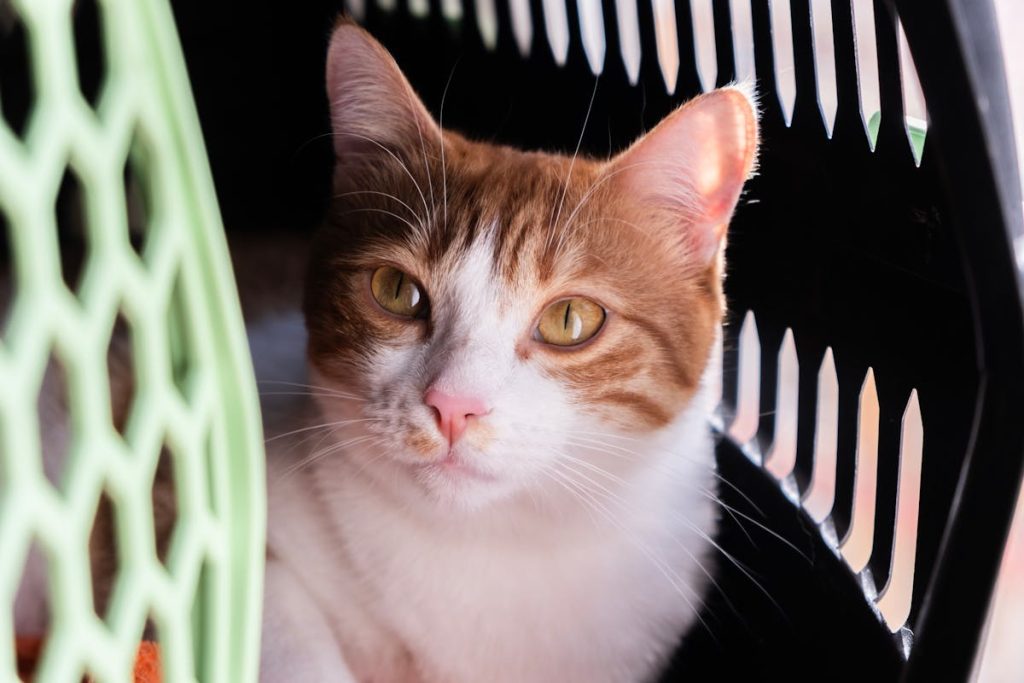
1. The Right Carrier (Skip This and Nothing Else Matters)
Your carrier is the single most important purchase. Get this wrong and the whole trip falls apart.
Hard-sided carriers with top-loading access are the gold standard for car travel. They protect your cat in a sudden stop and make it way easier to get a clingy cat in without wrestling.
Soft-sided carriers work great for plane travel because most airlines have strict under-seat dimensions. But for road trips lasting more than two hours, hard-sided wins.
Look for one with at least 1.5 times your cat’s length so they can turn around. A cramped carrier turns a nervous cat into a furious one fast.
Carrier Type Quick Compare
| Carrier Style | Best For | Watch Out For |
|---|---|---|
| Hard-sided plastic | Car trips, vet visits, big cats | Bulkier to carry |
| Soft-sided fabric | Airplanes, short trips | Less crash protection |
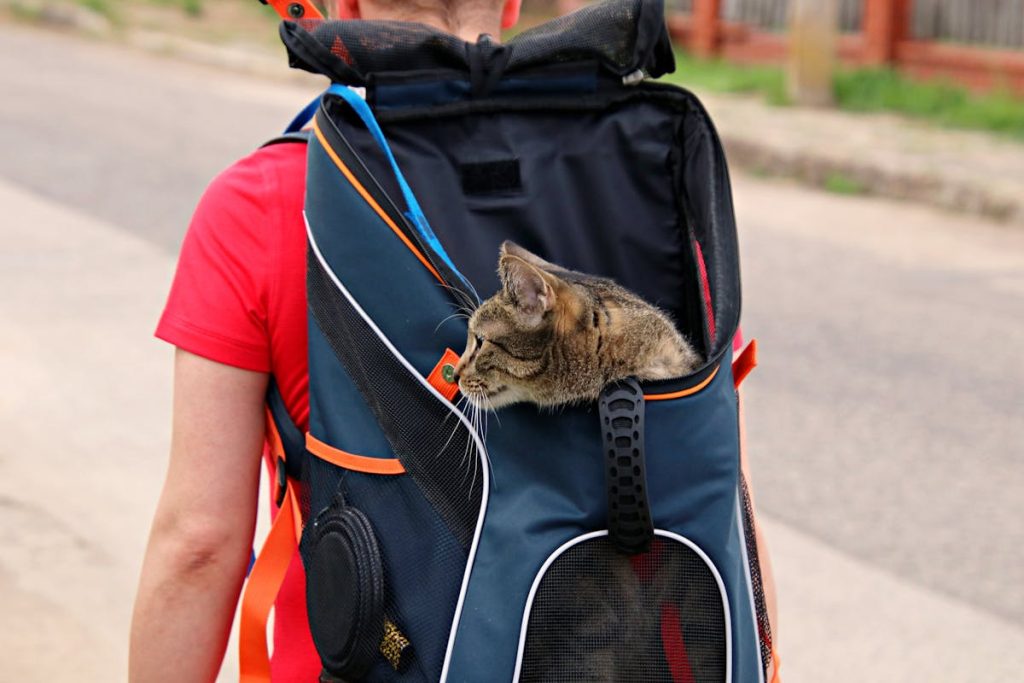
| Backpack | Hikes, short urban trips | Limited ventilation |
| Stroller | Outdoor sitting, recovery cats | Heavy, not for flying |
2. A Blanket That Smells Like Home
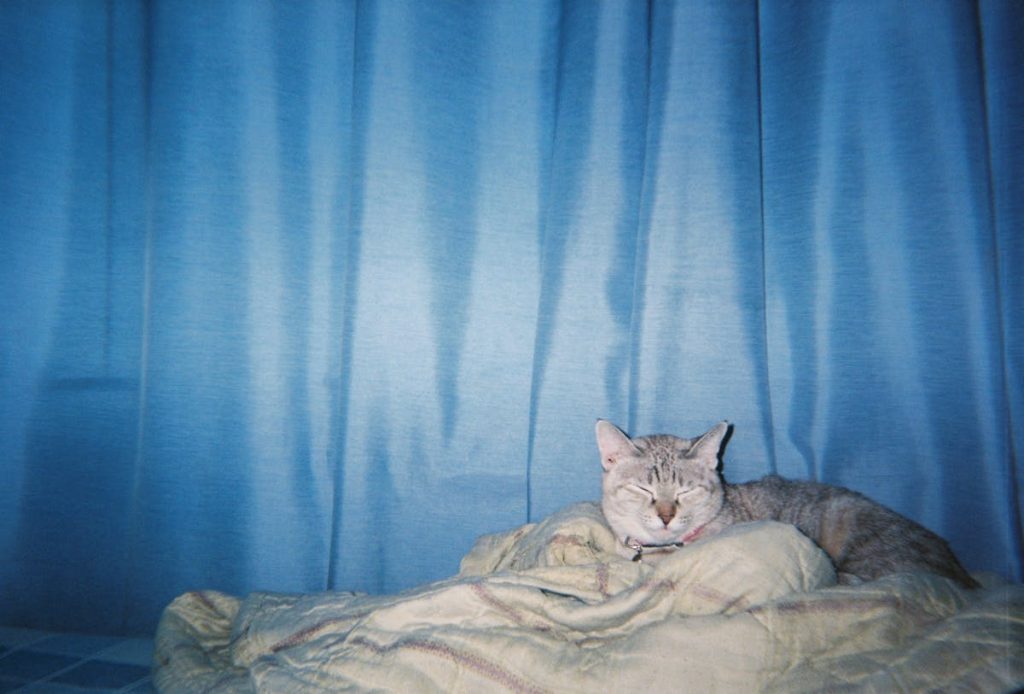
Take an old fleece blanket and let your cat sleep on it for a week before the trip.
That blanket goes in the carrier. It carries the scent of your home, your laundry detergent, and your cat’s own pheromones.
This is one of the cheapest, most effective calming tools in the world.
3. The Carrier Seatbelt Strap (Almost Nobody Packs This)
Your carrier needs to be strapped down. An unsecured carrier becomes a projectile in a crash.
Most modern carriers have a slot for the seatbelt to pass through. Use it every single time.
If yours doesn’t, a bungee cord through the door handles works in a pinch.
4-7. The Bathroom Situation
This trips up first-time cat travelers more than anything else. Cats will hold it for hours out of pure spite if conditions aren’t right.
You need a portable litter tray (the disposable cardboard kind from Petco works), a small zip-top bag of your usual litter (not a new brand, cats notice), a scoop, waste bags, and pee pads to line the carrier in case of accidents.
Here’s the trick most people miss: bring litter from your home, not the destination. Cats associate scent with safety. A familiar litter smell calms them faster than almost anything else.
8-11. Food and Water Without the Mess
Collapsible silicone bowls save space and don’t tip in the car. They cost five bucks and they work.
Pack more food than you think you need. A two-day trip should have four days of food packed in case of delays.
Bottled water from home prevents stomach upset. Different mineral content between cities is a real thing and your cat will absolutely show you on the back seat.
Treats are not optional. They are the currency of cat travel.
12-13. Harness, Leash, and ID Gear
A harness lets you give your cat supervised breaks at rest stops. Some cats love it. Most cats look at you like you’ve personally betrayed them.
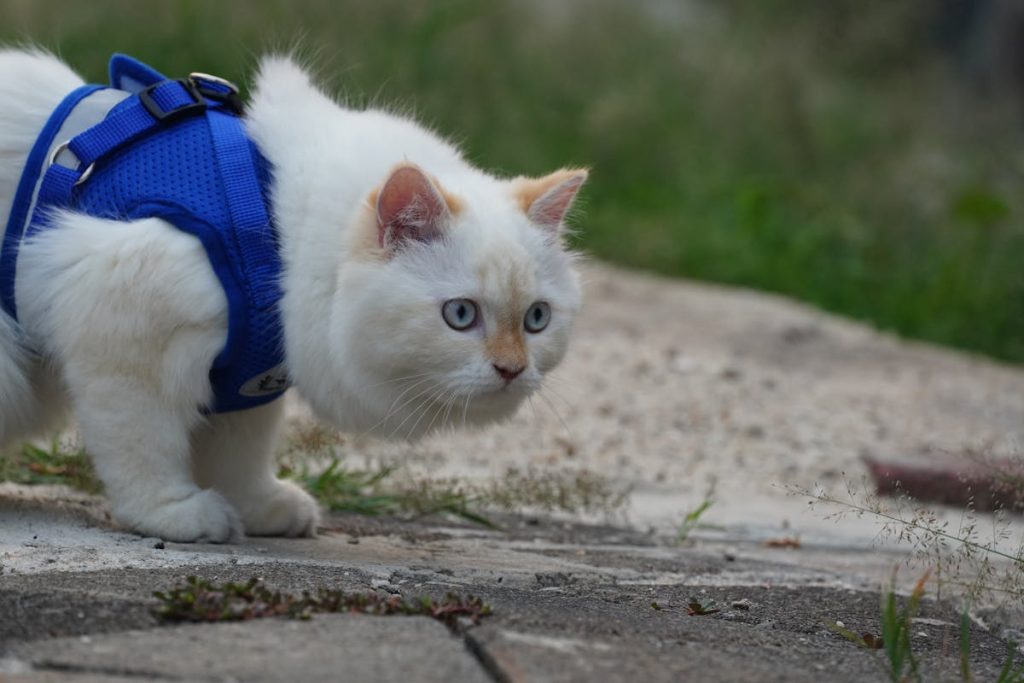
But here’s the thing: never open the carrier at a rest stop without the harness clipped on first. A spooked cat in a parking lot is one of the worst situations you can be in.
Your cat needs a collar with an ID tag that includes your phone number. If you’re crossing state lines, add your destination address too.
Microchipping isn’t on this list because it should already be done. If it isn’t, schedule it for next week.
14. The Paperwork You Forget Until You Need It
Vaccination records, a recent rabies certificate, and your vet’s contact info all need to be packed.
Some states require a Certificate of Veterinary Inspection (CVI) if you’re crossing state lines, especially by air. Get this within 10 days of travel.
Looking up your destination’s pet rules ahead of time takes 15 minutes. Discovering them at a border crossing takes hours.
15-16. Calming Aids (Read This Carefully)
Feliway spray is a synthetic version of the pheromone cats produce when they’re calm. Spray it inside the carrier 15-30 minutes before loading your cat. Don’t spray it on your cat.
This stuff has actual research behind it. It’s not a placebo and it’s not aromatherapy.
For seriously anxious cats, gabapentin at 50-100 mg per cat is the most commonly prescribed travel sedative. It kicks in about 60-90 minutes after dosing and lasts around 6-8 hours.
Do not give your cat any sedative without talking to your vet first. Dosing depends on weight, kidney health, and what other meds your cat takes.
If your vet prescribes it, do a trial run at home a week before the trip. You want to know how your specific cat responds before you’re 200 miles from home.
17. A Tiny First Aid Kit
You don’t need a full vet bag. You need:
- Gauze pads and self-adhesive bandage wrap
- Saline solution (for eye flushes)
- Styptic powder (broken nails happen)
- Your vet’s number AND the nearest 24-hour emergency vet at your destination
Stash it in a quart-size zip-top bag. Done.
What You Can Leave Behind
People over-pack for cat travel. These items almost always come home untouched:
- A cat bed (the carrier blanket does the job)
- Scratching posts (one weekend without won’t hurt)
- More than one toy (they’re stressed, they’re not playing)
- Anything battery-powered (just more stuff to charge)
Pre-Trip Checklist (One Week Out)
Don’t wait until the night before.
- One week out: Leave the carrier open in your home with treats inside so your cat associates it with good things
- Three days out: Confirm your vet has your records ready
- Two days out: Stop feeding wet food the morning of travel to reduce car sickness
- Day of: Skip the morning meal. Travel on an empty stomach reduces vomiting risk significantly
- 30 minutes before: Spray Feliway in the carrier and dose any prescribed meds
What About Flying?
Flying with a cat is its own beast. Quick notes if that’s your situation:
- Most airlines require the carrier to fit under the seat (typically 17.5 x 12 x 7 inches)
- Reserve your cat’s spot when you book. Airlines cap the number of in-cabin pets per flight
- You’ll pay around $95-$150 per direction for an in-cabin cat
- Health certificate is mandatory for most airlines, usually within 10 days of travel
- Skip sedatives for flights unless your vet specifically approves. Altitude changes can amplify sedative effects unpredictably
A Word on Cat Personalities
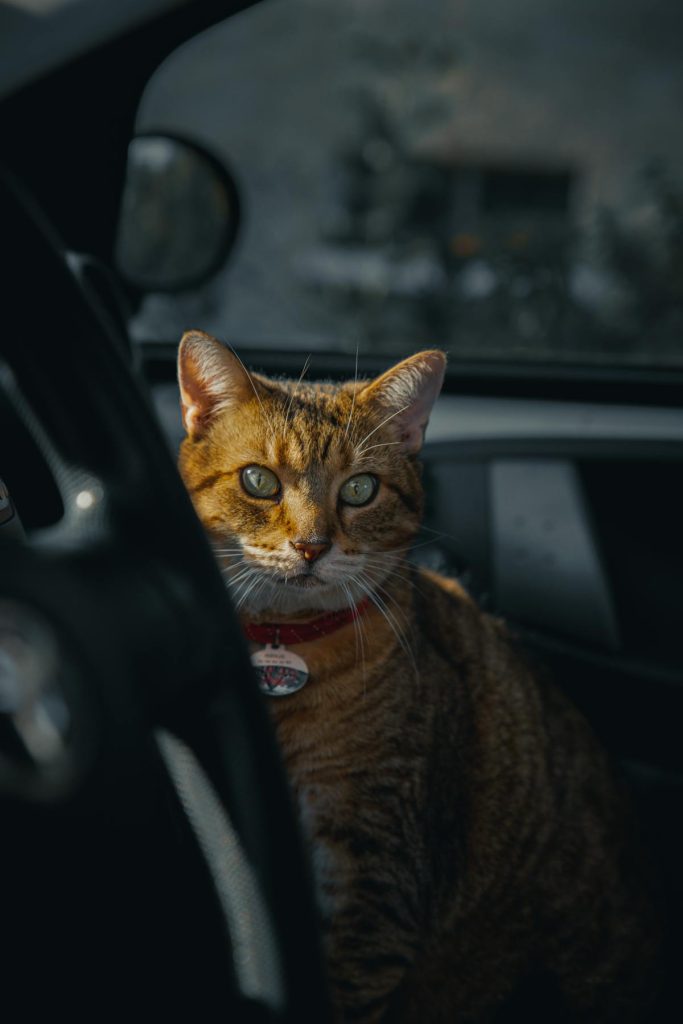
Some cats genuinely don’t mind traveling. They look out the window, take naps, and act like seasoned road warriors.
Most cats hate it. They will yowl, drool, pant, and possibly pee.
Both reactions are normal. A cat that howls for 30 minutes and then settles down is fine. A cat that howls the entire trip, refuses water, or shows signs of physical distress needs a vet check before continuing.
Trust your gut. You know your cat.
Final Thoughts
The whole point of this checklist is to remove the guesswork. Print it out, work through it once, and you’ll have a travel kit ready to grab for every future trip.
Cats deserve better than a panicked car ride with no supplies. With the right gear and a little planning, you can take your cat almost anywhere.
Now go pack. And please, for the love of everything, do a dry run with the carrier before you actually need it.