GigaPaw.com participates in affiliate programs including Amazon Associates. We earn from qualifying purchases. Content is for informational purposes only—consult a licensed veterinarian for pet medical advice.
Outdoor Cat House Ideas: 12 DIY Winter Shelters That Actually Keep Cats Warm

It is 20 degrees out, there is a cat curled up on your porch, and you are standing at the window feeling like a monster.
Been there. Whether it is your own indoor-outdoor cat, a neighborhood stray, or a whole feral colony you have quietly adopted with your leftovers, the panic is the same: they need somewhere warm, and they need it now.
Here is the good news. A cat shelter that genuinely keeps them alive through a brutal winter costs almost nothing and takes an afternoon.
Here is the bad news. Most of the “cozy outdoor cat houses” people build are basically cold, damp boxes that make things worse. A shelter done wrong pulls heat out of a cat faster than no shelter at all.
So let’s do it right. Below are 12 outdoor cat house ideas ranked from dead-simple to weekend-warrior, plus the handful of rules that separate a warm cat from a frozen one.
First, How Cold Is Actually Too Cold?
Cats are tougher than we give them credit for, but they are not invincible.
Once average temperatures drop below 45°F (7°C), cats should not be outside for long stretches. Below freezing, every cat is at risk of hypothermia and frostbite, no matter how fluffy.
Frostbite hits the thin, exposed bits first: ears, paws, and tails. A cat that is shivering, sluggish, hiding, or cool to the touch may already be in trouble.
That is the whole reason we build these things. A proper shelter lets a cat trap its own body heat and ride out the night instead of slowly losing the fight.
The 5 Rules That Make or Break Any Outdoor Cat House
Before the builds, memorize these. Skip them and even the prettiest cat house is useless.
1. Straw. Not hay. Not blankets. This is the big one. Straw repels moisture, so it stays dry and insulates. Hay soaks up water and rots. Blankets, towels, and newspaper are the worst of all because they absorb moisture, freeze, and actually pull body heat away from the cat. Loosely pack straw to about the halfway point.
2. Go small. A shelter should be just big enough for the cat to stand up and turn around. A cavernous house never warms up because there is too much cold air for one little cat to heat. Snug equals warm.
3. Tiny entrance, shielded from wind. Cut the door around 5.5 to 6 inches wide, just big enough for a cat and too small for most dogs and raccoons. Face it away from the prevailing wind and add a flap made of clear vinyl or a cut plastic placemat.
4. Get it off the ground. Raise the shelter on 2x4s, bricks, or pallets and tuck straw underneath. Cold seeps up from frozen ground and steals heat.
5. Weigh it down and waterproof it. Wind flips lightweight shelters like nothing. Add a paver on the roof, seal the seams, and make sure water cannot pool inside.
Bonus trick: line the interior with a Mylar emergency blanket (the silver kind) and lay straw on top. Mylar reflects the cat’s own radiant heat back at them for free.
The 12 DIY Outdoor Cat House Ideas
Quick note before we dig in: these are all outdoor, cold-weather survival builds. If you are after a cute indoor cat house for the living room, that is a whole different project.
1. The Double Storage Tote Shelter (The Gold Standard)
If you build only one thing, build this.
Take a large plastic storage tote and a smaller one. Nest the small tote inside the big one and stuff the gap between them with rigid foam insulation or straw. Cut matching 6-inch entrance holes through both walls.
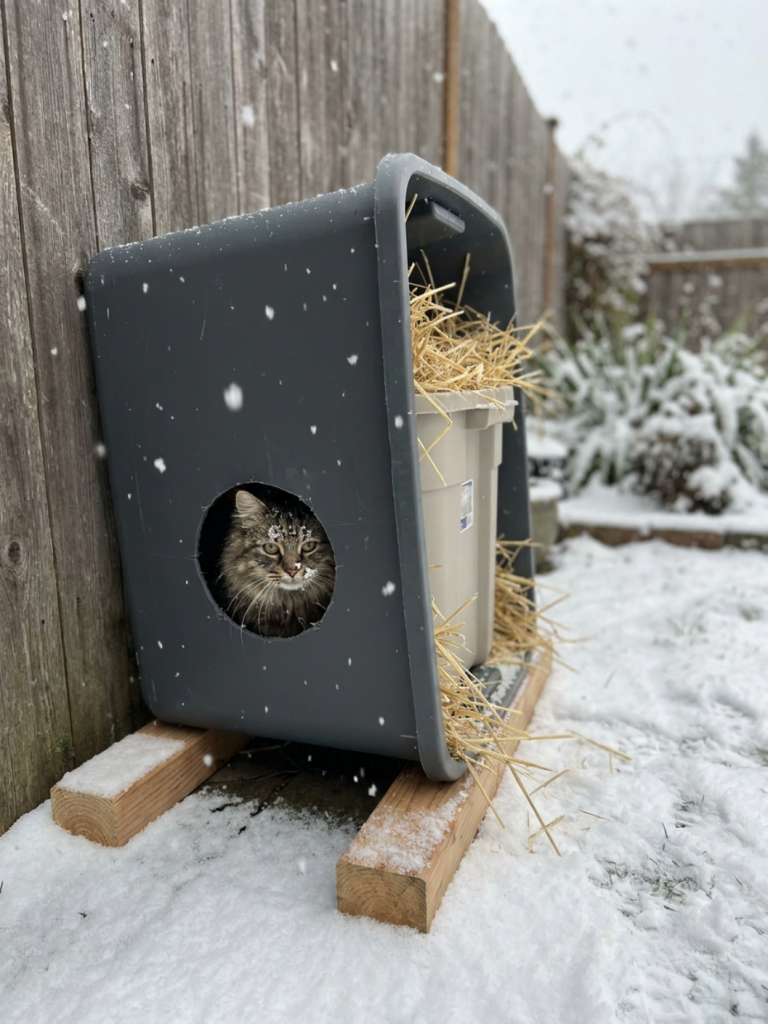
That dead-air gap between the two totes traps heat like a thermos. Snap the lid on top, and you have a waterproof, insulated shelter for about $25 that holds up in genuinely brutal cold.
Volunteers in Canada and the northern states use this exact design because it flat-out works.
2. The Styrofoam Cooler Shelter (Basically Free)
Got an old beach cooler in the garage? You are one box cutter away from a shelter.
Styrofoam is an insulation machine. Cut a 6-inch door, line the bottom with straw, and set a brick or board on the lid so wind does not send it flying.
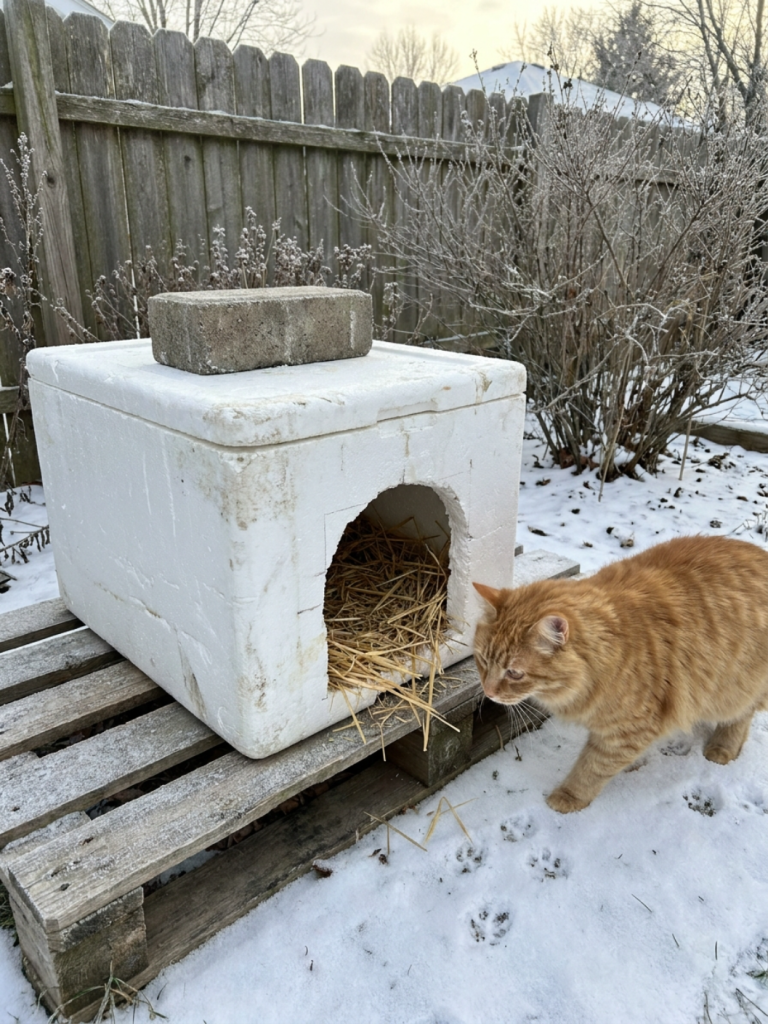
Ask a restaurant, florist, or medical office for the heavy-duty foam coolers they get shipments in. They toss them constantly, and those thick-walled ones are even better than a beach cooler.
3. The Insulated Wooden A-Frame
For the person who owns a drill and wants curb appeal.
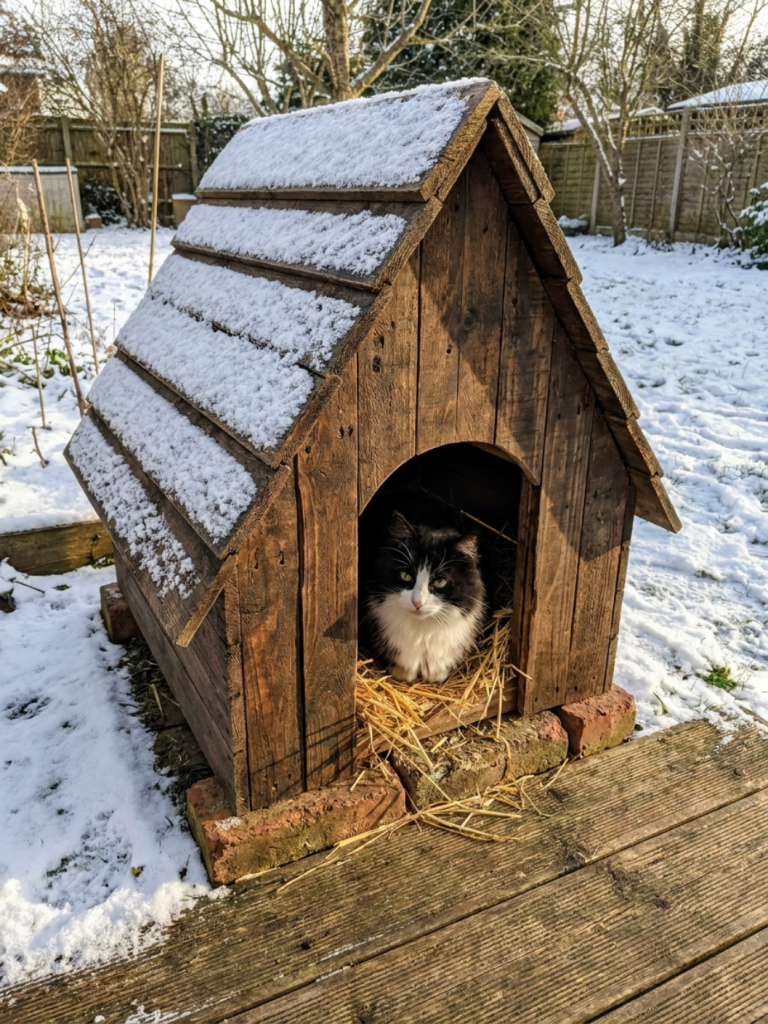
Build a simple A-frame from plywood or scrap lumber. The peaked roof sheds rain and snow instead of collecting it, and you can pack rigid foam insulation between the inner and outer walls.
Use pallet wood stamped “HT” (heat-treated, not chemically treated) to keep it cheap and cat-safe. Stain it to match your deck and the neighbors will think you bought it.
4. The Tote-Inside-a-Cooler Combo
This is the double-tote’s overachieving cousin.
Drop a foam cooler inside a hard-sided Rubbermaid tote and line the leftover space with straw. You get the cooler’s insulation plus the tote’s tough, waterproof, chew-proof shell.
It is the closest you will get to a fancy store-bought insulated house for a fraction of the price.
5. The Cinder Block Base Build
Sometimes the shelter is fine and the problem is the ground.
Set your tote or wooden house on top of two cinder blocks or a stack of pavers. This kills the cold-ground heat drain in one move and keeps meltwater from seeping under the floor.
Bonus: the extra weight means a windstorm is not carrying your shelter into the next county.
6. The Two-Room Feral Cat House (Vestibule Design)
Want to go pro? Add an entry room.
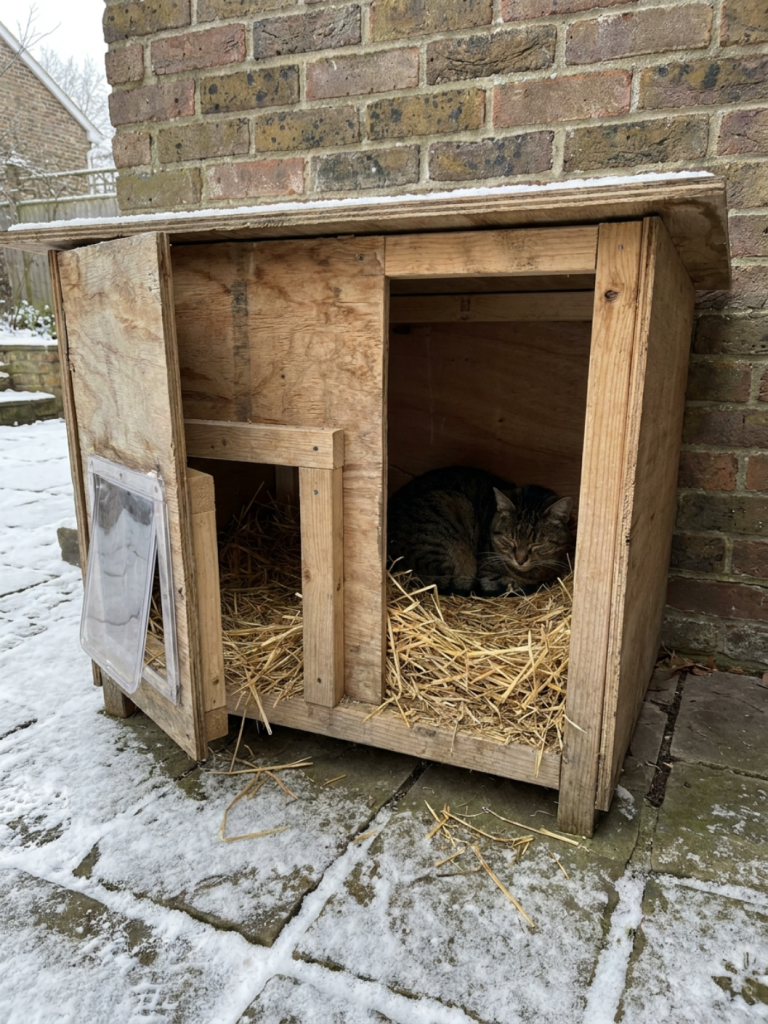
Build a wooden box with an interior wall that splits it into a small front “mudroom” and a back sleeping chamber, each with its own door offset from the other. The front room blocks wind and snow before it ever reaches the sleeping cat.
Colony caretakers swear by this design for the coldest climates. It is the difference between a wind tunnel and an actual bedroom.
7. The Mylar-Lined Heat Trap
This is less a separate build and more an upgrade you bolt onto any shelter above.
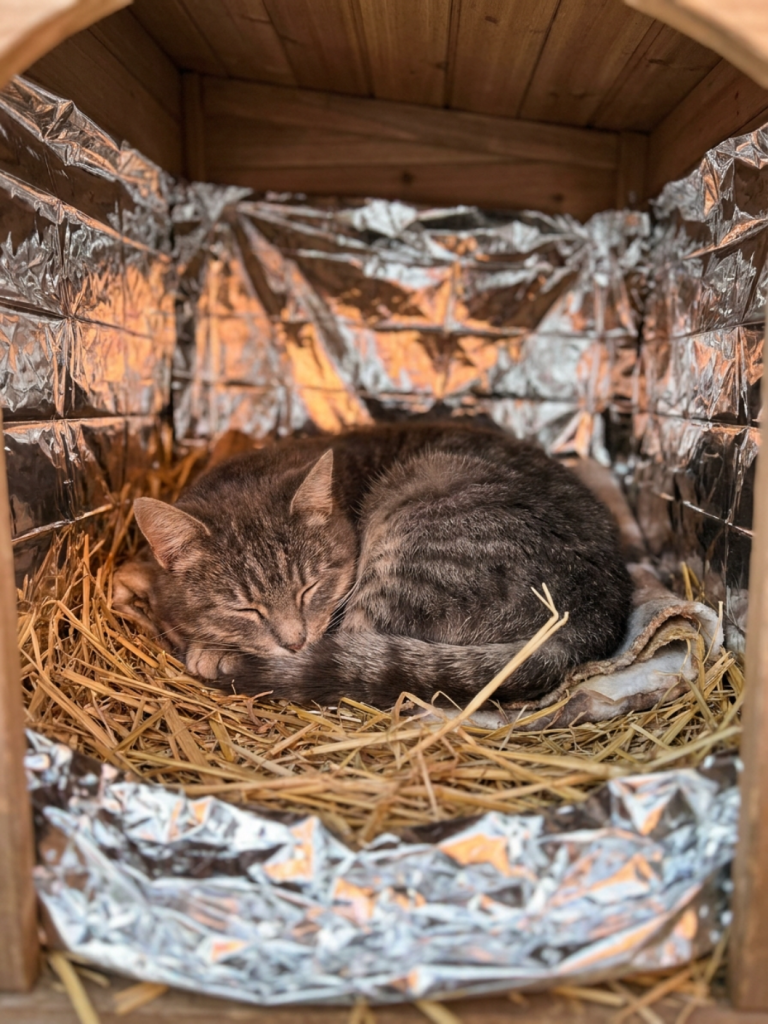
Line the walls and floor with a Mylar emergency blanket, then cover it with straw so the cat is not lying directly on plastic. The reflective surface bounces radiant body heat back inside.
It costs about a dollar and can raise the interior temperature noticeably. No electricity required.
8. The Heated Outdoor Cat House
If you have an outlet nearby and cats who need extra help, go electric, but do it safely.
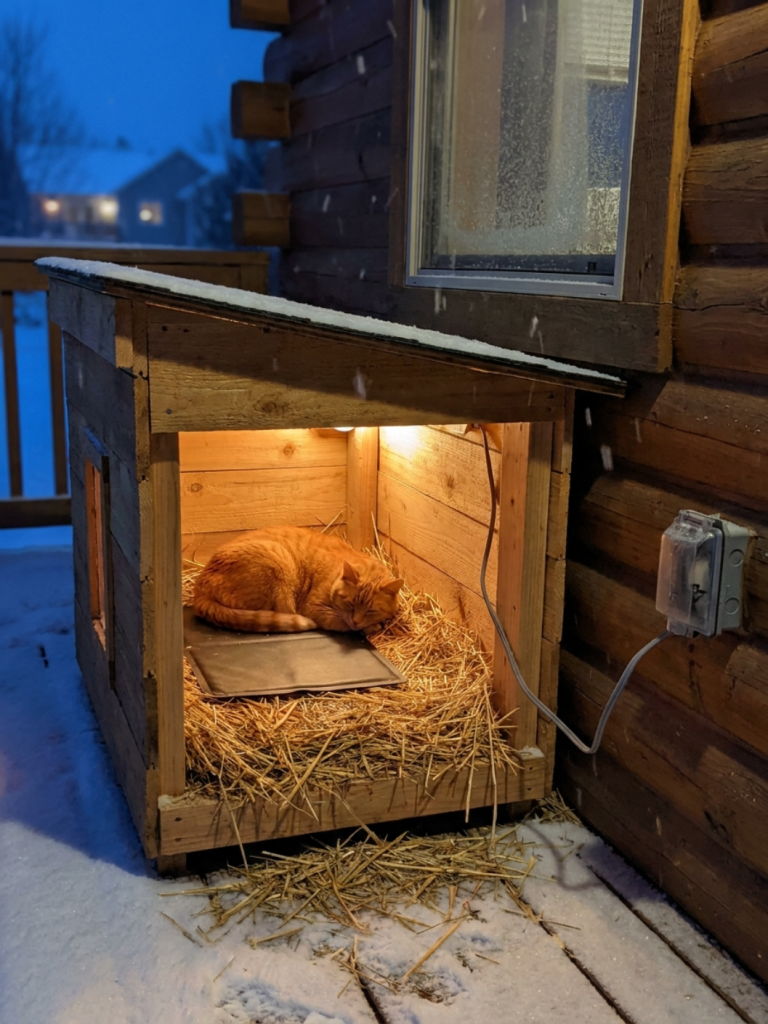
Use a product actually rated for outdoor pet use: a microwavable heated disc (like a SnuggleSafe) that needs no cord, or a weatherproof heated pad designed for cat houses. Both hold gentle warmth for hours.
Never rig up a space heater, heat lamp, or bare bulb. Those are house-fire and burn risks, full stop.
9. The Repurposed Dog House
That old plastic dog house nobody uses is a head start.
The catch: it is too big for a cat to heat. Shrink the interior by stuffing the back half with straw bales or building a smaller insulated box inside, and cut the doorway down to cat size with a flap.
Downsize it and it goes from a drafty cave to a snug den.
10. The Colony Barn Station
For folks feeding four, five, or a dozen cats, one tiny tote will not cut it.
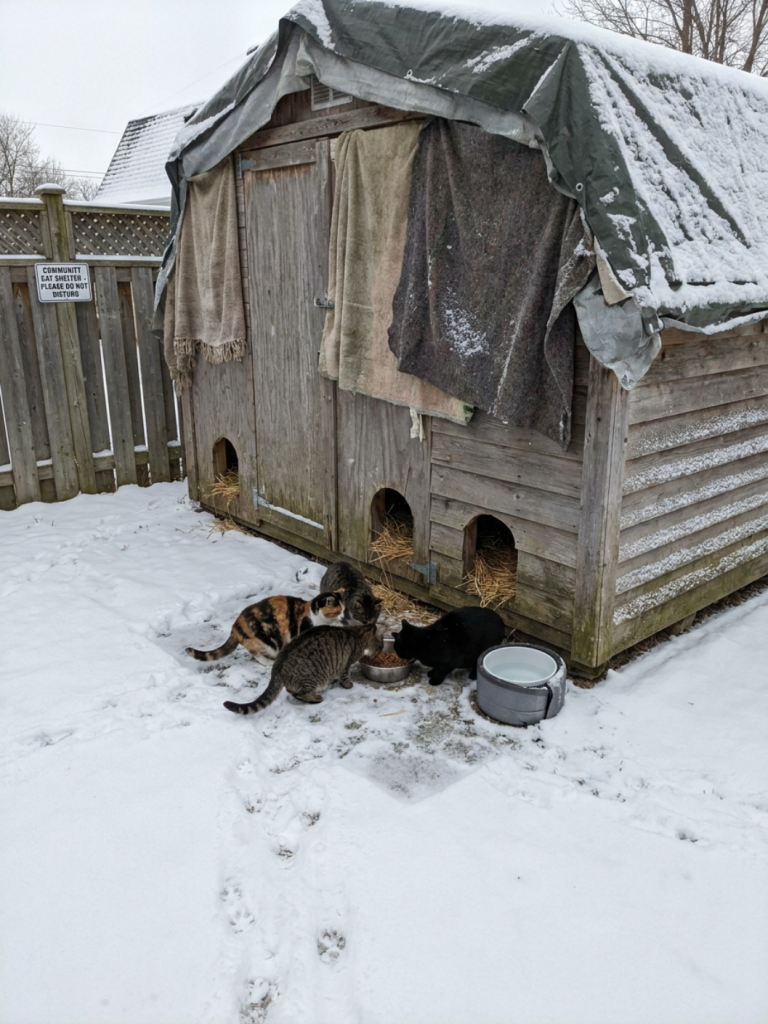
Set up a larger insulated structure, a converted garden shed, deck box, or a cluster of connected totes, where several cats can pile in together. Cats share body heat, so a group in one shelter stays warmer than any of them would alone.
Keep individual sleeping nooks snug even inside the big footprint. You want warm pockets, not one giant cold room.
11. The Elevated Pallet Platform
Living somewhere that floods, sleets, or slushes? Build up.
Mount your shelter on a raised pallet platform so it sits well above puddles, snowmelt, and frozen ground. Add a little ramp or step and skirt the sides with straw to block updrafts.
Great for wet climates where ground-level shelters turn into cold soup by February.
12. The 20-Minute Emergency Shelter
Cold snap tonight and no time to build? This will get a cat through.
Grab one tote, cut a door, line it with a trash bag then a thick layer of straw, snap the lid on, and weigh it down with a rock. Done.
It is not elegant, but it beats a doorstep every single time. You can upgrade to one of the builds above once the emergency passes.
Where to Put the Outdoor Cat House
A perfect shelter in a bad spot gets ignored.
Tuck it somewhere quiet, hidden, and away from foot traffic so cats feel safe using it. Against a wall, under a deck, or behind shrubs all work.
Point the entrance toward a wall or a corner, not into open wind. And if you are running two shelters, angle the doors toward each other a few feet apart so cats can dash between them.
Feeding and Water in Winter (Do Not Skip This)
Warmth is only half the job. A cold cat also needs fuel and unfrozen water.
Wet food freezes into a hockey puck fast, so lean on dry food in deep cold or serve wet food warm and take it in before it ices over. More calories help cats generate body heat.
For water, use a heated bowl or at least a deep, thick-walled plastic bowl set in a sunny spot. Metal bowls freeze faster and can stick to little tongues.
Consider a simple insulated feeding station, another tote with a door, so the cats are not eating exposed to the wind.
The Two Safety Warnings Every Winter
Two silent killers show up every cold season.
Antifreeze. It tastes sweet, cats and other animals lap it up, and even a tiny amount is deadly. Clean up every spill and store it sealed and out of reach.
Warm engines. Outdoor cats crawl up into wheel wells and onto engine blocks for warmth. Bang loudly on your hood and honk before starting the car on cold mornings. It takes two seconds and it saves lives.
Build the Thing This Weekend
You do not need to be handy, rich, or a carpenter. You need a tote, some straw, a box cutter, and one free afternoon.
Start with the double-tote shelter if you want the sure thing, or the styrofoam cooler if you want free and fast. Line it with straw, get it off the ground, keep the door small, and you have done more for that shivering cat than a hundred worried glances out the window.
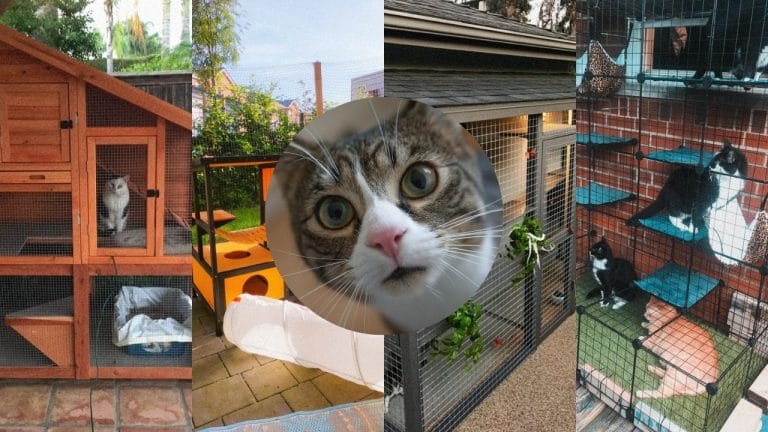
Then, come spring, if you want that cat to enjoy the outdoors safely without the frostbite risk, take a look at building a proper catio so they get fresh air on their own terms.
Now go grab that tote. There is a cat out there counting on you.