GigaPaw.com participates in affiliate programs including Amazon Associates. We earn from qualifying purchases. Content is for informational purposes only—consult a licensed veterinarian for pet medical advice.
Best Self-Cleaning Litter Boxes Compared (Is the Litter Robot Actually Worth It?)

Let’s start with the thing everyone is really thinking. You are staring at a litter box that costs almost as much as a used laptop, and some part of your brain is screaming, “It scoops poop. Why does it cost seven hundred dollars?”
Fair question. I asked it too.
But then you do the math on your own life. You scoop that box twice a day, every day, forever. That’s roughly 730 face-to-face meetings with cat waste per year. Suddenly the expensive robot starts to look less like a splurge and more like a hostage negotiation with your own free time.
So the real question isn’t “is it expensive.” It’s “is it worth it for you and your specific cat?” That answer changes a lot depending on your budget, your cat’s size, and how many cats are fighting over the throne.
Let’s break down every option honestly, including the parts the shiny ads leave out.
The Quick Answer (For People Who Hate Suspense)
Yes, a good self-cleaning litter box is worth it for most single-cat and two-cat homes where the humans are busy, forgetful, or just genuinely sick of scooping.
The Litter-Robot 4 is still the best one overall in 2026. It is also the most expensive, and it is not the right pick for everyone. There are cheaper boxes that do 90% of the job, and there are a few types of cats that should not use these machines at all.
Keep reading, because the “which cat should skip this” part actually matters more than the price.
What Actually Separates a Good One From a Gimmick
Before we compare models, here’s what you’re really paying for. Not all self-cleaning boxes are built the same, and the cheap ones cut corners in ways you feel later.
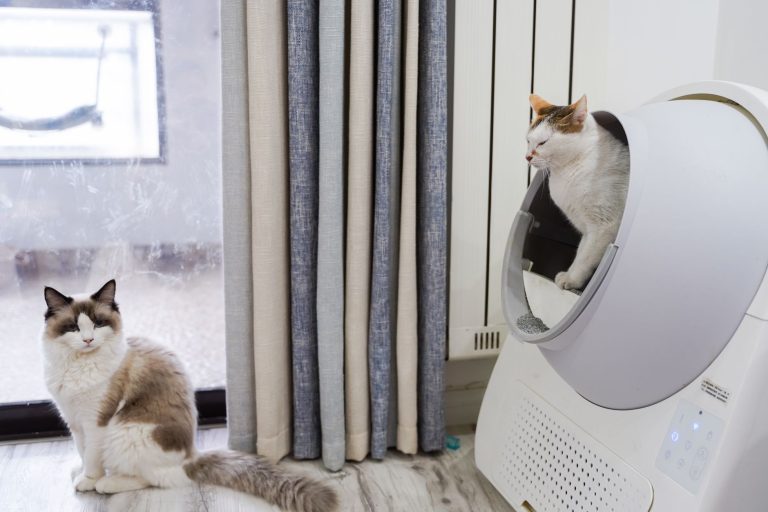
Cleaning method. The best boxes use a rotating globe or a gentle sifting rake that separates clumps and drops them into a sealed drawer. Cheaper “crystal tray” boxes just rake waste into a bin you swap out, which works but keeps costing you money.
Waste drawer size. A bigger drawer means fewer times you have to deal with it. This is the whole point. A tiny drawer in a multi-cat home fills up fast and defeats the purpose.
Safety sensors. This is non-negotiable. The machine has to know a cat is inside and refuse to cycle. We’ll come back to this, because it’s the scariest part of the whole category.
Odor control. Sealed drawers, carbon filters, and UV sterilization all help. A self-cleaning box that traps all the waste in one place can actually smell worse than a normal box if it has no odor system.
Ongoing costs. Some boxes need proprietary refills or a monthly app subscription to unlock their best features. That $299 box is not really $299 if it needs $33 refill rings every few weeks.
The 2026 Self-Cleaning Litter Box Comparison
Here’s how the top models stack up. Prices bounce around with sales, so treat these as ballpark numbers, not carved in stone.
| Model | Rough Price | Cleaning Style | Waste Drawer | Extra Costs | Best For |
|---|---|---|---|---|---|
| Litter-Robot 4 | ~$699 | Rotating globe | Large | None required | Best overall, single or 2-cat |
| Litter-Robot EVO | ~$599 | Rotating globe | Large | None required | Same tech, smaller footprint |
| Litter-Robot 5 Pro | ~$799+ | Rotating globe | Large | Whisker+ ~$7.99/mo | Gadget lovers who want cameras |
| PetKit Puramax 2 | ~$299 | Rotating drum | Large | Care+ ~$7.99/mo for full AI | Budget-conscious tech fans |
| Catlink Luxury Pro-X | ~$500 | Rotating globe | 13L (huge) | Carbon filter refills | Multi-cat, heavy odor control |
| HHOLOVE Litter Box Pro | ~$220 | Rotating drum | Medium | Occasional filters | Best value, adds UV cleaning |
| PetSafe ScoopFree Crystal | ~$150-200 | Raking, crystal tray | Disposable trays | Trays cost extra ongoing | Cheapest entry point |
| Petlibro Luma | ~$300 | Open-air sifting | Medium | Filters | Timid cats who hate enclosed globes |
Is the Litter-Robot 4 Actually Worth It?
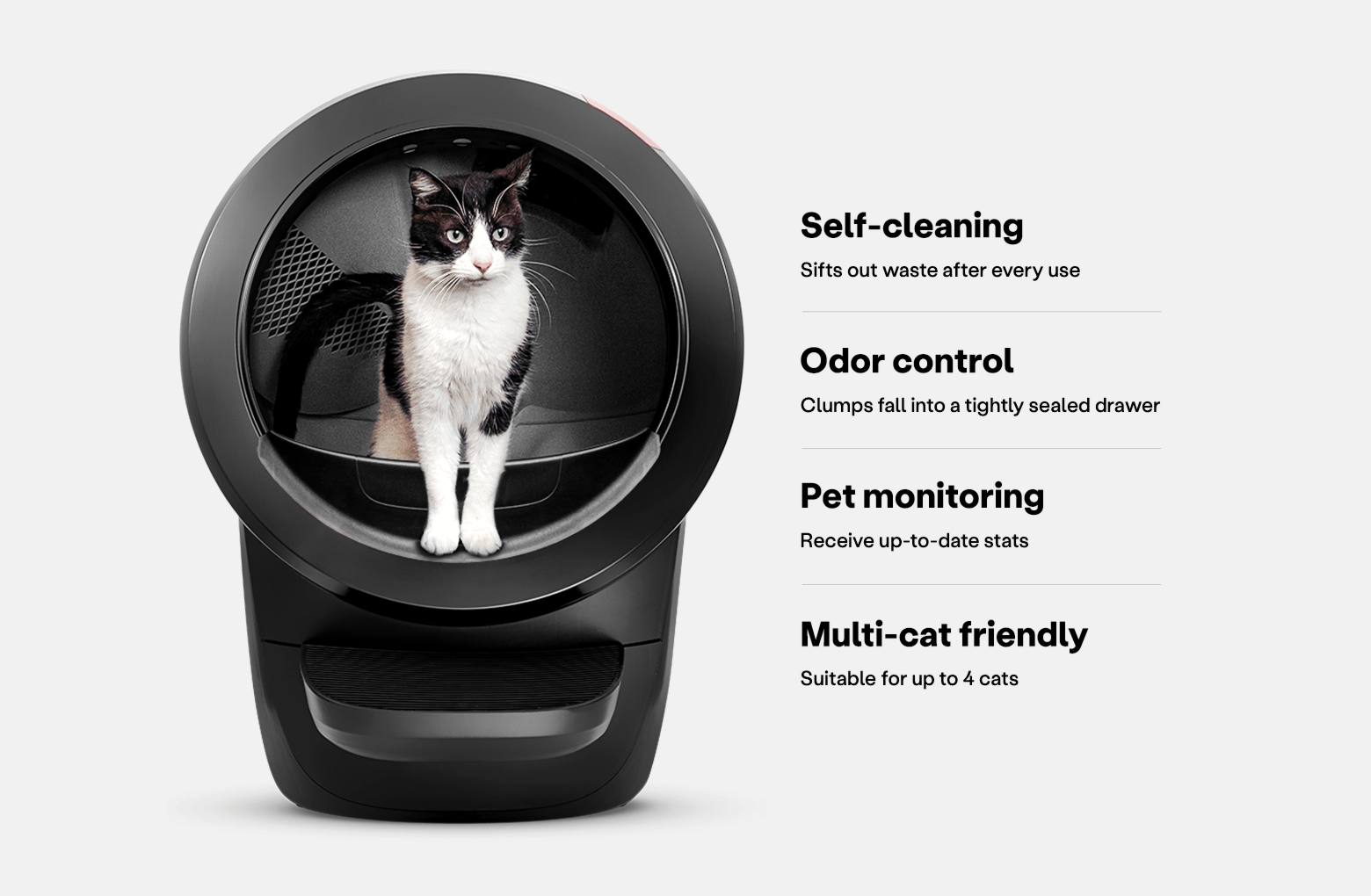
Short version: yes, if you can stomach the price. It earns the top spot for real reasons, not just marketing.
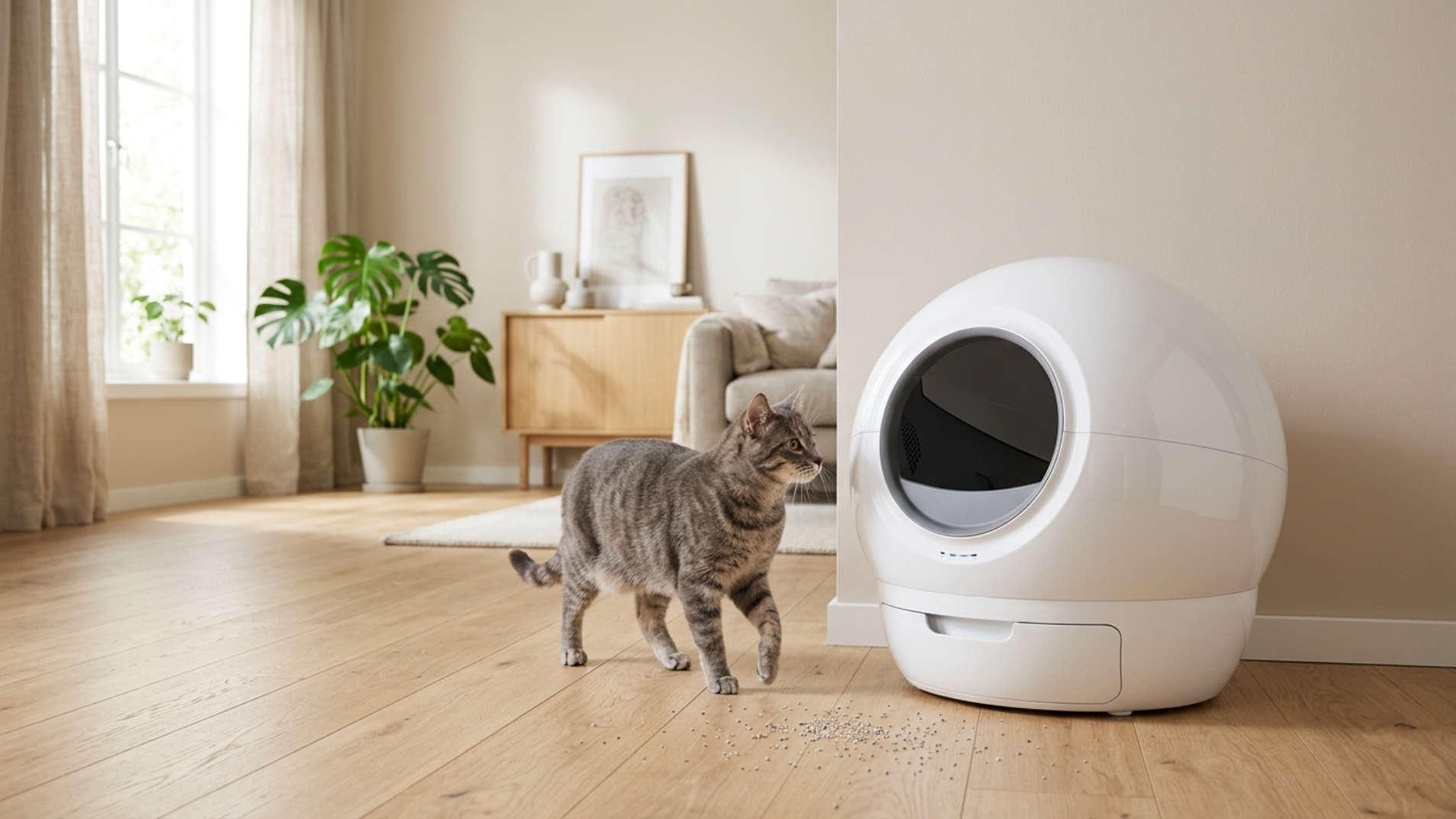
It’s noticeably quieter than most competitors, which matters more than you’d think, because a loud machine scares cats away from using it. It also does the best job of cutting down on litter getting flung across your floor. If tracked litter drives you nuts, this is the box that fights it hardest. (If you’re battling tracking on any box, our guide to low-tracking cat litter helps too.)
The globe design seals waste into a big drawer at the bottom, and the odor control is genuinely good. The app tells you when your cat used it and how often, which turns out to be a sneaky-useful health tool.
The honest downside? The most common complaint is the drawer sensor sometimes reading “full” when it isn’t. When that happens, the machine refuses to cycle until you recalibrate the sensor. It’s a five-minute fix, but it’s annoying on a box this pricey.
There’s also the new Litter-Robot EVO at around $599, which is the same core technology in a smaller body. If your bathroom or laundry nook is tight on space, the EVO is arguably the smarter buy. And the flashy Litter-Robot 5 Pro adds cameras and AI, but it also nudges you toward a monthly subscription. For most people, that’s paying extra to livestream your cat pooping. Cool, but optional.
The Best Cheaper Alternatives That Don’t Feel Cheap
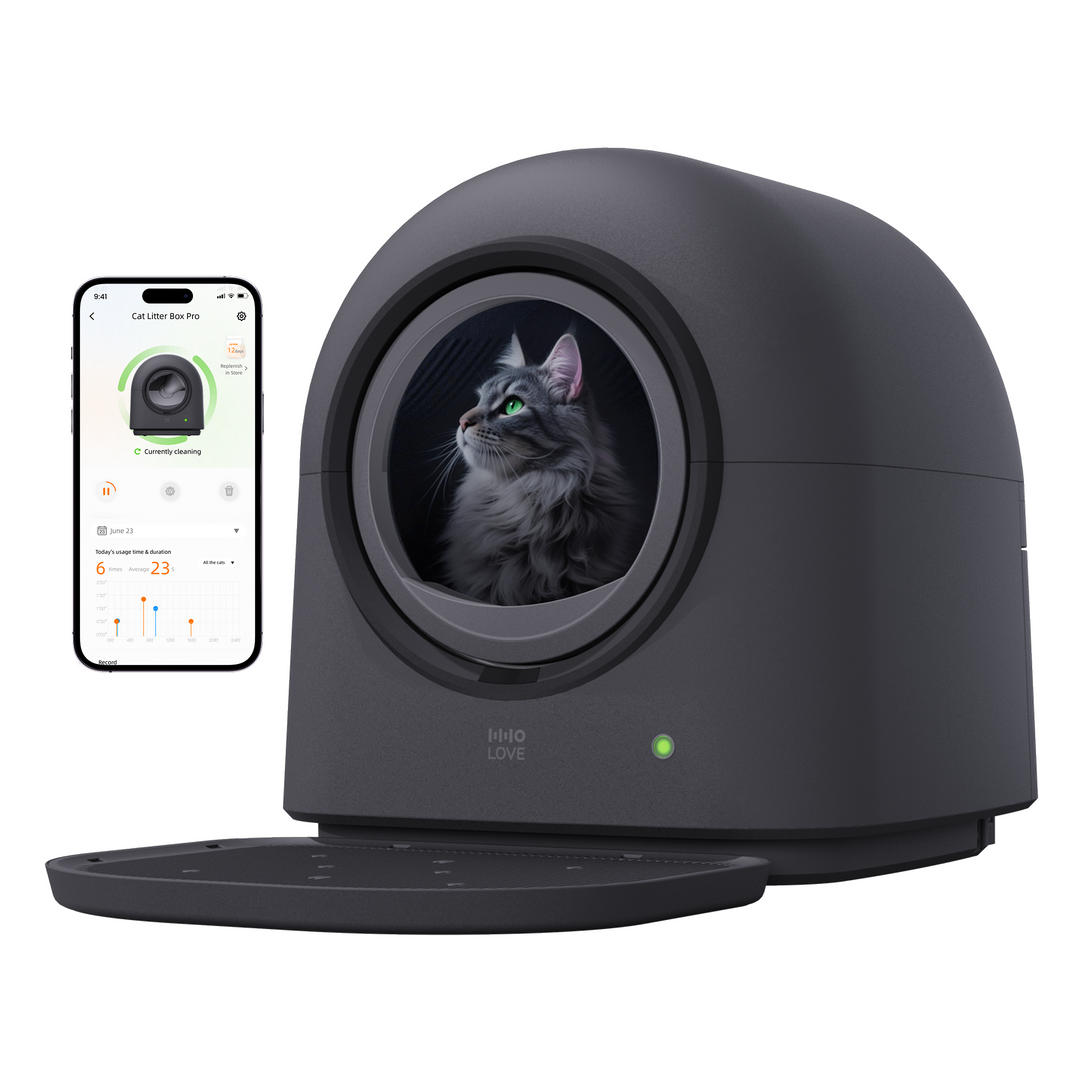
Not everyone wants to spend $700 on a poop machine, and you don’t have to.
The HHOLOVE Litter Box Pro is the standout value pick. At around $220, it delivers most of what the Litter-Robot does at roughly a third of the price, and it throws in UV sterilization to boot. For a lot of homes, this is the sweet spot.
The PetKit Puramax 2 is another strong budget contender, often on sale near $299. Just remember the fine print: its full smart features live behind a monthly Care+ subscription, and some versions want proprietary refill supplies. Do that math before you buy.
If you have multiple cats and odor is your main enemy, the Catlink Luxury Pro-X has a massive 13-liter drawer plus carbon and UV odor control. It handles a busy household without you emptying it constantly.
And if your cat is nervous or hates climbing into an enclosed globe, the open-air Petlibro Luma is friendlier for timid cats who would otherwise boycott the whole thing.
The Part the Ads Won’t Tell You
Here’s where I have to be the friend who tells you the truth instead of the salesperson who wants the sale.
Self-cleaning litter boxes have real downsides, and a few are genuinely serious.
Entrapment risk. These machines cycle a moving mechanism. If the safety sensors fail and your cat is inside, that’s a nightmare scenario. The good news: reputable brands like Whisker build in cat-detect and weight sensors specifically to prevent this. The bad news: cheap, no-name boxes sometimes don’t, and there have been tragic cases. Never buy a self-cleaning box without proven safety sensors. This is the one corner you never cut.
You stop seeing the poop. This sounds like a feature. It’s actually a hidden risk. Your cat’s waste is one of the earliest warning signs of trouble, especially urinary blockages, which can turn deadly fast in male cats. When a machine whisks it away instantly, you might miss the change until your cat is already in pain. Peek in the drawer regularly and don’t go fully hands-off.
Ammonia can settle low. Sealing waste fast is great, but ammonia is heavier than air and can pool in the lower zone where your cat’s face actually is. Ventilation and regular full cleanings still matter. A robot is not an excuse to ignore the box for a month.
Small cats and kittens. Most globe-style boxes need a cat to hit a minimum weight of around 3 pounds to trigger the safety sensor. Tiny kittens can fall below that, so they should stick to a regular open box until they’re big enough.
Which Cats and Homes Should Skip It
Be honest with yourself here. A self-cleaning box is not right for everyone.
Skip it, at least for now, if you have kittens under about 3 pounds, a cat recovering from illness where you need to monitor output closely, or an extremely anxious cat who panics at any noise or movement.
Also think twice if you have a big multi-cat crowd and only want to buy one small box. Cats can be territorial about the litter box, and one machine for five cats causes exactly the traffic jams and standoffs you’re trying to avoid. If a dog in the house is also raiding the box, that’s a different fight covered in our dog-proof litter box guide.
For everyone else, a solid self-cleaning box is one of the best quality-of-life upgrades you can buy as a cat owner.
So, Final Verdict: Is the Litter Robot Worth It?

For a busy single-cat or two-cat home, yes. The Litter-Robot 4 is the best overall pick in 2026, and the time it buys back is worth real money if you value your evenings.
If that price makes you wince, the HHOLOVE Litter Box Pro around $220 gives you most of the magic for a third of the cost, and it’s the value pick I’d point most people toward first.
If you have multiple cats, go bigger with the Catlink Pro-X and its giant drawer. And if you have a tiny kitten or a cat who needs monitoring, wait and stick with a classic box for now.
Whatever you pick, the box is only half the battle. Litter choice, placement, and airflow still decide whether your home smells like a home or like a litter box. If odor is your real problem, start with our guide on how to get rid of litter box smell, then let the robot handle the scooping.
Your cat gets a fresh box every time. You get your weekends back. That’s a trade worth making.