GigaPaw.com participates in affiliate programs including Amazon Associates. We earn from qualifying purchases. Content is for informational purposes only—consult a licensed veterinarian for pet medical advice.
Are Black Cats Really Bad Luck? 15 Black Cat Myths and Facts Debunked

Black cats have one of the worst PR campaigns in animal history. They’ve been called witches, demons, omens of death, and walking bad luck. Meanwhile, half the world thinks they’re walking good luck and the other half is just trying to take a clear photo of one.
So which is it? Are black cats really cursed? Are they bred for evil? Are they secretly all the same cat? And why do they look red in the sun sometimes?
Here are the 15 most stubborn black cat myths, what the actual facts are, and why your inky little gremlin is probably the luckiest thing that ever happened to you.
The Quick Answer
No. Black cats are not bad luck. That whole idea is a medieval European superstition that got exported to America with the Pilgrims and never quite died. In most of the world, including Scotland, Ireland, England, Japan, and Germany, black cats are considered good luck.
The bad luck thing comes from a single 13th-century document (more on that in a minute), centuries of witch panic, and Hollywood horror movies that wanted a cheap visual shorthand for “spooky.” That’s the whole origin story.
If you want to nerd out on coat genetics generally, our complete cat coat colors chart breaks down every pattern and what it’s called. For now, let’s settle the black cat thing once and for all.
A Quick History of How Black Cats Got Cancelled
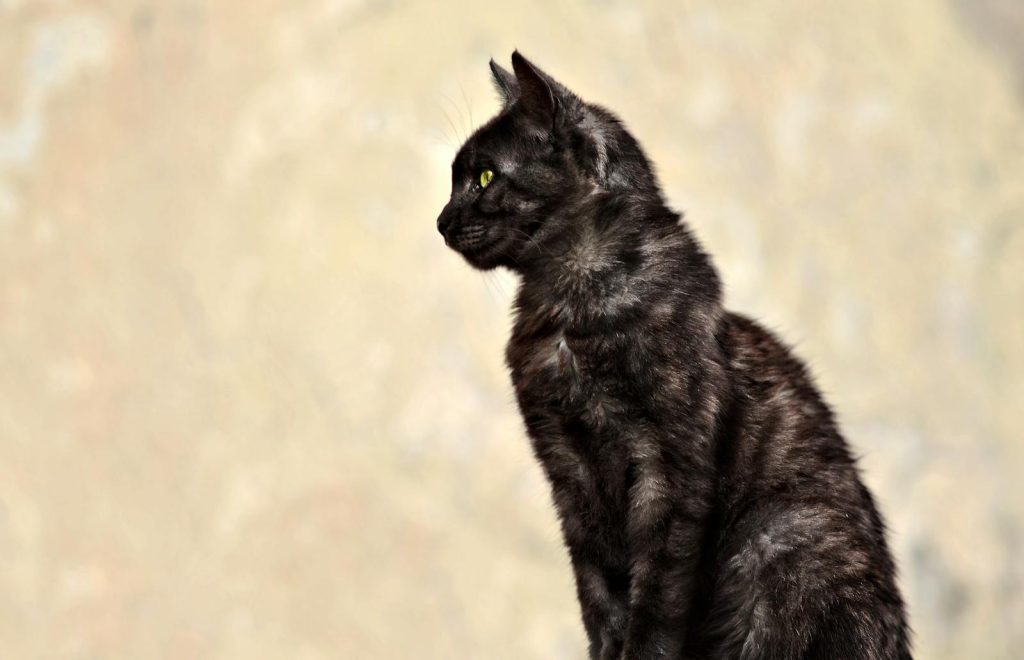
Before we get to the myths, you need the backstory. Because the “black cats are evil” narrative didn’t come from nowhere. It came from a very specific place, in a very specific century, and we can name names.
Ancient Egypt: Black Cats Were Holy
In ancient Egypt, all cats were sacred, but black cats had a particularly strong association with the goddess Bastet, the protector of home and women. Harming a cat in Egypt was a crime, and some sources say it carried the death penalty.
Egyptians believed black cats brought blessings into the home. They were mummified, buried with their owners, and treated as divine. That’s the start.
Medieval Europe: The Reputation Crash
Fast-forward to 1233. Pope Gregory IX issued a document called Vox in Rama that, among other things, declared black cats to be agents of the devil. This kicked off centuries of black cats being killed alongside accused witches, particularly during the witch trials of the 1500s and 1600s.
This is the moment the reputation flipped. Some historians have even suggested (it’s debated) that the mass killing of cats during this period contributed to rat populations exploding, which made the bubonic plague worse. Whether or not that’s true, it’s a wild possibility.
America: The Superstition Imported Itself
When the Pilgrims sailed to North America, they brought the witch-panic with them. Salem, 1692. Black cats got swept up in the trials alongside the accused women. The bad luck association stuck around in American folklore basically untouched for the next 300+ years.
That’s why your grandma probably told you not to let a black cat cross your path. It’s a Salem witch trial leftover.
15 Black Cat Myths, Debunked
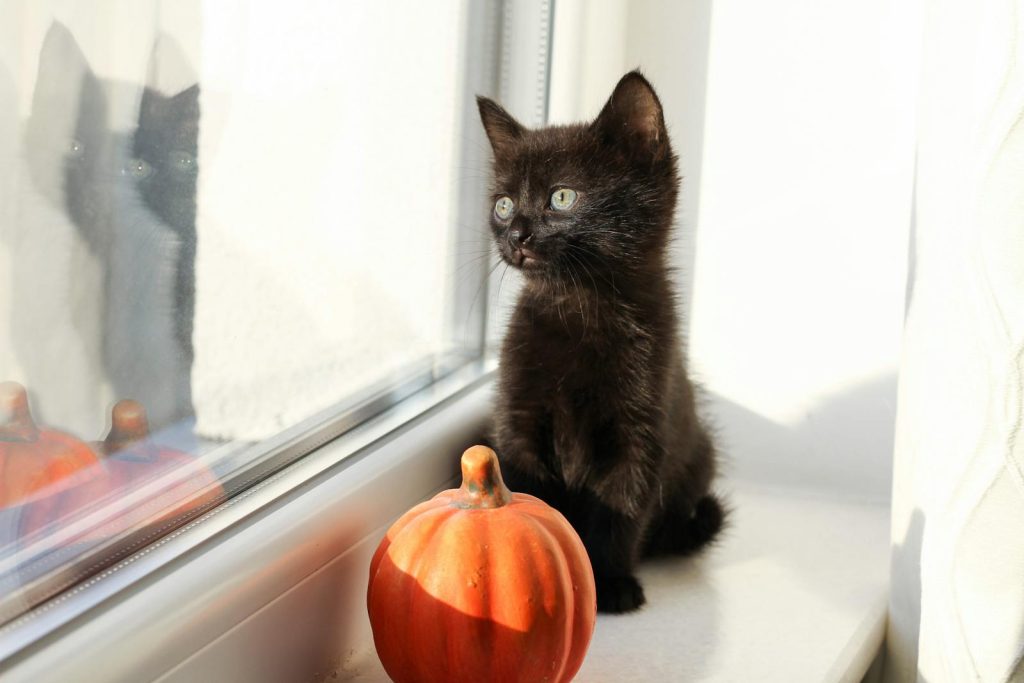
Here are the most common myths people still believe, with the actual facts.
Myth 1: Black Cats Are Bad Luck
Fact: Only in some places. In Scotland, a strange black cat showing up at your house means prosperity is coming. In Japan, black cats are considered very lucky, especially for single women looking for love. In England and Ireland, a black cat crossing your path is good luck. In Germany, a black cat crossing right-to-left is good, left-to-right is bad. It’s all cultural.
Myth 2: Black Cats Are Witches in Disguise
Fact: This one comes straight from medieval Europe. There’s no folkloric tradition of this in most of the rest of the world. Your cat is not a witch. Probably.
Myth 3: Shelters Don’t Adopt Out Black Cats Around Halloween
Fact: Most shelters do adopt out black cats year-round, including October. The fear of “satanic ritual abuse” of black cats is largely an urban legend. The ASPCA, Humane Society, and most major rescues have stated there’s no evidence of widespread Halloween-related harm to adopted black cats. Some shelters do extra screening in October, but adoptions continue.
Myth 4: Black Cats Are Less Likely to Get Adopted
Fact: This is the famous “black cat syndrome” and the data is more nuanced than you’d think. Black cats DO stay in shelters slightly longer on average, but it’s mostly because black cats are more numerous in shelters in the first place. A 2013 ASPCA study found that black cats actually have a slightly higher adoption rate than the average. They just have more cats to begin with, so the absolute numbers look worse.
Myth 5: Black Cats Are All One Breed
Fact: Not even close. The Cat Fanciers’ Association recognizes 22 different breeds that can have solid black coats, including Persian, Maine Coon, Scottish Fold, and Norwegian Forest Cat. The only breed bred specifically to look like a mini black panther is the Bombay, created in the 1950s by crossing a Burmese with a black American Shorthair.
Myth 6: Black Cats Are More Aggressive
Fact: No reputable study has linked coat color to temperament in cats. Personality is shaped by genetics (general, not coat-related), socialization, and individual experience. Your black cat is no more or less likely to bite you than your tabby. They’re all equally capable of being a menace.
Myth 7: All Black Cats Have Green Eyes
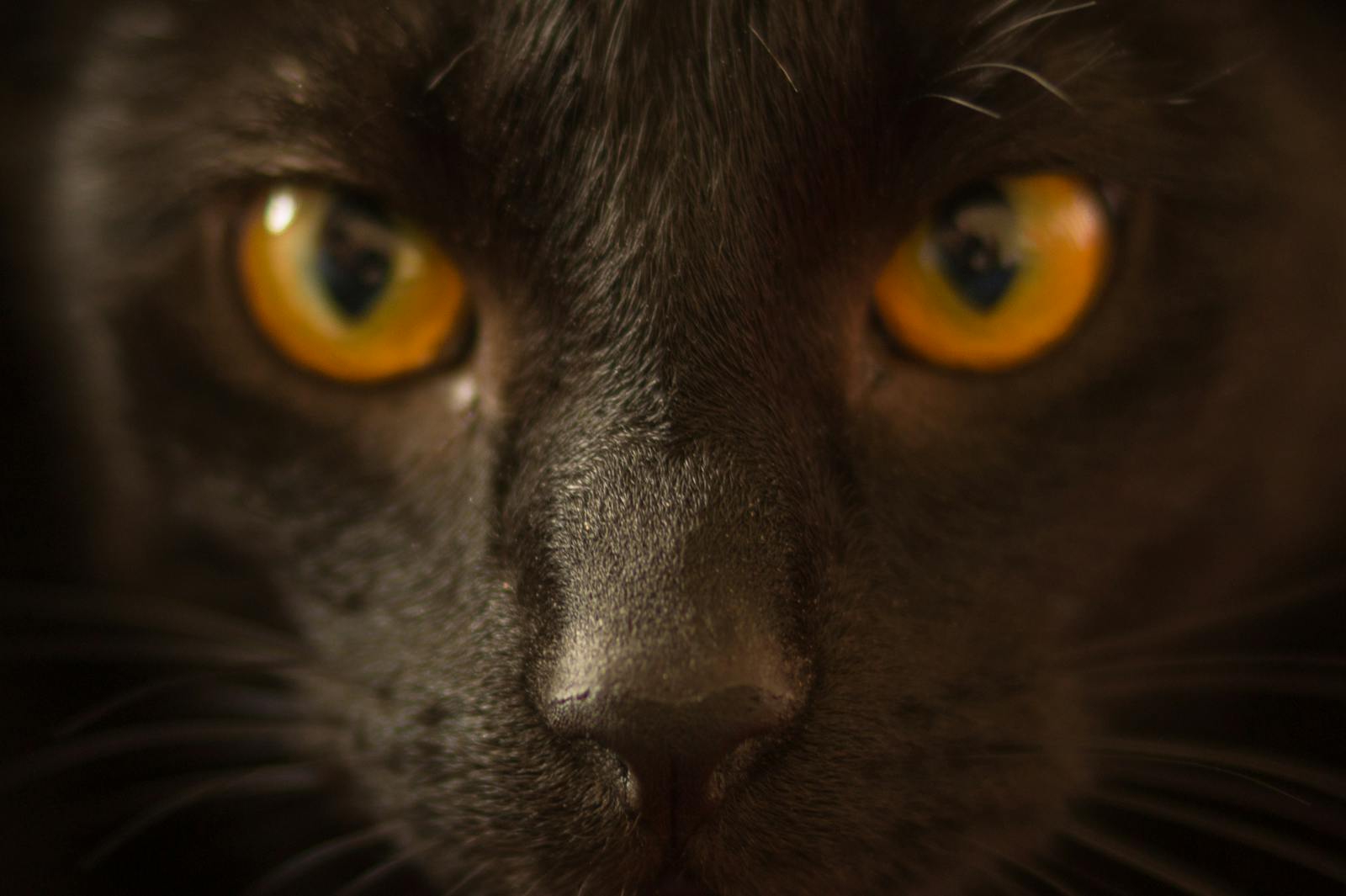
Fact: Most black cats actually have gold, yellow, or copper eyes, not green. High melanin in the fur usually correlates with high melanin in the iris, which produces the iconic warm-gold “spooky” eye glow. Green eyes do happen in black cats, but they’re less common than gold.
Myth 8: Black Cats Can’t See Well at Night
Fact: Black cats see exactly as well as any other cat. Their tapetum lucidum (the reflective layer behind the retina) works the same way regardless of fur color. They’re just harder for you to see in the dark.
Myth 9: Black Cats Are Always Male
Fact: This one’s interesting. Coat color in cats is partially sex-linked, but it’s the orange gene (O) that lives on the X chromosome, not black. So female calicos and torties are way more common than male ones, but black itself is autosomal and shows up about equally in males and females. The “all black cats are toms” idea is just wrong.
Myth 10: Black Cats Bring Bad Weather
Fact: Pure sailor superstition. Old sailors believed a black cat onboard would bring storms (and also good luck, because superstition is inconsistent). Cats can sense pressure changes the same as any animal, so they may act weird before a storm, but they don’t cause it.
Myth 11: Black Cats Are Harder to Photograph
Fact: This one is actually true. Cameras struggle with low-contrast subjects, and a black cat against most backgrounds is exactly that. The trick is side lighting, a brighter background to outline the cat’s silhouette, and exposure compensation to brighten the shot by half a stop or so.
Myth 12: A Black Cat in the House Means Death
Fact: Medieval nonsense. In Japanese folklore, a black cat in the house means a husband will arrive. In Scotland, it means money. The death-omen interpretation is purely a Western European leftover from the witch-hunt era.
Myth 13: Black Cats Don’t Show Up in Pet Photos / Don’t “Show Off” Their Personality
Fact: This one is a marketing problem, not a cat problem. Black cats look amazing in person. They just lose detail in low light, which made them look “flat” in old film photography. Modern phone cameras and proper lighting fix it instantly.
Myth 14: Black Cats Are Connected to the Devil
Fact: This came from one specific 13th-century papal document and has no basis in any other religion or folklore tradition. In Buddhist tradition, black cats are considered very lucky. In Norse mythology, the goddess Freyja rode a chariot pulled by two large cats. There is no global “evil cat” tradition. It’s a regional medieval thing.
Myth 15: Black Cats Will Steal a Baby’s Breath
Fact: This is an old wives’ tale from the 1700s, possibly tied to crib death misunderstandings. Cats don’t have any urge to “steal breath.” They might curl up near a warm sleeping baby for warmth, which is its own safety concern (keep cats out of baby cribs), but breath-stealing isn’t a thing.
Why Are Black Cats Black? The Actual Science
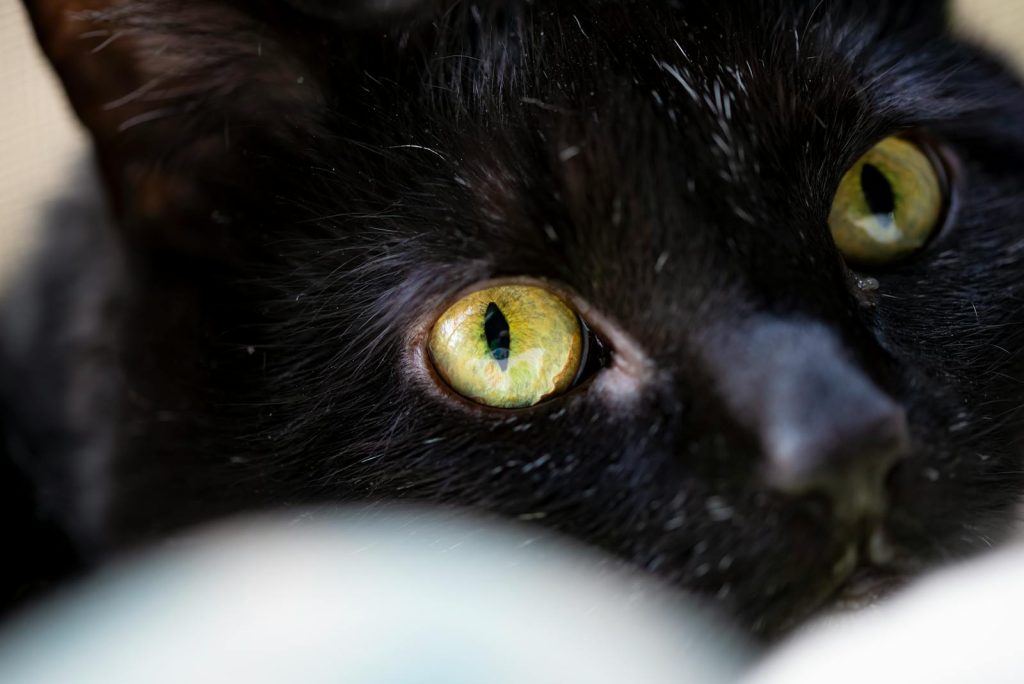
Black coats come from a mutation in the MC1R gene that produces high levels of eumelanin (the dark pigment). This same gene produces melanism in big cats too. That black panther in the zoo? It’s a melanistic jaguar or leopard. Your house cat is the same trick, just smaller.
Interesting side note: some research from the National Institutes of Health has suggested that the gene mutation causing black coats may also offer some resistance to diseases like FIV (feline immunodeficiency virus). The same melanism gene in humans is linked to HIV resistance. So your black cat might be slightly more disease-resistant than other cats, which is kind of a flex.
The “Rusting” Thing
If you have a black cat and they spend time in the sun, you might notice their fur takes on a reddish-brown tint, especially around the edges. This is called rusting and it has two main causes:
- Sun bleaching: UV light slowly breaks down eumelanin, exposing the underlying red pigment (pheomelanin). The hair literally fades.
- Tyrosine deficiency: Tyrosine is an amino acid the body uses to produce eumelanin. If your cat’s diet is low in tyrosine, their black fur can shift toward rust.
If the rusting is mild and seasonal, it’s probably just sun. If it’s heavy or year-round, talk to your vet about a tyrosine-supplemented diet.
Black Cats Around the World
| Country / Culture | What Black Cats Mean |
|---|---|
| Egypt (ancient) | Sacred, divine, associated with Bastet |
| Japan | Good luck, especially for love and marriage |
| Scotland | A black cat at your door means prosperity |
| England | Black cat crossing your path = good luck |
| Ireland | Sailor’s black cat at home = sailor returns safely |
| France | “Matagot” cats bring wealth if treated well |
| Germany | Right-to-left = good, left-to-right = bad |
| Norse mythology | Sacred to Freyja, goddess of love |
| United States | Inherited European bad-luck superstition |
If you’re keeping score, that’s a long list of “lucky” and one big “unlucky” outlier. Guess which culture made the most horror movies.
Famous Black Cat Breeds
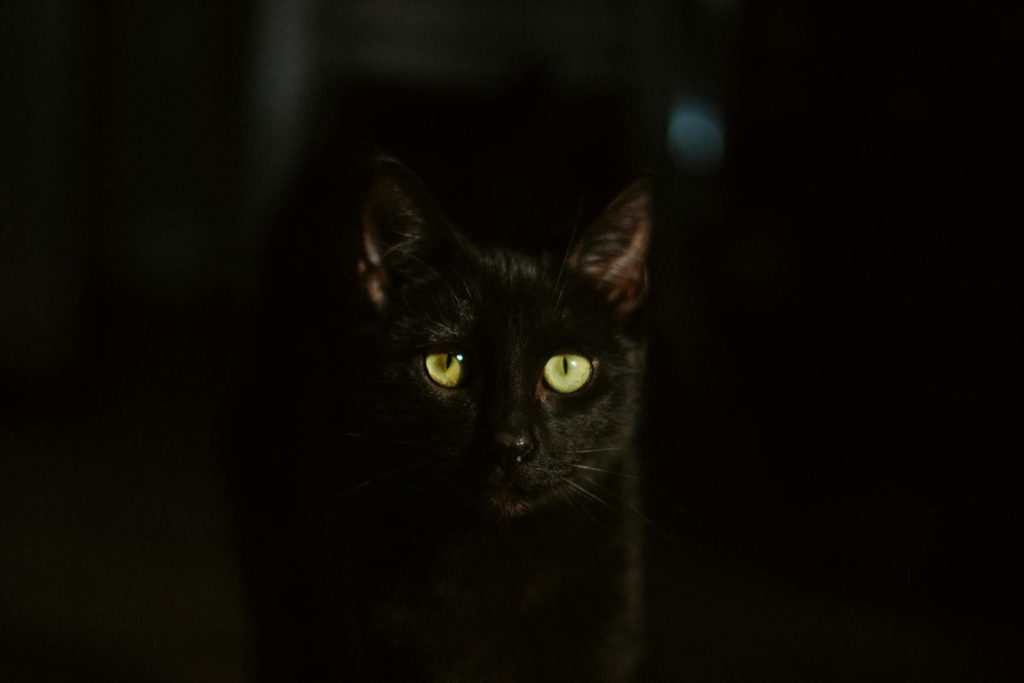
If you’re specifically looking for a black cat, these are your strongest contenders:
- Bombay: The only breed bred to look 100% like a miniature black panther. Always solid black, always gold-eyed.
- Black Persian: Long-haired, dramatic, looks like a tiny lord of darkness.
- Black Maine Coon: Gigantic, fluffy, friendly. Closer to a small dog than a cat.
- Black British Shorthair: Round, plush, slightly grumpy face.
- Black Oriental Shorthair: Tall, lean, glossy, can also have green eyes.
- Black Scottish Fold: All the charm plus the folded ears.
- Black American Shorthair: The classic. Hardy, social, the cat your grandparents had.
Quick FAQ
Are black cats really unlucky?
No. In most of the world they’re considered lucky. The bad-luck thing is a medieval European superstition that doesn’t hold up to history or science.
Why are black cats harder to adopt?
They’re not, actually. They sit in shelters slightly longer on average because there are more of them, not because adopters reject them. ASPCA data shows their adoption rate is comparable to or higher than the shelter average.
Are black cats a specific breed?
No. At least 22 different breeds can have solid black coats, plus all the mixed-breed black cats. Only the Bombay was bred specifically for the all-black look.
Why do some black cats turn reddish in the sun?
It’s called rusting, caused by sun bleaching of the black pigment or a tyrosine deficiency in the diet. Talk to your vet if it’s heavy.
What’s the best name for a black cat?
Whatever you want. But common picks: Salem, Binx, Luna, Onyx, Bagheera, Vader, Magic, Inky, Pepper, Jiji. Or just Bob. Bob the black cat is iconic.
Is it okay to adopt a black cat around Halloween?
Yes, despite the urban legend. Major shelters and humane societies continue to adopt out black cats in October. Some do extra screening, but they’re not “banned” from adoption.
The Bottom Line
Black cats got a bad rap from one specific moment in medieval European history and the witch panic that followed. The actual facts are way more interesting. They’re lucky in most of the world, no more aggressive than any other cat, often slightly more disease-resistant, available in dozens of breeds, and capable of looking like tiny panthers in your living room.
If you’ve ever passed on adopting a black cat because of some half-remembered superstition, you should know you’re walking past one of the most stunning animals on earth and falling for 13th-century propaganda. Go meet one. They’re great.
And if you want to nerd out further on cat coat patterns, the full cat coat colors chart covers every pattern with names, plus how to tell a black cat from a smoke, a tuxedo, and a black-tabby in low light.