GigaPaw.com participates in affiliate programs including Amazon Associates. We earn from qualifying purchases. Content is for informational purposes only—consult a licensed veterinarian for pet medical advice.
Cat Balcony Ideas: Safe Outdoor Spaces for Apartment Cats

Your cat is staring out the window right now, isn’t she?
That slow tail flick. The chattering jaw when a bird flies by. The look she gives you that basically says, “I could be out THERE, you know.”
If you live in an apartment, you’ve probably felt guilty about it. But here’s the thing — you don’t need a backyard to give your cat a taste of the outdoors. You just need a balcony and a solid plan.
Let’s talk about how to turn that boring slab of concrete into the best thing your cat has ever experienced.
Why Your Cat Needs Outdoor Time (And Why Balconies Are Tricky)
Cats are wired for the outdoors. The sun, the breeze, the sounds of birds being annoying — it all feeds their natural instincts to stalk, hunt, and lounge like tiny furry royals.
But here’s what most cat owners get wrong: they assume balconies are already safe.
They’re not. Not even close.
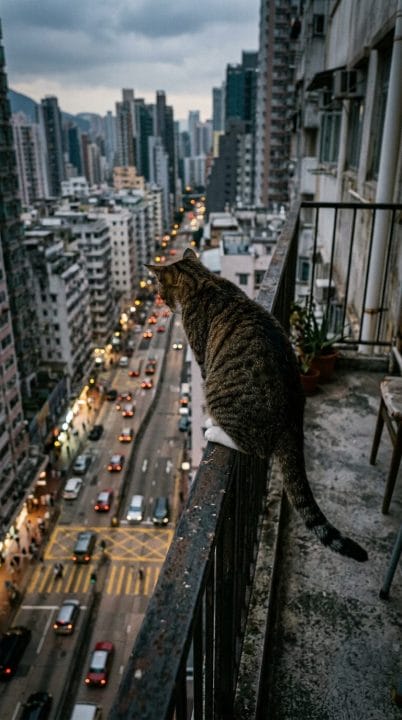
Veterinarians actually have a name for it — “high-rise syndrome.” It refers to the injuries cats get from falling off buildings, and it’s been studied since the 1980s when NYC vets started noticing a scary pattern.
About 90% of cats survive these falls with veterinary care, but roughly a third of those survivors wouldn’t have made it without emergency treatment. And the injuries are brutal — broken jaws, shattered leg bones, collapsed lungs, chest trauma.
The most unsettling part? Nearly 60% of fall victims are under one year old. Young cats are just too curious and too fearless for their own good. They’ll chase a butterfly right off the edge without a second thought.
And if you think your calm, well-behaved adult cat would never do something like that — 77% of these falls happen during summer when windows and balcony doors are open for ventilation. One unexpected loud noise, one pigeon landing on the railing, and your cat’s instincts take over before her brain catches up.
So yeah. Step one is making that balcony escape-proof.
The Big Decision: Full Enclosure vs. Partial Setup
Before you buy a single zip tie, you need to figure out what kind of setup makes sense for your space.
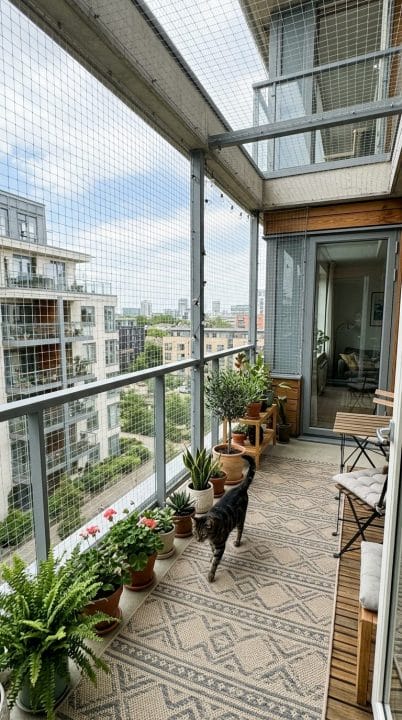
Option 1: Enclose the Entire Balcony
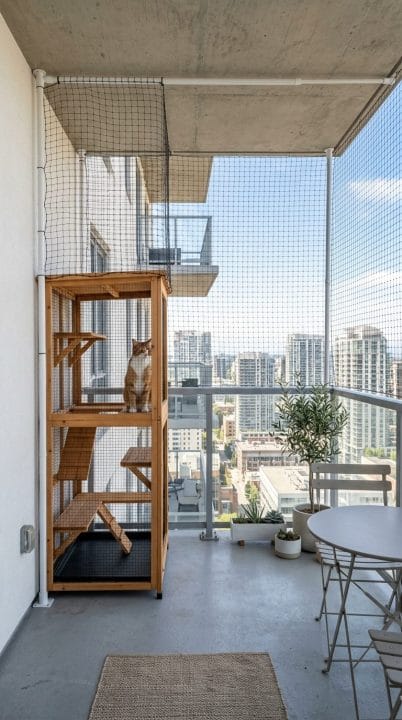
This is the gold standard. You basically turn the whole balcony into one giant cat-safe zone using mesh netting or cat-proof fencing panels.
It works great if your balcony is relatively small and you don’t mind sharing the entire space with your cat. (Spoiler: your cat will claim all of it anyway.)
The typical approach is to use close-knit mesh netting or wire panels attached from floor to ceiling, covering every possible escape route. The mesh openings should be small enough that your cat can’t squeeze through — remember, if a cat can fit its head through a gap, the rest of the body follows.
Budget-friendly version: Aluminum screen mesh attached to railings with copper wire or heavy-duty zip ties. One cat owner built a full balcony enclosure for under $100 using aluminum mesh and 3M outdoor tape.
Premium version: Invisible grills or professional-grade stainless steel netting systems. They look clean, barely obstruct your view, and they’re seriously sturdy.
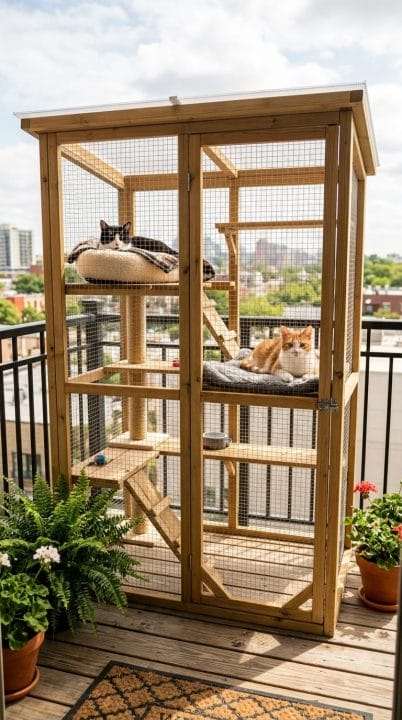
Option 2: Build or Buy a Catio
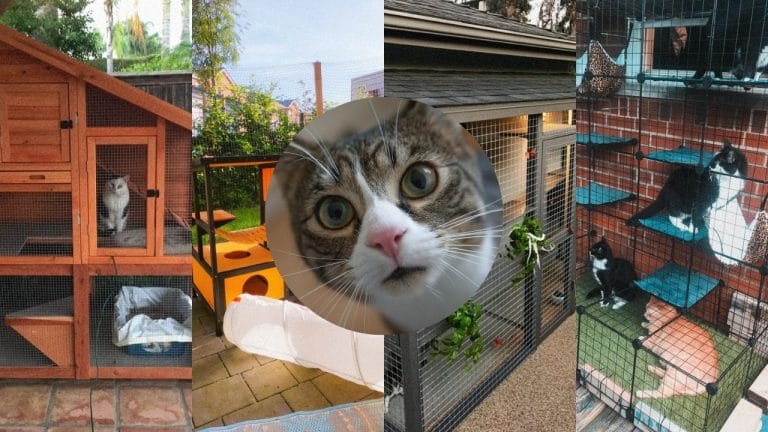
A catio — yes, that’s “cat patio” — is a freestanding enclosed structure that sits on your balcony. Think of it as a screened porch, but exclusively for your cat.
The beauty of a catio is that it doesn’t take over your entire balcony. You still get your morning coffee spot, and your cat gets her own outdoor room.
You can go three routes here:
| Approach | Cost Range | Best For |
|---|---|---|
| DIY build with PVC pipe and mesh | $50 – $150 | Handy people on a budget |
| Pre-made catio kit | $200 – $600 | Easy assembly, solid construction |
| Custom-built professional catio | $800 – $3,000+ | Maximum quality and design |
The biggest advantage of a catio? It’s portable. When you move apartments — and let’s be honest, renters always move — you can disassemble it and take it with you.
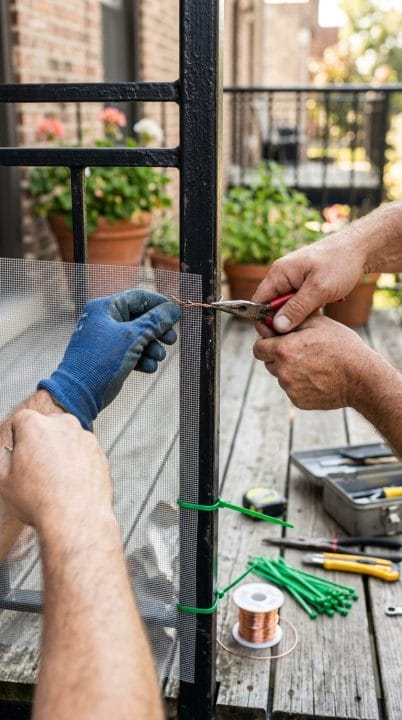
Option 3: The Netting-Only Approach
This is the most common DIY method. You attach cat-safe netting to your balcony railing and extend it up to the ceiling using tension rods or telescopic poles.
It works, but here’s the catch: cheap netting systems are genuinely unreliable. Multiple cat owners have reported flimsy telescopic poles and wobbly mounting brackets that don’t inspire confidence.
One guy on a 3rd-floor balcony went through two complete setups from Amazon before finding a proper German-made pole mount system that actually felt secure. His advice? Don’t cheap out on the mounting hardware. The net itself can be basic, but the poles and brackets holding everything together need to be rock solid.
What to Put Inside Your Cat Balcony
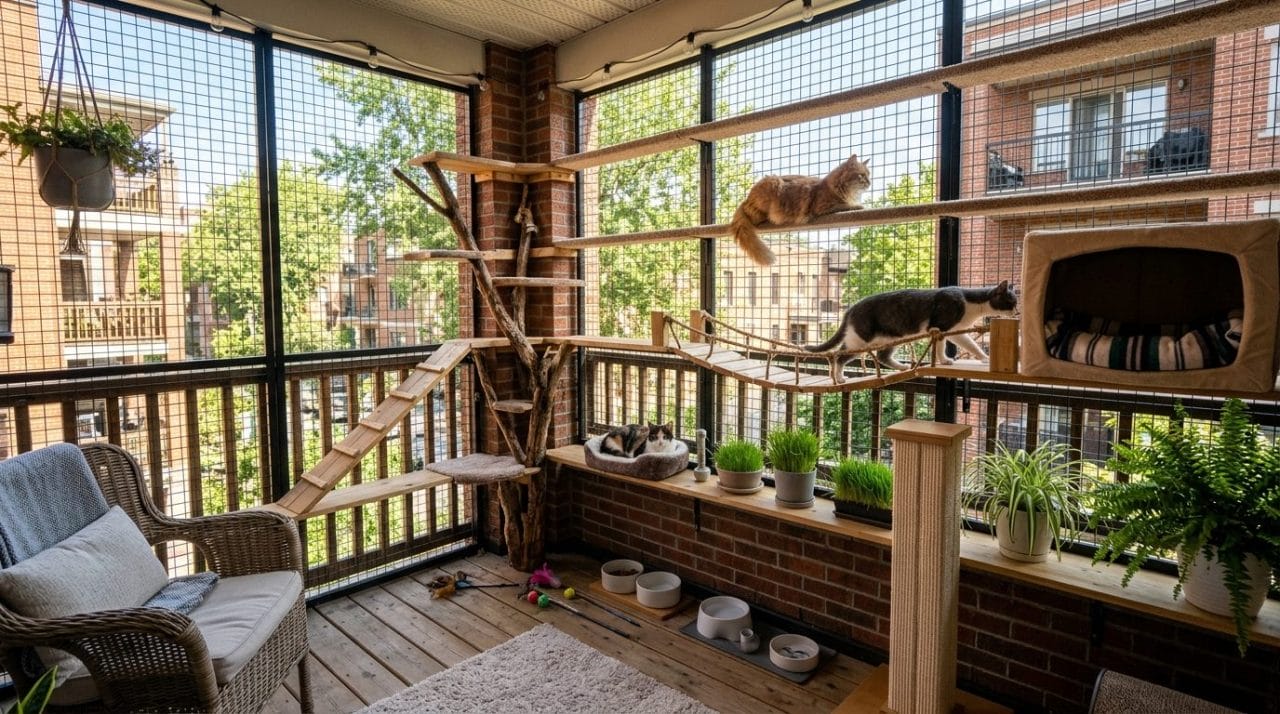
Once your balcony is locked down, the fun part starts. This is where you turn a safe space into an amazing space.
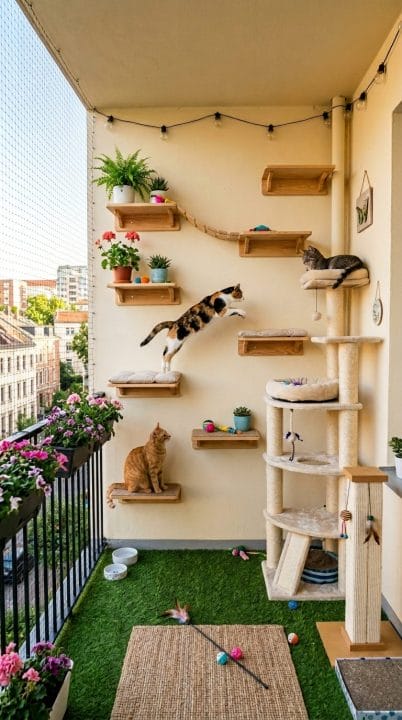
Vertical Space is Everything
Cats think in vertical dimensions. A flat balcony floor is boring. A balcony with shelves, perches, and climbing opportunities at different heights? That’s an adventure playground.
Wall-mounted shelves (See floating cat wall shelves on Amazon), a cat tree rated for outdoor use, or even stacked storage cubes can give your cat multiple levels to explore. Position at least one perch in a sunny spot and one in the shade — cats are picky about their sunbathing schedule.
Floor Comfort
Bare concrete is no fun for anyone. Throw down an outdoor rug or a section of artificial grass. The artificial grass is actually genius because it gives indoor cats that “outside” sensation under their paws without any maintenance hassle.
Make sure whatever you choose dries quickly after rain. Nobody wants a soggy, moldy cat rug.
Scratching Stations
Your cat will absolutely want to scratch things while enjoying the fresh air. An outdoor scratching post or a flat cardboard scratcher keeps her claws busy and saves your balcony furniture from destruction.
A Cozy Hideaway
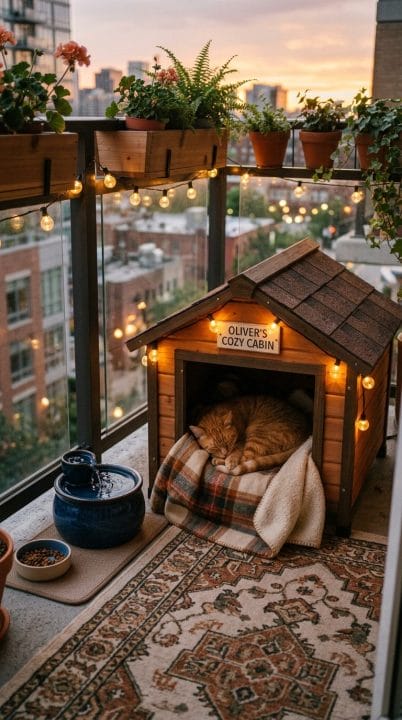
Even outdoors, cats need a spot where they can curl up and feel hidden. An insulated cat house, a covered bed, or even a simple box with a blanket works perfectly.
This is especially important for weather protection. If your balcony isn’t covered, your cat needs somewhere to retreat from surprise rain showers. In colder months, a heated outdoor cat pad can keep the space usable year-round.
Water and Snacks
Always keep fresh water available. A small cat water fountain is a great option — cats are naturally attracted to moving water, and the sound of trickling water adds a nice ambiance to the space.
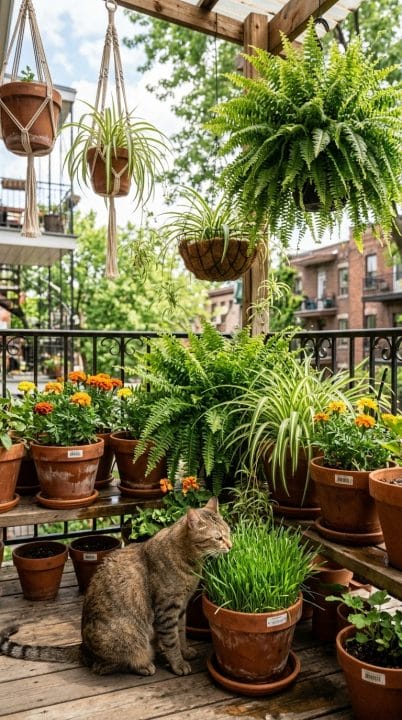
Cat-Safe Plants for Your Balcony Garden
Here’s where a lot of people accidentally mess up. You want your balcony to look nice, maybe grow some greenery, create a little garden vibe. But many common plants are straight-up toxic to cats.
According to the ASPCA, plants are among the top ten reported pet toxins. And cats, being cats, will chew on anything green that catches their eye.
Safe Plants Your Cat Will Love
| Plant | Why It’s Great |
|---|---|
| Cat grass (wheatgrass) | Cats love munching on it, and it may help with digestion |
| Catnip | Obviously. Your cat will think you’re the greatest human alive |
| Spider plant | Non-toxic, easy to grow, and purifies the air |
| Cat thyme | Attracts cats similarly to catnip, safe to chew |
| African violet | Adds color, completely safe for cats |
| Boston fern | Non-toxic and looks lush on a balcony |
| Parlor palm | Safe, low-maintenance, and handles shade well |
| Marigolds | Bright, cheerful, and cat-safe |

Plants That Will Send You to the Emergency Vet
Lilies are the number one offender. Tiger lilies, Easter lilies, Asiatic lilies, and daylilies can cause kidney failure in cats from even tiny exposures — including just the pollen. Keep these far, far away.
Other common balcony plants to avoid: sago palms, oleander, tulips, foxglove, and autumn crocus. If you’re ever unsure, check the ASPCA’s toxic plant database before buying.
Pro tip: Use hanging planters or elevated pots for decorative plants, and keep cat-safe grass and catnip at ground level where your cat can reach them easily.
Renter-Friendly Tips (Because Your Landlord is Watching)
Let’s be real. Most apartment leases have rules about what you can and can’t do to your balcony. Drilling into walls or permanently modifying railings might get you in trouble.
Here’s how to stay on your landlord’s good side:
- Use tension-based systems. Telescopic poles that press between the floor and ceiling don’t require any drilling. Same goes for adjustable curtain rods repurposed for netting.
- Go with freestanding structures. A catio that sits on the balcony floor without being attached to anything is technically just furniture. Hard to argue with that.
- Choose “invisible” netting. Some cat-proof netting is practically transparent from more than a few feet away. If management can’t see it, management can’t complain about it.
- Keep it removable. If your building needs to paint or do maintenance, you want to be able to take your setup down quickly and put it back up just as fast.
- Check your lease first. Some buildings explicitly prohibit balcony enclosures. It’s better to ask permission than beg forgiveness when your security deposit is on the line.
Common Mistakes That Could Ruin Everything
Even well-intentioned cat owners make these errors. Don’t be one of them.
- Leaving gaps. If there’s a gap bigger than about 1.5 inches anywhere in your enclosure, your cat will find it. Cats are basically liquid when they want to be. Check every corner, every seam, every joint.
- Ignoring the ceiling. A lot of people only net the sides and forget that cats can climb straight up. If your balcony doesn’t have a ceiling, you need to net the top too.
- Using weak materials. Regular window screen mesh might stop mosquitoes, but it won’t stop a determined cat. Use materials rated for pet containment — 14 to 16 gauge galvanized or vinyl-coated wire with a small grid is what many catio builders recommend.
- Forgetting about heat. Enclosed balconies with glass can turn into ovens during summer. If your balcony is glazed, make sure there’s ventilation, and never leave your cat out there with the windows closed on a hot day.
- Putting bird feeders on the balcony. I know it seems like great cat TV, but it actually tempts your cat to lunge and potentially damage the enclosure. Also, it’s just mean to the birds.
How to Introduce Your Cat to the Balcony
Don’t just open the door and shove your cat outside. Some cats will sprint out like they’ve been freed from prison. Others will take one step, sniff the air, and immediately retreat to the couch.
Start with supervised visits. Let your cat explore for short periods while you’re sitting right there. Watch how she reacts to sounds, birds, and the open sky above.
Add familiar scents. Put one of her favorite blankets or a worn t-shirt out on the balcony. Familiar smells signal “safe zone.”
Don’t force it. If your cat hates the balcony at first, give it time. Leave the door open so she can come and go on her own terms. Most cats come around within a week or two.
The Bottom Line
You don’t need a house with a yard to give your cat an outdoor life. A balcony, some mesh, a few plants, and a little creativity — that’s all it takes.
Your cat doesn’t care about square footage. She cares about the sun on her fur, the wind ruffling her whiskers, and the satisfaction of watching a pigeon she’ll never catch.
Build her that space. She’ll spend the rest of her nine lives thanking you for it.
Well, she won’t actually thank you. She’s a cat. But you’ll see it in the way she stretches out on that sunny perch, eyes half-closed, purring like a tiny engine.
And honestly? That’s better than a thank you.