GigaPaw.com participates in affiliate programs including Amazon Associates. We earn from qualifying purchases. Content is for informational purposes only—consult a licensed veterinarian for pet medical advice.
The Complete Cat Coat Colors Chart (With What Each Pattern Is Actually Called)

You’ve been calling your cat “orange-ish with stripes” for three years.
It’s fine. We’ve all been there.
But cats actually have a surprisingly organized system of colors and patterns — and once you learn the names, you’ll never look at a cat the same way again.
This is the complete cat coat colors chart, broken down so any human can understand it.
It All Starts With Two Pigments
Here’s something wild: every single cat coat color in existence comes from just two pigments.
That’s it. Two.
- Eumelanin — makes black and brown tones
- Pheomelanin — makes red, orange, and cream tones
Every tabby, every calico, every silvery blue cat you’ve ever seen? All of them are just different genetic spins on those two pigments. The genes dial up, dial down, dilute, or block these pigments in different ways — and that’s how you get the entire rainbow of cat coats.
The Base Cat Colors Chart
Before we get to patterns, let’s talk colors. Patterns are the shape of the markings. Colors are the actual pigment. Your cat has both.
| Color | Also Called | Description | Genetics |
|---|---|---|---|
| Black | — | Deep, solid black | Full eumelanin, no dilution |
| Blue | Gray | Muted, soft gray | Black + dilution gene |
| Chocolate | Brown | Warm, rich brown | Recessive brown gene (bb) |
| Lilac | Lavender, Frost | Pale gray-pink | Chocolate + dilution gene |
| Cinnamon | — | Warm light brown | Rare recessive variant of brown |
| Fawn | — | Pale, muted beige | Cinnamon + dilution gene |
| Red | Orange, Ginger | Vivid orange | Pheomelanin, sex-linked gene |
| Cream | — | Pale, muted orange | Red + dilution gene |
| White | — | Pure white | Masking gene (hides other colors) |
Lilac and fawn are genuinely rare. To produce either, a cat needs to be homozygous recessive for both the brown gene and the dilution gene at the same time. Two separate recessive traits stacking together. That’s why you mostly see them in specific pedigree lines.
White isn’t actually a color. It’s more like a genetic override. The KIT gene essentially masks whatever other color the cat would have been. A white cat could be genetically black, orange, or anything else — you just can’t see it.
The Cat Coat Patterns Chart
Now the fun part.
| Pattern | What It Looks Like |
|---|---|
| Solid | One color, all over, no markings |
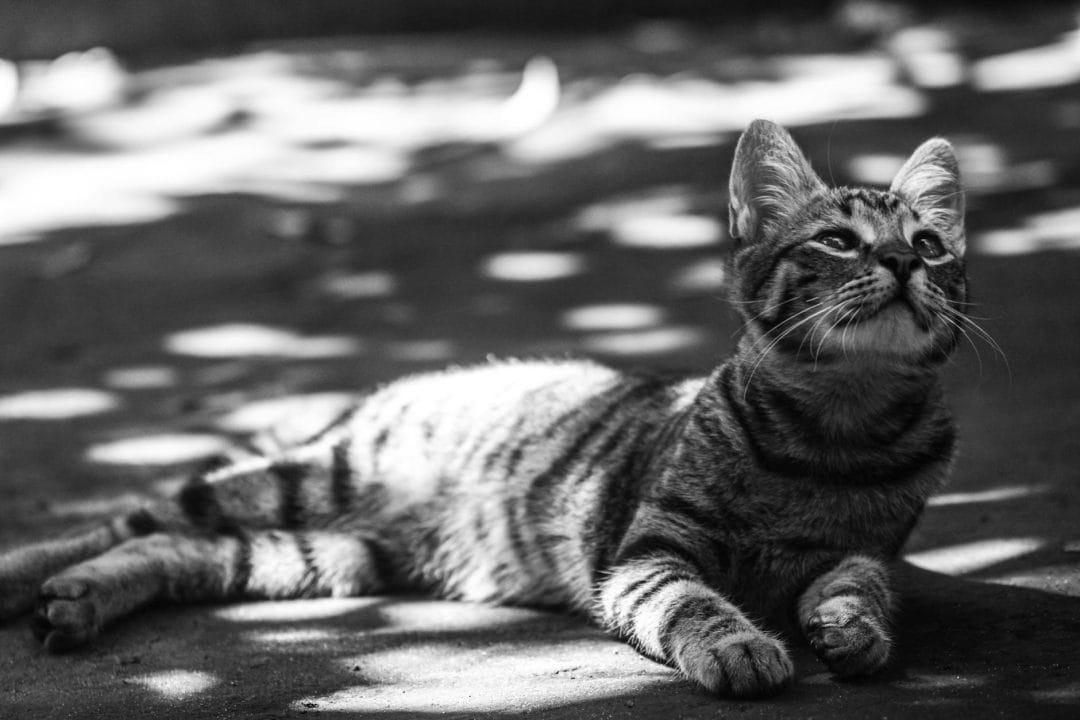
| Tabby – Mackerel | Narrow, parallel vertical stripes — the classic “tiger cat” |
| Tabby – Classic | Bold swirling whorls and bullseye on the sides |
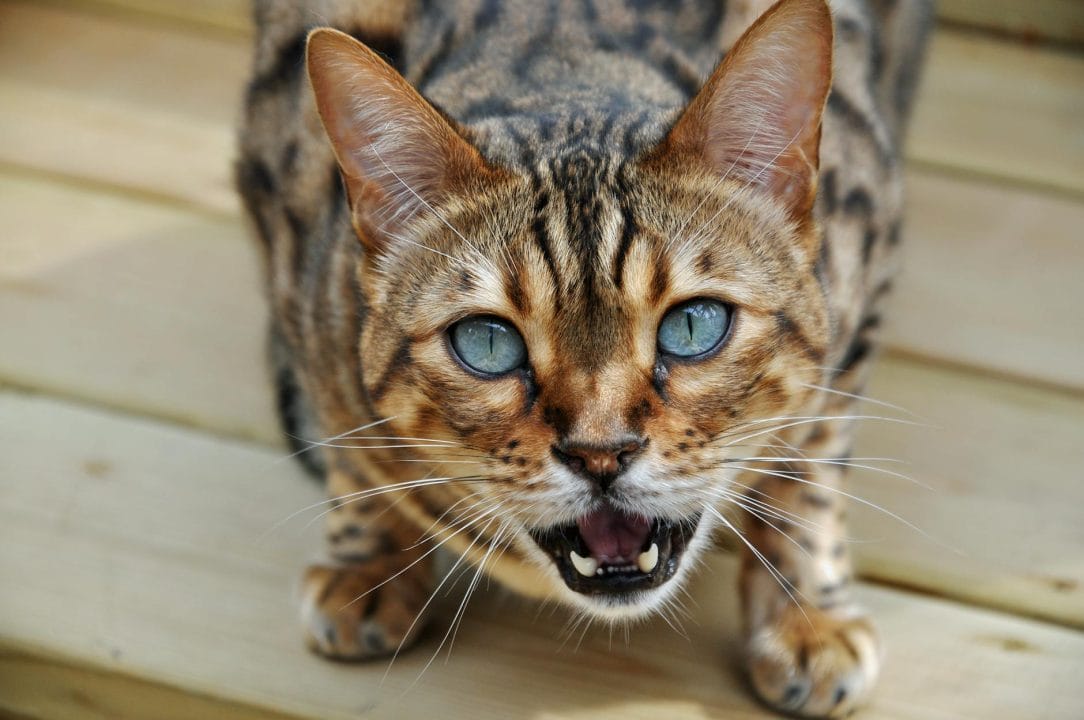
| Tabby – Spotted | Spots instead of stripes (think Bengal vibes) |
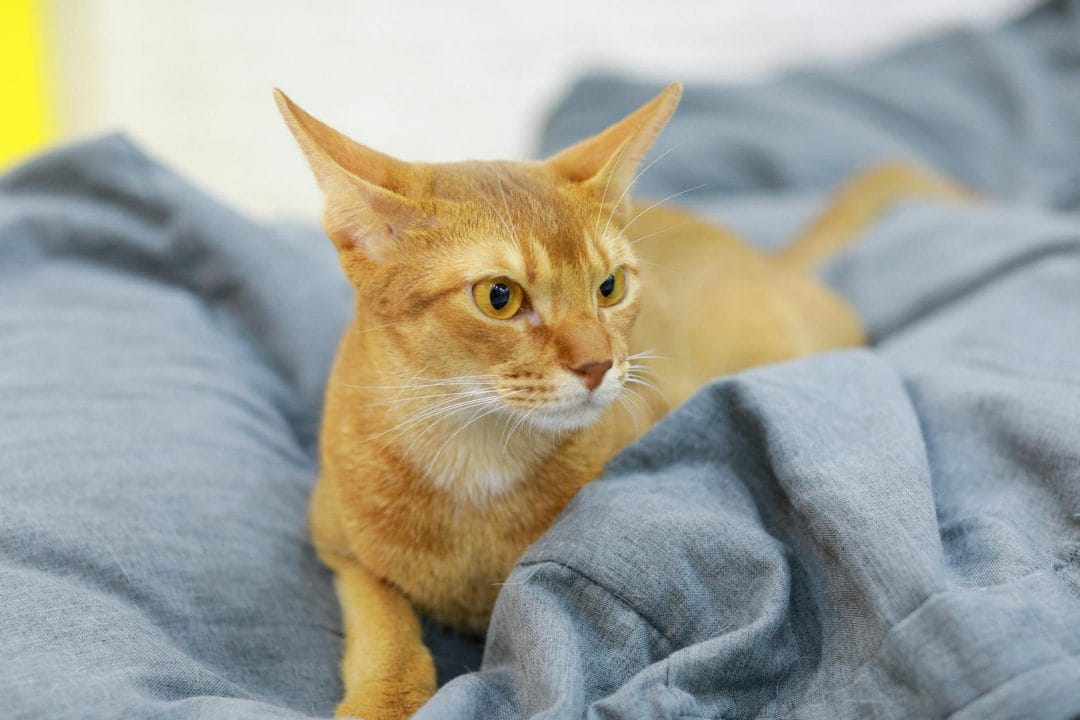
| Tabby – Ticked | No stripes on body, just banded individual hairs (Abyssinian-style) |
| Tortoiseshell | Patchy mix of black and red/orange, no white |
| Calico | Tortoiseshell + large white patches |
| Bicolor | White + any other color, roughly 50/50 |
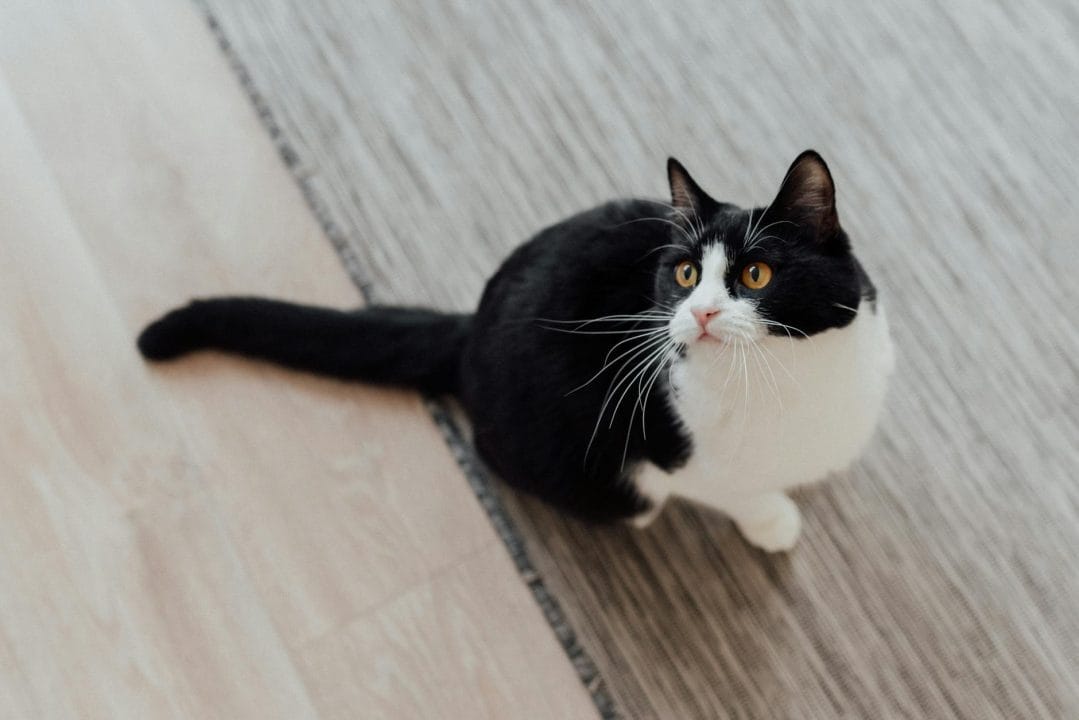
| Tuxedo | Black and white, white only on face, chest, paws |
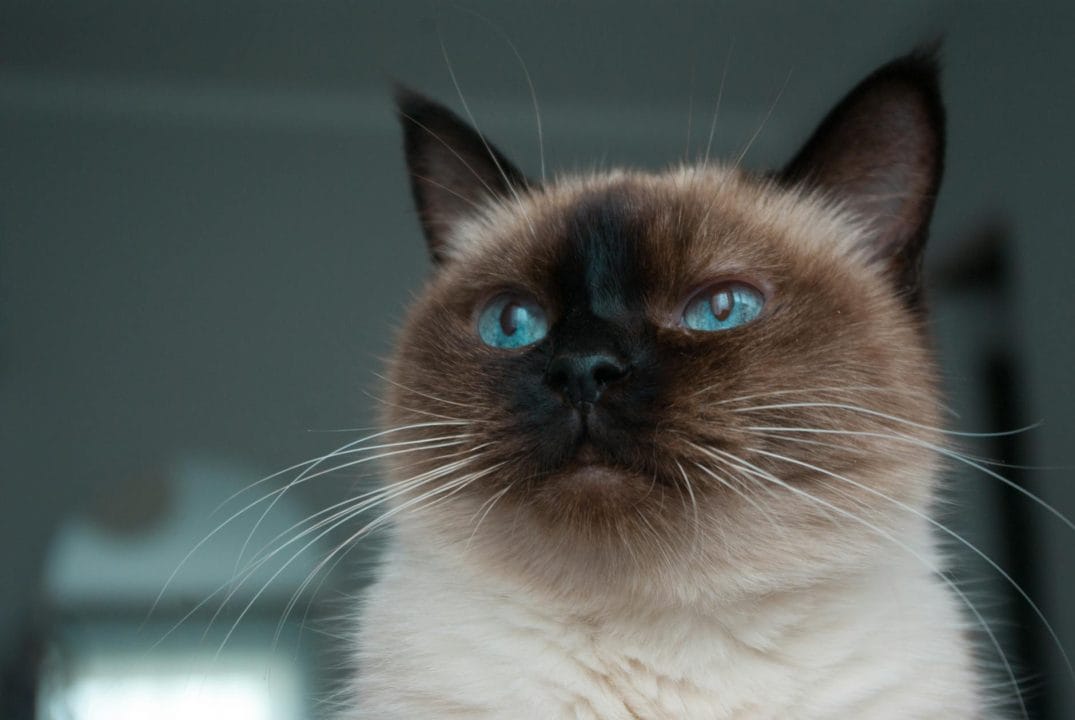
| Colorpoint | Dark “points” (face, ears, tail, paws) on pale body — think Siamese |
| Smoke | Solid color on tips, white or pale at the hair root |
| Shaded | Like smoke but lighter — color only on the outer third of the hair |
| Chinchilla | Very light shading, tips only — gives a sparkling, silver effect |
Tabby: The Most Common Pattern on Earth
Here’s a fact that breaks people’s brains.
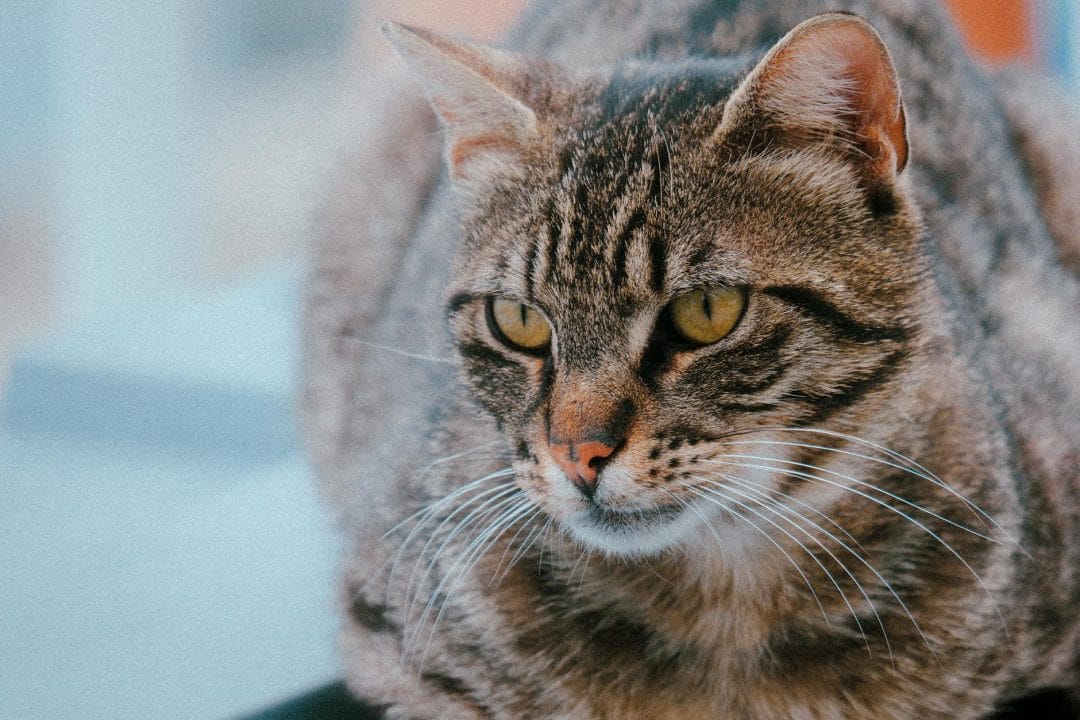
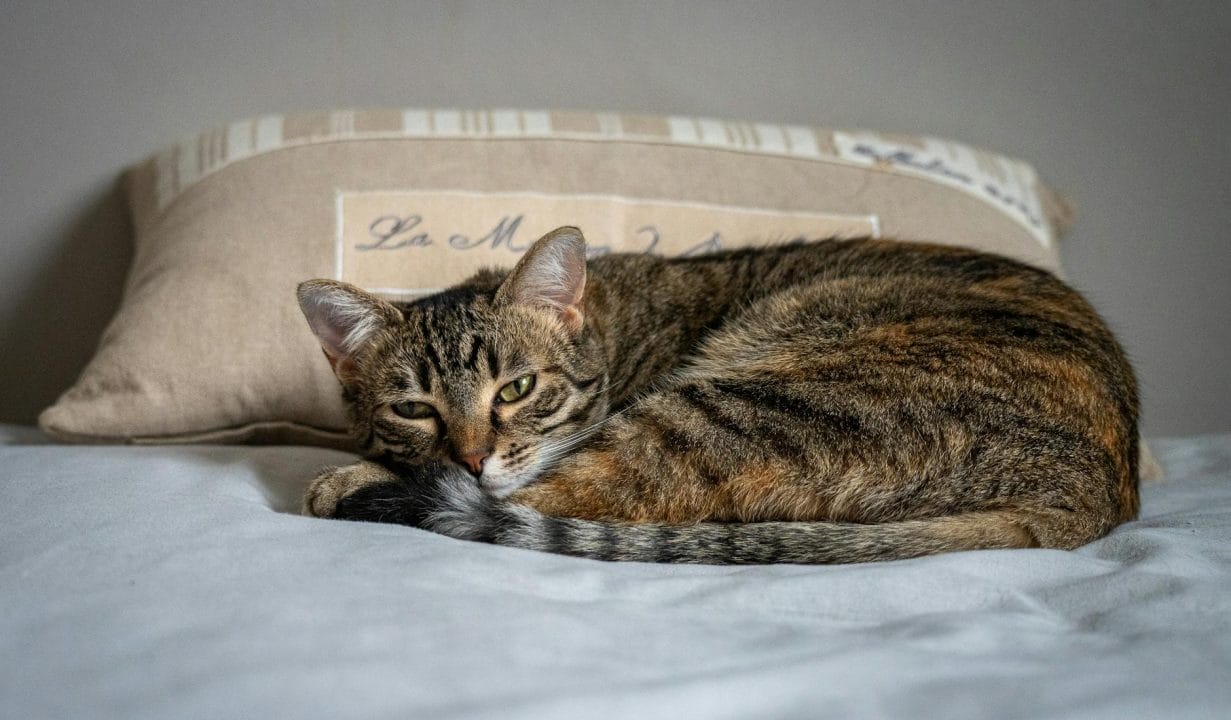
Almost every domestic cat is technically a tabby.
Even if you have a “solid” black cat, there’s a tabby pattern hiding underneath. You can sometimes see faint tabby markings on solid cats in bright sunlight — those are called “ghost stripes,” and they’re proof the agouti gene is in there, just suppressed.
The agouti gene (gene A) is what creates tabby patterns. When a cat has at least one dominant A allele, you get the striped, banded, or spotted look. When a cat is homozygous recessive (aa), the agouti signal gets turned off, and the coat appears solid.
So solid cats aren’t “missing” their tabby. They just have two copies of the recessive version of the gene telling it to quiet down.
Tortoiseshell and Calico: The Female Cat Rule
This is where cat genetics gets genuinely weird and interesting.
Almost all tortoiseshell and calico cats are female. And it’s not a coincidence.
The orange color gene (O) lives on the X chromosome. Male cats are XY — they only have one X chromosome, so they’re either orange or they’re not. Simple. Clean. Boring.
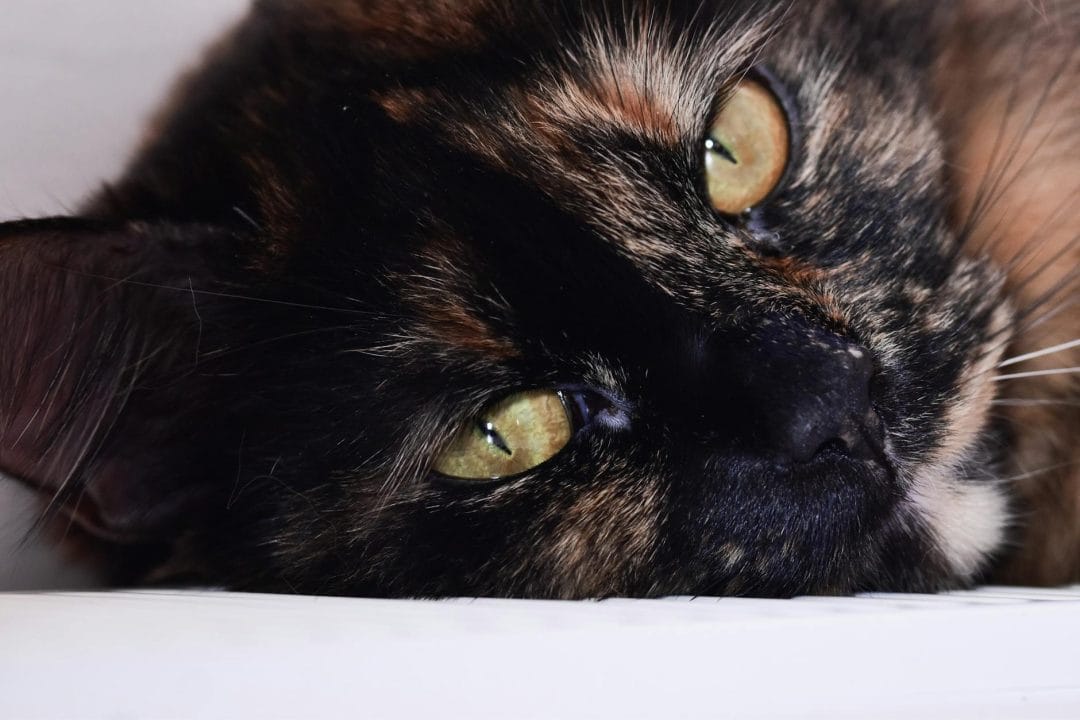
Female cats are XX — they have two X chromosomes. One can carry the orange gene (O) and one can carry the non-orange version (o). When this happens, the cat displays both colors in patches.
That patchy mix of orange and black? That’s tortoiseshell.
Add white patches on top via the piebald gene? That’s calico.
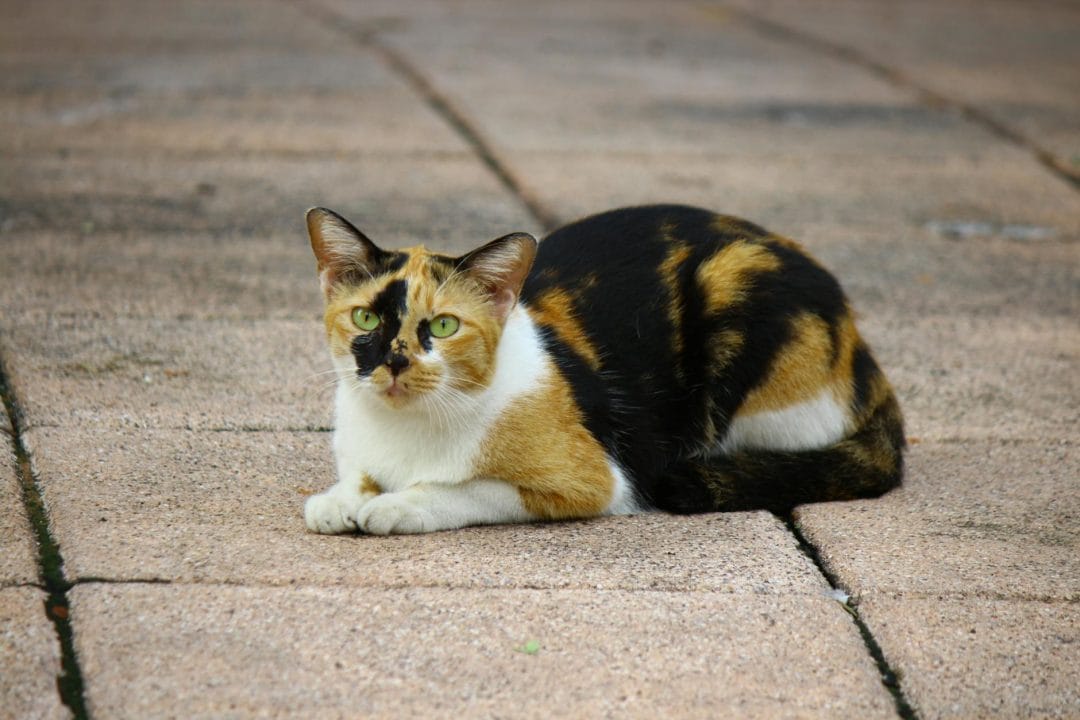
The reason the patches are random and not blended is X-inactivation. In every cell during fetal development, one X chromosome randomly switches off. So some cells express orange, others express black — hence the patchwork quilt look.
Male calicos do exist — but they’re incredibly rare. About 1 in 3,000 calico cats is male, and it usually happens because they have XXY chromosomes (Klinefelter syndrome). Most of them are sterile.
Orange Cats: Why Most of Them Are Male
Same gene, different angle.
If a female cat needs two copies of the orange gene (OO on both X chromosomes) to be fully orange, that’s actually pretty rare — both parents have to pass it on in exactly the right combination.
But a male cat only needs one copy (O on his single X) to be fully orange.
That’s why roughly 80% of orange tabby cats are male.
Research published in 2025 identified the exact DNA mutation responsible — a small deletion in a non-coding region of the X chromosome that activates pheomelanin production. It’s one of the clearest examples of sex-linked inheritance in any mammal.
So yes, your big orange cat being a boy isn’t a coincidence. The genetics were stacked heavily in that direction.
Color + Pattern Combinations: How They Work Together
Every cat has a color and a pattern. These are separate genetic systems layered on top of each other.
Here are some common real-world combinations:
| Combination | What It Is |
|---|---|
| Black tabby | Dark stripes on a black base (hard to see indoors) |
| Blue tabby | Gray stripes on a lighter gray base |
| Orange/red tabby | The classic “ginger tabby” |
| Cream tabby | Very pale orange stripes on cream |
| Silver tabby | White undercoat + black tabby markings = high contrast |
| Brown tabby | Warm brown base + darker brown markings |
| Blue tortoiseshell | Blue and cream patches instead of black and orange |
| Dilute calico | Blue, cream, and white instead of black, orange, and white |
| Chocolate point | Siamese-style but with chocolate-brown points |
| Lilac point | Siamese-style with pale lavender-gray points |
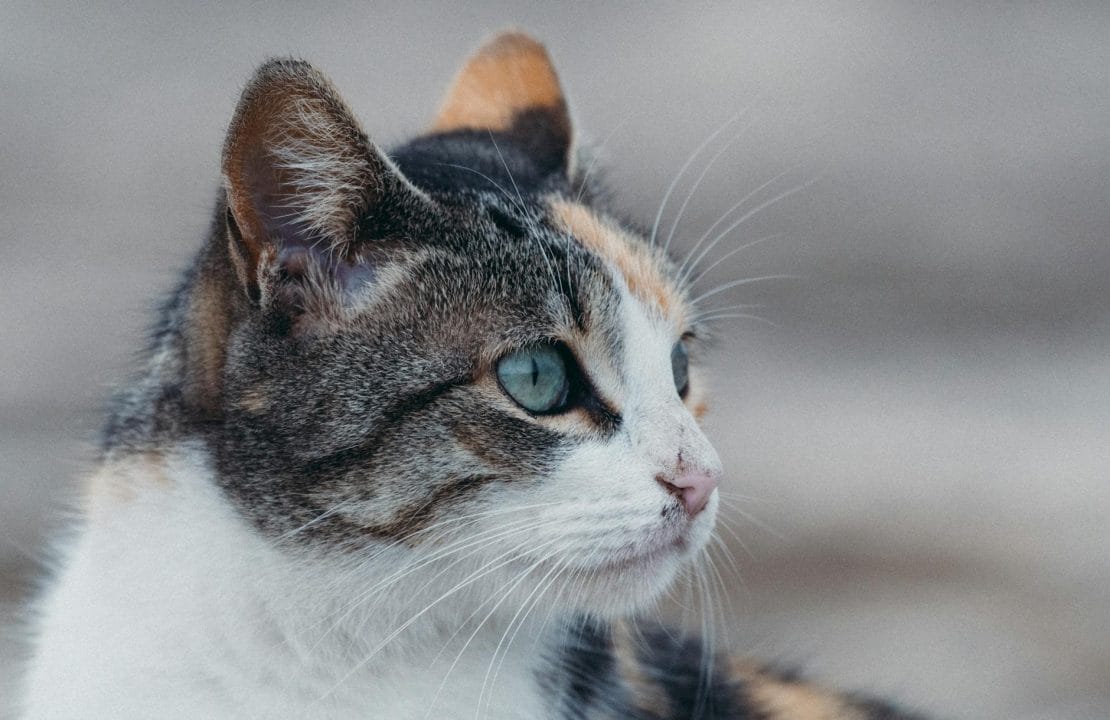
The “dilute” versions of tortoiseshell and calico are just the same patterns made from diluted pigments. A dilute calico is every bit as real as a classic calico — it’s just softer and pastel-toned.
Smoke, Shaded, and Chinchilla: The Misunderstood Ones
These three don’t get enough credit.
They’re not separate colors. They’re gradients — the color isn’t uniform down the length of each hair. It fades.
- Smoke: The bottom 1/3 of each hair is white or very pale. The top 2/3 is fully colored. When the cat sits still, it looks solid. When it moves, the pale undercoat flashes through. It’s dramatic.
- Shaded: The bottom half of each hair is pale, the top half is colored. Less dramatic than smoke, but still very distinct. Common in silvers.
- Chinchilla: Only the very tip of each hair is colored. The rest is white. The result is a shimmery, sparkling look — like someone dusted the cat with silver. The chinchilla Persian is probably the most famous example.
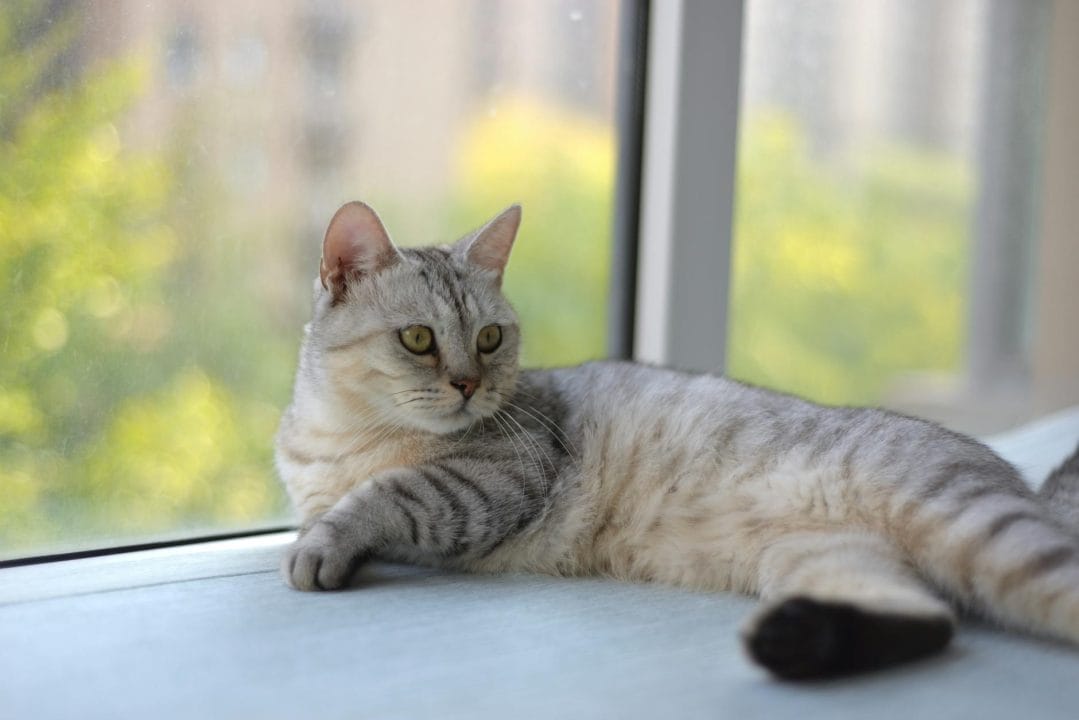
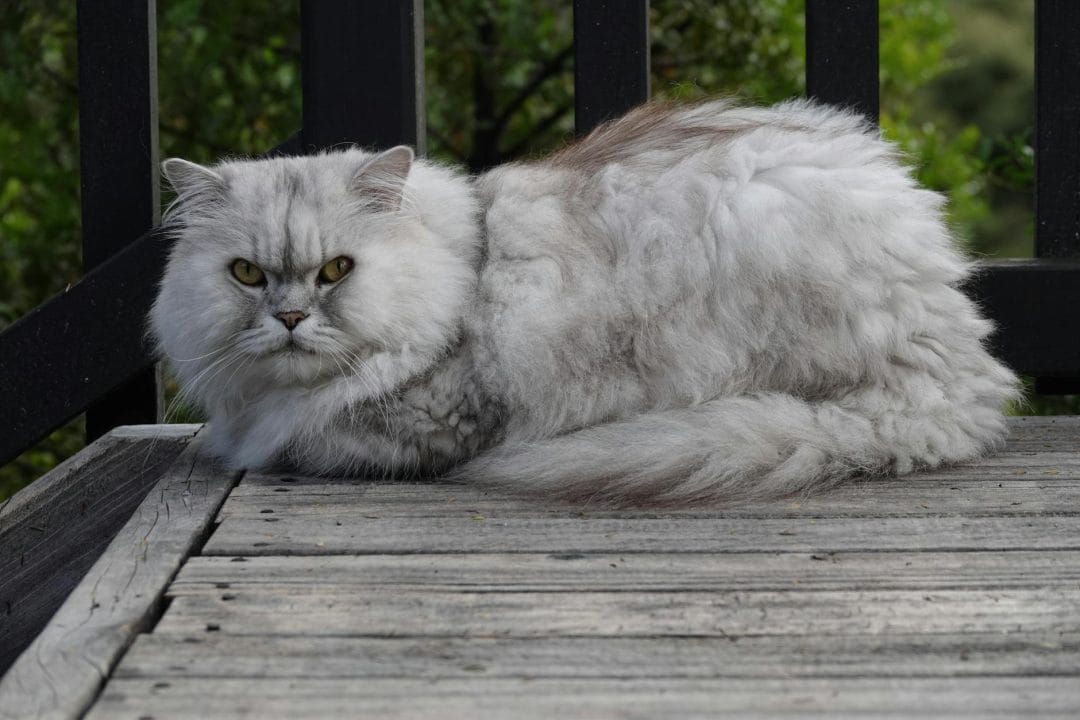
Most people looking at a chinchilla cat just think it’s “white” or “very light silver.” It’s actually one of the most complex coat expressions genetically.
Colorpoint: Why Siamese Cats Look the Way They Do
The colorpoint pattern is temperature-sensitive. Genuinely.
The gene responsible for colorpoint (the cs allele) produces an enzyme that only works at low temperatures. The cooler extremities of the body — ears, nose, tail, paws — show full color. The warmer body stays pale.
Siamese kittens are born all-white because the womb is warm and uniform. The darker points develop as they cool after birth.
This is why older Siamese cats tend to get darker overall as they age — their body temperature regulation changes slightly, and more pigment activates across the body.
Quick Reference: What Is My Cat?
If you’re staring at your cat trying to figure out what it’s called:
- Stripes? → Tabby. Look at the pattern: narrow stripes (mackerel), swirls (classic), spots (spotted), or no obvious stripes but banded hairs (ticked).
- Orange and black patches, no white? → Tortoiseshell.
- Orange, black, AND white patches? → Calico.
- Mostly one color with some white? → Bicolor. White on chest and paws specifically → Tuxedo.
- Pale body, dark face and tail? → Colorpoint.
- Looks solid but shimmers when it moves? → Probably smoke.
- Very pale, almost white but with a slight shimmer? → Chinchilla or shaded.
- Pure white? → Could be genetically any color. White masking gene is covering it.
The One-Sentence Summary
All cat coat colors come from two pigments, shaped by roughly 10-15 genes, and your cat’s exact look is the result of which version of each gene it inherited from each parent.
Which is honestly more elegant than it has any right to be.
If you want to go deeper on any specific breed’s coat, check out our cat breed guides — most of them include color and pattern details for that specific breed.
What color and pattern is your cat? Drop it in the comments.