GigaPaw.com participates in affiliate programs including Amazon Associates. We earn from qualifying purchases. Content is for informational purposes only—consult a licensed veterinarian for pet medical advice.
Cat Petting Chart: The 5 Yes-Zones, 3 Maybe-Zones, and 4 Never-Touch Zones

Look, you’ve been there. You’re petting your cat, things are going great, the purring is at maximum volume, and then out of nowhere your hand becomes a chew toy.
You didn’t do anything different. Or so you thought.
Turns out cats are extremely opinionated about where you touch them. There’s actual science on this, and it’s wildly specific. Some spots release feel-good pheromones. Other spots are basically a tripwire connected to their teeth.
So I made you a chart.
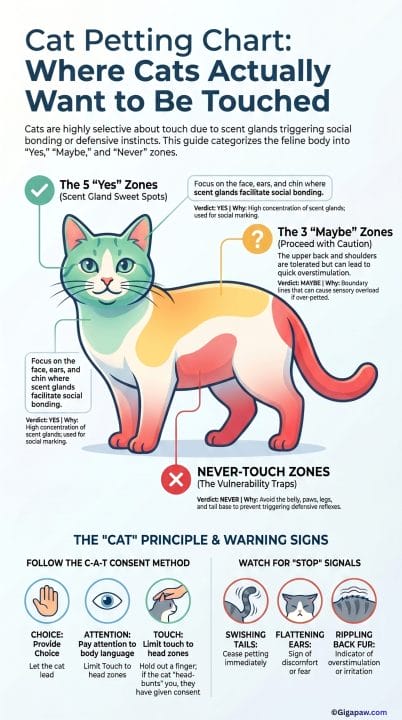
Below is every zone on your cat’s body, ranked by how much they actually want you there. Five zones they love. Three they tolerate. Four that will get you bitten if you push your luck.
The Cat Petting Chart at a Glance
| Zone | Verdict | Why |
|---|---|---|
| Forehead / between the eyes | Yes | Scent glands, grooming reminder |
| Top of the head | Yes | Scent glands, social bonding spot |
| Base of the ears | Yes | Temporal scent glands |
| Cheeks (under cheekbones) | Yes | Highest concentration of scent glands |
| Under the chin | Yes | Submandibular scent glands |
| Shoulder blades | Maybe | Tolerated by friendly cats |
| Along the upper back | Maybe | Some love it, some get overstimulated |
| Sides / ribs | Maybe | Depends on the cat’s personal bubble |
| Belly | Never | Vulnerable organs, hypersensitive fur |
| Base of the tail | Never | Overstimulating, intimate cat-to-cat zone |
| Legs | Never | Defensive area, escape hardware |
| Paws | Never | Hypersensitive, last line of defense |
Now let’s break each one down so you actually know what you’re doing.
The 5 Yes-Zones (Pet Here, Get Loved)

These are the zones where your cat is basically begging you to scratch. They’re packed with scent glands, which is the cat equivalent of a love language.
When you pet here, you’re not just touching fur. You’re rubbing the spots they use to mark their favorite humans, blankets, and door frames. You’re literally being claimed.
1. The Forehead (Between the Eyes)
This is the bullseye. The strip of fur right between the eyes, going up to the top of the head.
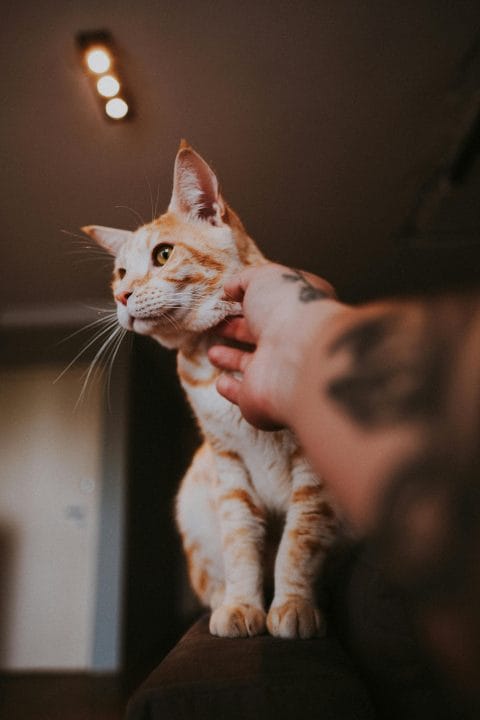
Cats have scent glands here. When they bonk their head into yours, that thing called a head-bunt, they’re depositing pheromones on you.
A gentle two-finger scratch right on the forehead is almost universally welcomed. I’ve yet to meet a friendly cat who didn’t melt for this one.
2. The Top of the Head
Right above the forehead, between the ears. The flat zone.
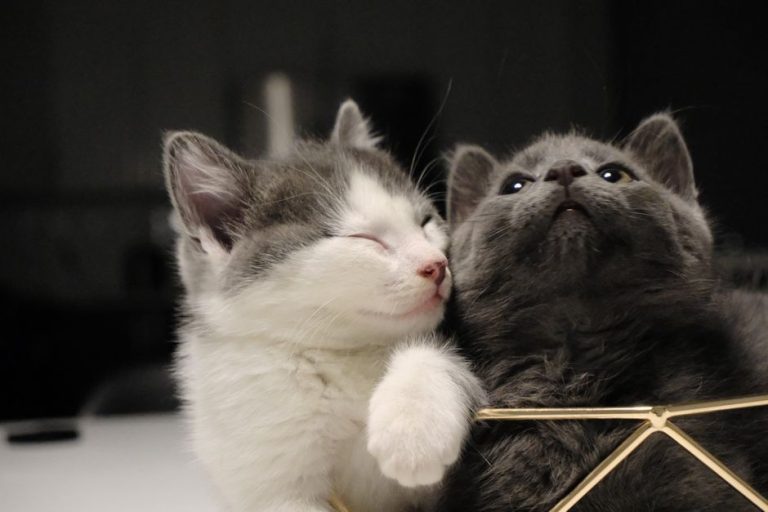
This is the spot you’ll see two cats lick each other when they’re best friends. It’s called allogrooming, and it’s a sign of deep social trust.
When you scratch the top of their head, you’re imitating their best friend. Their eyes will half close. The purring will start. You’ve done it.
3. The Base of the Ears
The fleshy part where the ear meets the skull, both behind and in front.
Cats have temporal scent glands right here. According to a study published by researchers at Nottingham Trent University, this is one of the most preferred petting zones across cats they tested at Battersea’s London cattery.
A slow circular rub here, with just one finger, will turn most cats into a puddle.
4. The Cheeks
The fluffy area under the cheekbones, just below the eyes and behind the whiskers.
This zone has the highest concentration of scent glands on the entire cat body. It’s why cats rub their face on the corner of every couch, table, and shoe in your house.
When you scratch their cheeks, you’re helping them mark you. They love it. They wrote you into the will.
5. Under the Chin
The soft area right under the jawline.
Submandibular scent glands sit here, plus most cats can’t easily groom this spot themselves. So a good chin scratch is doing them a real favor.
If your cat tilts their head up and stretches their neck out when you scratch, that’s the highest compliment a cat can give. It means they trust you completely in that moment, because the throat is one of their most vulnerable areas. That neck stretch is one of the clearest signs your cat genuinely loves you.
The 3 Maybe-Zones (Read the Room)
These zones are not a no. But they’re not a yes either.
Some cats love them. Some cats will tolerate maybe twenty seconds before flipping the script and turning your hand into target practice. Pay attention to the body language.
If their tail starts swishing rapidly, ears go flat or rotate sideways, fur ripples along the spine, or they suddenly lick their nose, stop immediately. These are stress signals, and they appear before the bite. If you want to get fluent in these tells, our guide on how to read your cat’s mood breaks them all down.
1. The Shoulder Blades
The flat zone right where the neck meets the back, between the shoulder blades.
Most friendly cats are okay with this one. It’s still close enough to the head zone that it feels social.
But it’s the boundary line. Anything past this point, you’re entering risky territory.
2. Along the Upper Back
The spine, from the shoulder blades down to about the middle of the back.
Some cats love a good back stroke. Others get petting-induced aggression, which is basically sensory overload from repeated stroking.
Keep it short. A few slow strokes, then check in with your cat. If they lean into the next stroke, you’re good. If they tense up, move back to the head.
3. The Sides and Ribs
The flanks of the cat, below the spine but above the belly.
This one really depends on the cat’s personality. A confident, social cat might roll into your hand. A more reserved cat will dart away like you tried to grab them.
Best rule: only pet here if the cat actively presents this side to you and seems relaxed.
The 4 Never-Touch Zones (You’ve Been Warned)
These are the zones that make cats look like they have multiple personality disorder. They’ll lure you in. They’ll roll over. They’ll look adorable.
Then they’ll bite your wrist hard enough to draw blood. Touching these zones is one of the things your cat secretly hates, even when they look like they’re asking for it.
Here’s why each zone is off-limits, no matter how cute the trap looks.
1. The Belly (The Famous Trap)

Yes, your cat just rolled over and exposed her tummy. No, that is not an invitation.
When a cat shows you their belly, they’re saying “I trust you so much I’m willing to be in this position around you.” It’s a compliment, not a request for a rub.
The belly contains a cat’s most vital organs sitting just millimeters below the skin. Their entire evolutionary instinct screams to protect this area.
On top of that, animal behaviorist Lena Provoost from the University of Pennsylvania’s School of Veterinary Medicine notes that hair follicles on the belly are hypersensitive to touch, which makes belly rubs feel overstimulating instead of pleasant.
So when you reach for the belly, you’re triggering a defensive instinct AND overloading their nerves at the same time. That’s why you get the bunny-kick claw attack.
A small percentage of cats do enjoy belly rubs. You’ll know yours is one of them only after years of consistent, gentle, cat-led testing. Don’t assume.
2. The Base of the Tail
Right where the tail meets the spine, on top of the rump.
Some cats will hike their butt into the air when you scratch here, looking like they enjoy it. They might. But for most cats, this zone is incredibly overstimulating.
Cats only touch each other’s tails when they’re closest of friends, and even then, mostly by wrapping tails together. So you scratching the base of the tail is a level of intimacy that most cats are not actually comfortable with.
The Nottingham Trent University study specifically found that the base of the tail was the least-liked petting zone across the cats they observed. That tracks.
3. The Legs
Front legs, back legs, doesn’t matter. Hands off.
The legs are how cats escape danger. Touching them activates a defensive reflex, even in cats who fully trust you.
Your cat’s leg is also where they take the most precise control during a hunt or fight. So having that hardware grabbed by a giant warm hand feels like being pinned.
4. The Paws
The most sacred zone of all.
Cat paws have an incredibly high concentration of nerve endings, which is why they pull their paws away the moment you touch one. They’re using those paws to feel the vibration and texture of every surface they walk on.
A grabbed paw also means the cat can’t run. Combined with the claws being their primary weapon, paws are the last thing a cat wants you handling casually.
You’ll only get away with paw touching if you’ve done years of slow, consent-based handling, usually for nail trims. And even then, most cats hate it.
The Golden Rule: Let the Cat Lead

The biggest finding from the Nottingham Trent University and Battersea research is something they call the CAT principle.
- C stands for Choice. Let the cat choose to come to you.
- A stands for Attention. Watch their body language during the interaction.
- T stands for Touch. Stick to the head zones unless they invite more.
When researchers had participants follow these guidelines, the cats showed significantly less aggression and noticeably more affection. The hands-off approach produced the cuddliest cats.
So here’s the move. Hold your finger or hand out at their nose level. Wait. If they bonk into your hand, they’ve consented. Pet the head zones. Stop every fifteen seconds and let them ask for more.
Watch for these stop signals at all times:
- Tail swishing or thumping
- Ears flattening or rotating sideways
- Skin or fur rippling along the back
- Sudden licking of the nose or lips
- Head turning away from your hand
- Body going stiff under your touch
If you see any of those, you’ve hit the limit. Pull back.
Why Your Specific Cat Might Be Different
Here’s the wrinkle. Some cats break every rule on this chart.
I’ve met a Maine Coon who wanted his belly rubbed for twenty minutes straight. I’ve also met a Russian Blue who would bite if you breathed near his cheeks.
Personality varies. Early socialization matters huge. A cat handled gently as a kitten between two and seven weeks old will be way more open to touch as an adult.
Your job isn’t to memorize this chart and force it on your cat. Your job is to use it as the starting map, then learn your cat’s personal version of it.
Some signs your cat is asking for more pets:
- Headbutting your hand
- Pressing their cheek into your fingers
- Slow blinks while you pet them
- Purring that gets louder with each stroke
- Following you around for more
Trust those signals more than any chart, including this one.
The Bottom Line
Cats are not small dogs. They don’t want to be smothered, scooped, or rubbed in random places.
They want precise, consensual, head-zone touching, with full permission to walk away whenever they feel like it.
Stick to the cheeks, chin, head, and base of the ears. Be careful around the back and sides. Stay completely off the belly, tail base, legs, and paws.
Do that and you’ll go from “the human who occasionally gets clawed” to “the human my cat actually likes.” Which, let’s be honest, is the entire reason you got a cat in the first place.
Now go scratch some chins. Properly this time.