GigaPaw.com participates in affiliate programs including Amazon Associates. We earn from qualifying purchases. Content is for informational purposes only—consult a licensed veterinarian for pet medical advice.
Cat Vomit 101: The Complete Cat Vomit Color Chart (And When to Actually Panic)

If you own a cat, you’ve heard The Sound.
You know exactly which sound I’m talking about.
That guttural, heaving, “oh no, not on the rug” alarm clock that can wake you from a dead sleep at 3 AM faster than any fire alarm ever could.
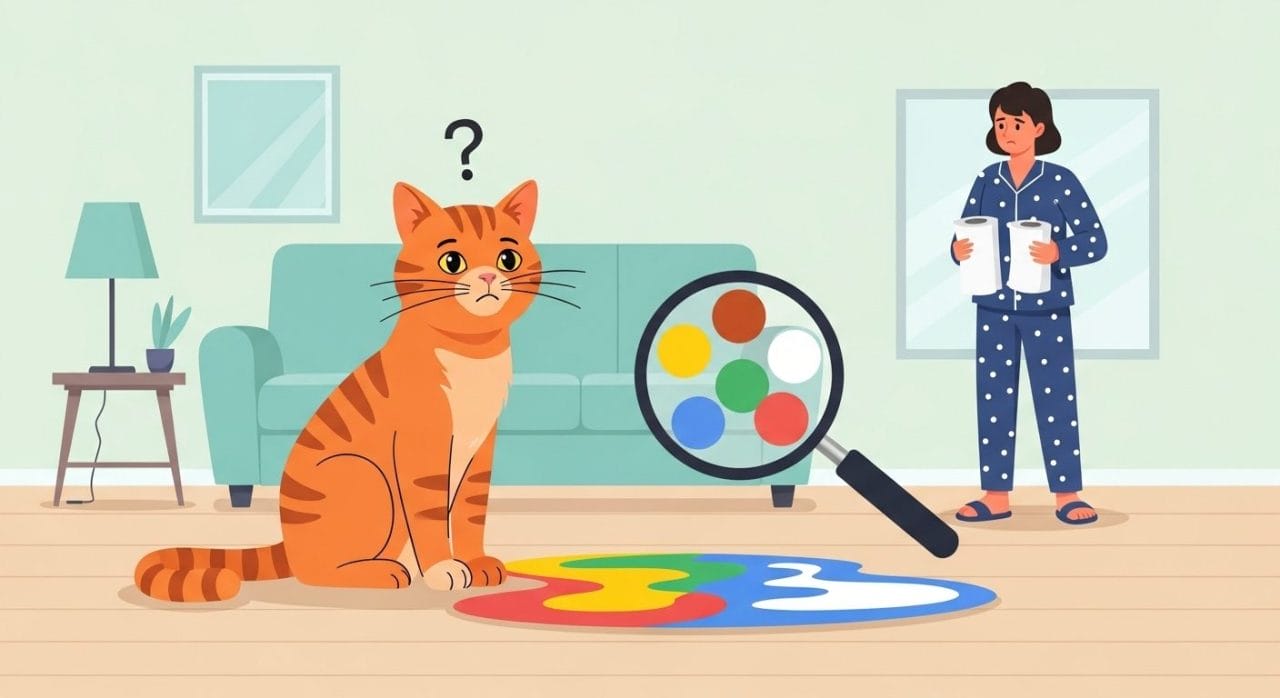
And then you’re standing there, half-asleep, in your underwear, staring at a puddle of mystery goo on your favorite throw blanket, wondering: is this normal? Is my cat dying? Or did she just eat too fast again?
Look, cat vomit is gross. Nobody’s arguing that.
But here’s the thing – the color of that mess on your floor can actually tell you a lot about what’s going on inside your cat.
Think of it like a weird, disgusting mood ring for your cat’s stomach.
So grab some paper towels (you’re going to need them eventually anyway), and let’s break down what every shade of cat puke actually means.
Why Do Cats Throw Up So Much?
First, let’s address the elephant in the room.
Cats puke. A lot. Way more than dogs, and definitely more than you’d like.
But here’s something most cat owners get wrong: just because vomiting is common in cats doesn’t mean it’s “normal.”
Cornell University’s Feline Health Center has been pretty clear on this one – vomiting is a clinical sign of something going on, not just a quirky personality trait your cat picked up.
That said, not every barf session is a five-alarm emergency.
Here are the most common reasons your cat is treating your floor like a splash zone:
Hairballs (The Classic)
Your cat spends roughly half of its waking life licking itself.
That’s a LOT of fur going down the hatch.
Sometimes that fur clumps up in the stomach and has to come back out the way it went in.
If your cat hacks up a tubular wad of fur once in a while, that’s pretty standard – especially for long-haired cats.
But if they’re producing hairballs more than once a month, something else could be going on with their digestive system.
Eating Too Fast (The Vacuum Cleaner Cat)
Some cats treat mealtime like a competitive sport.
They inhale their food so fast they barely chew, swallow a bunch of air, and then – surprise – it all comes right back up.
The food in the vomit usually looks almost exactly the same as it did in the bowl, which is both impressive and horrifying.
A slow-feeder bowl can work wonders for these little food vacuums.
Diet Changes
Switching your cat’s food without a gradual transition is basically asking for trouble.
Their stomachs are sensitive, and a sudden swap can throw everything off.
The golden rule: take 7-10 days to transition between foods, gradually mixing the new stuff in with the old.
The Serious Stuff
Sometimes vomiting points to bigger problems like kidney disease, liver disease, hyperthyroidism, inflammatory bowel disease (IBD), pancreatitis, intestinal parasites, or even cancer.
That’s exactly why paying attention to the color and frequency matters so much.
Which brings us to the main event.
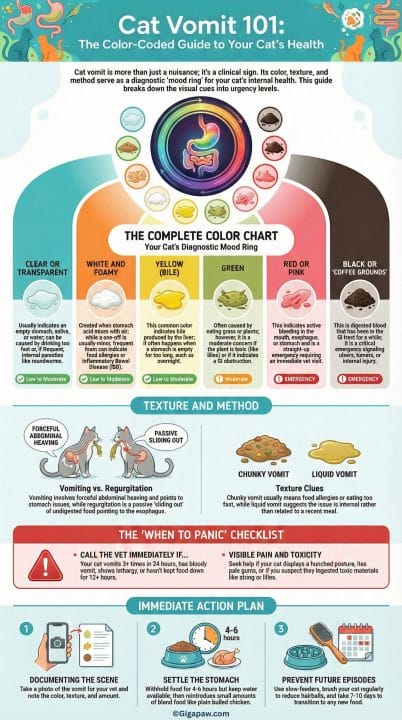
The Complete Cat Vomit Color Chart
Alright, here’s the part you actually came for.
Below is a breakdown of every color of cat vomit, what it likely means, and what you should do about it.
Bookmark this. Screenshot it. Tape it to your fridge. You’ll thank me at 3 AM.
| Vomit Color | What It Usually Means | Urgency Level |
|---|---|---|
| Clear / Transparent | Empty stomach, regurgitation from esophagus, or possible parasites | Low to Moderate – monitor closely |
| White / Foamy | Stomach acid mixed with air, empty stomach, possible IBD or food allergies | Low to Moderate – see vet if frequent |
| Yellow | Bile from an empty stomach, possible liver issues | Low to Moderate – try smaller, more frequent meals |
| Green | Plant material (grass/houseplants), bile, or possible GI obstruction | Moderate – check for toxic plant ingestion |
| Brown (light) | Undigested food, something brown they ate | Low – likely harmless |
| Brown (dark/sludgy) | Possible bleeding in upper GI tract, intestinal blockage, or liver problems | High – see vet soon |
| Red / Pink | Active bleeding in mouth, esophagus, or stomach | EMERGENCY – vet immediately |
| Black / Coffee Grounds | Digested blood from stomach or intestines | EMERGENCY – vet immediately |
| Orange | Partially digested food mixed with bile | Low to Moderate – similar to yellow/brown causes |
Now let’s dig into each one.
Clear or Transparent Vomit
Clear vomit is basically your cat throwing up water, mucus, or saliva.
It usually means their stomach was already empty when the heaving started.
This can happen if they drank water too fast, or if something irritated their stomach when there was nothing in it.
One thing to watch for: if your cat vomits clear liquid regularly, internal parasites like roundworms could be the culprit. You might even spot what looks like thin spaghetti in the vomit. Yeah, I know. Gross.
White or Foamy Vomit
White foam happens when stomach acid mixes with air during the retching process.
It’s basically your cat’s stomach saying, “There’s nothing in here, but I’m upset anyway.”
A one-off foamy episode? Probably not a big deal.
But if white foam becomes a regular thing, it could point to food allergies, stomach lining irritation, or inflammatory bowel disease.
Keep an eye out for other symptoms like bloating, weight loss, or loss of appetite.
Yellow Vomit
Yellow vomit is bile. Plain and simple.
Your cat’s liver produces bile to help digest food, and when the stomach’s running on empty, that bile has nowhere to go but up.
This is one of the most common colors cat owners see, and it often happens first thing in the morning when your cat hasn’t eaten overnight.
The fix can be surprisingly simple: try feeding smaller meals more frequently throughout the day so the stomach doesn’t sit empty for too long.
However, if yellow vomit becomes a regular guest at your house, it could signal liver disease, food allergies, or an intestinal blockage – so don’t ignore it if it keeps happening.
Green Vomit
Green vomit usually means one of two things.
Either your cat has been munching on grass or houseplants, or they’re throwing up bile that has a greenish tint.
If your cat has access to grass, this is probably nothing to stress about. Cats sometimes eat grass deliberately to help them throw up something that’s bugging their stomach.
But here’s the important part: check whether the plants your cat has been chewing on are toxic.
Lilies, for example, are extremely dangerous to cats. If you suspect your cat ate a toxic plant and is vomiting green, that’s a vet visit right now.
If the green color isn’t from anything they ate, it could indicate a gastrointestinal obstruction, which is serious.
Brown Vomit
Brown vomit is a bit of a coin flip.
Light brown vomit is often just undigested or partially digested food. If your cat ate something brown (which, let’s be honest, is most cat food), the vomit is going to look brown. Mystery solved.
Dark brown vomit is a different story entirely.
If it looks dark, sludgy, or has a coffee-ground texture, that could mean there’s bleeding somewhere in the upper digestive tract. It could also indicate an intestinal blockage or liver problems.
If the brown vomit smells particularly terrible (more than usual, I mean), or if your cat is also lethargic, bloated, or losing weight, get to the vet.
Red or Pink Vomit
Red means blood. And blood means something is wrong.
If the blood is bright red, it’s likely coming from the mouth, esophagus, or stomach. Your cat might have swallowed something sharp, have an ulcer, or be dealing with trauma to the digestive tract.
Even a small amount of red in cat vomit should be taken seriously.
Pink-tinged vomit carries the same concern – it’s just diluted blood mixed with stomach contents.
This is not a “wait and see” situation. Call your vet immediately.
Black or Coffee-Ground Vomit
This is the worst one on the list.
Black vomit, especially if it has a gritty texture that looks like coffee grounds, means there’s digested blood in the mix.
That blood has been sitting in the stomach or intestines long enough to turn dark, which suggests bleeding deeper in the GI tract.
This could point to ulcers, tumors, advanced disease, or internal injuries.
This is a straight-up emergency. No waiting. No googling. Get your cat to a vet immediately.
Orange Vomit
Orange is sort of the middle child between yellow and brown.
It usually means there’s a mix of partially digested food and bile in the vomit.
The causes are similar to yellow and brown vomit – empty stomach, eating too fast, or mild digestive upset.
Unless it’s happening frequently or your cat is acting off, orange vomit isn’t usually cause for panic.
It’s Not Just About Color: Texture Matters Too
Color gets all the attention, but the texture of your cat’s vomit tells its own story.
Foamy vomit usually means your cat was retching hard and swallowing a lot of air during the process. It often shows up when the stomach is empty.
Chunky vomit means there was food in the stomach at the time. This could be from eating too fast, food allergies, or an obstruction preventing food from moving through properly.
Liquid vomit (no chunks, no foam) suggests the stomach was empty. The cat probably isn’t vomiting because of something it ate, but because of something internal going on.
Paying attention to both color AND texture gives your vet way more information to work with.
Vomiting vs. Regurgitation: They’re Not the Same Thing
Here’s something a lot of cat owners don’t realize.
Vomiting and regurgitation are two completely different things.
Vomiting involves abdominal contractions, that classic retching sound, and the forceful expulsion of stomach contents. Your cat will usually look uncomfortable and may drool or pace before it happens.
Regurgitation is much more passive. Food just sort of… slides back out. No retching, no abdominal effort. It usually happens shortly after eating, and the food looks pretty much undigested.
Why does this matter? Because the causes and treatments are different.
Regurgitation often points to esophageal problems, while vomiting points to stomach or intestinal issues.
Pro tip: try to get a video of your cat in the act (I know, I know) because your vet will find it incredibly helpful for figuring out which one is happening.
When to Call the Vet: The No-Nonsense Checklist
Not every puke session requires a vet trip. But some absolutely do.
Call your vet RIGHT AWAY if:
- There’s blood in the vomit (red, pink, dark brown, or black)
- Your cat vomits 3 or more times in 24 hours
- The vomiting comes with lethargy, hiding, or refusal to eat or drink
- Your cat hasn’t kept food or water down for 12+ hours
- You notice weight loss, diarrhea, or a bloated belly alongside vomiting
- Your cat is in visible pain (hunched posture, crying when touched)
- You suspect they ate something toxic (plants, chemicals, medication)
- The vomit contains foreign material (string, plastic, etc.)
- Your cat has pale gums, difficulty breathing, or seems weak
You can probably monitor at home if:
- It was a single episode and your cat is acting totally normal
- They’re still eating, drinking, and playing like nothing happened
- The vomit was clearly a hairball
- They obviously just ate too fast and brought it right back up
What to Do When Your Cat Throws Up
So your cat just threw up. Here’s the game plan.
Step 1: Don’t freak out. Look at the vomit (yes, really). Note the color, texture, and amount.
Step 2: Take a photo. Your vet will appreciate this more than you think. A picture of the vomit is worth a thousand words.
Step 3: Withhold food for 4-6 hours to let the stomach settle. Don’t take away water though – dehydration from vomiting is a real concern.
Step 4: Offer small amounts of water (a couple tablespoons every 30 minutes) if your cat can keep it down.
Step 5: Reintroduce food slowly. Start with small portions of bland food – think plain boiled chicken or a vet-recommended bland diet.
Step 6: Watch and wait. If the vomiting stops and your cat bounces back to normal, you’re probably in the clear. If it continues or other symptoms show up, it’s vet time.
How to Prevent Cat Vomiting (Or At Least Reduce It)
You can’t prevent every episode of cat vomit. That’s just cat ownership.
But you can cut down on the frequency with some simple changes:
Slow down mealtime. Use a slow-feeder bowl or puzzle feeder if your cat inhales food. Smaller, more frequent meals also help.
Brush your cat regularly. Less loose fur swallowed means fewer hairballs coming back up. This is especially important for long-haired breeds.
Transition food gradually. Always take at least a week to switch between diets. Mix old and new food in increasing ratios.
Keep toxic stuff out of reach. Plants (especially lilies), cleaning products, medications, string, rubber bands – if your cat can reach it, your cat will try to eat it.
Stay current on vet visits. Regular checkups, vaccinations, and deworming prevent a lot of vomit-inducing problems before they start. Cats over 7 should get wellness bloodwork done annually to catch things like kidney disease and hyperthyroidism early.
Keep them hydrated. A cat water fountain can encourage more drinking, and wet food adds moisture to their diet.
The Bottom Line
Cat vomit is never fun to deal with. But it’s not always a disaster, either.
The key is knowing what to look for.
A one-time puke from a cat that’s otherwise happy, eating, and full of energy? Probably just a bad hair day (literally).
Frequent vomiting, blood, weird colors, or a cat that’s acting sick? That’s your signal to stop Googling and start dialing your vet’s number.
Your cat can’t tell you when something’s wrong. But their vomit sure can.
So the next time you hear that dreaded sound at 3 AM, take a deep breath, grab those paper towels, and actually look before you clean.
It might just save your cat’s life.