GigaPaw.com participates in affiliate programs including Amazon Associates. We earn from qualifying purchases. Content is for informational purposes only—consult a licensed veterinarian for pet medical advice.
10 DIY Cat House Ideas That’ll Make Your Cat Think You’re Actually Cool

Your cat’s been giving you the stink-eye because they’ve been sleeping in boring places, right?
Maybe they’re squeezing into Amazon boxes that are way too small, or they’ve claimed your favorite chair as their personal throne. Look, cats are simple creatures with complex demands—they want their own space, but they also want it to look good.
Lucky for you, building a cat house doesn’t require a PhD in carpentry or selling a kidney to afford it.
I’m talking about projects you can knock out in an afternoon with stuff you probably already have lying around. Some of these ideas are so ridiculously easy that you’ll wonder why you haven’t done this sooner.
The Cardboard Box + T-Shirt Tent (Easiest Thing Ever)
This is the gateway drug of DIY cat houses.
Grab any cardboard box that’s big enough for your cat to fit inside—think moving boxes or those massive Amazon deliveries. Cut holes on opposite ends for entry and exit (cats hate being trapped, trust me). Then pull an old t-shirt over the entire box so the neck hole lines up with one of the openings.
The secret: Use a shirt you’ve recently worn.
Your scent makes cats feel safe and they’ll actually use the thing. Plus, you can throw the shirt in the wash whenever it gets gross, which is way easier than trying to clean cardboard.
Time investment: 10 minutes, maybe 15 if you’re being fancy.

Styrofoam Cooler Shelter (For Outdoor Cats)
Got a cooler collecting dust in your garage from last summer’s beach trip?
Turn that thing into a weatherproof cat shelter. Grab a box cutter (carefully!), cut a small entrance hole about 6 inches wide, and line the inside with straw—not blankets, straw. This is important because straw repels moisture while blankets just get soggy and freeze.
Cat shelter experts swear by this method for feral cats.
Pro tip: Ask your local restaurant or medical office for heavy-duty Styrofoam coolers they’re about to toss. They get shipments in these all the time and usually throw them away.
The insulation keeps cats warm when it’s freezing and cool when it’s hot. And if you want to get fancy, you can place a few boards underneath to keep it off the ground.
Cost: Basically free if you already have a cooler.
The Double Plastic Tote Fort (Winter Warrior Edition)
This one’s genius for cold climates.
You need two plastic storage totes—one large, one slightly smaller. Place the small tote inside the large one, then stuff the gap between them with rigid foam insulation or straw. Cut matching entrance holes in both totes using a heated knife or box cutter.
The double-wall insulation creates a dead air space that traps heat like crazy.
Bonus feature: The lid on top makes it super easy to clean or add a heating pad if winters get brutal where you live. People in Canada and northern states use this design all the time because it actually works.
One person built this and said their outdoor cat used it for an entire winter, even when temperatures dropped below freezing.
Materials needed: Two totes (about $20 total), insulation material, and a cutting tool.
Mid-Century Cardboard Manor (For the Hipster Cat)
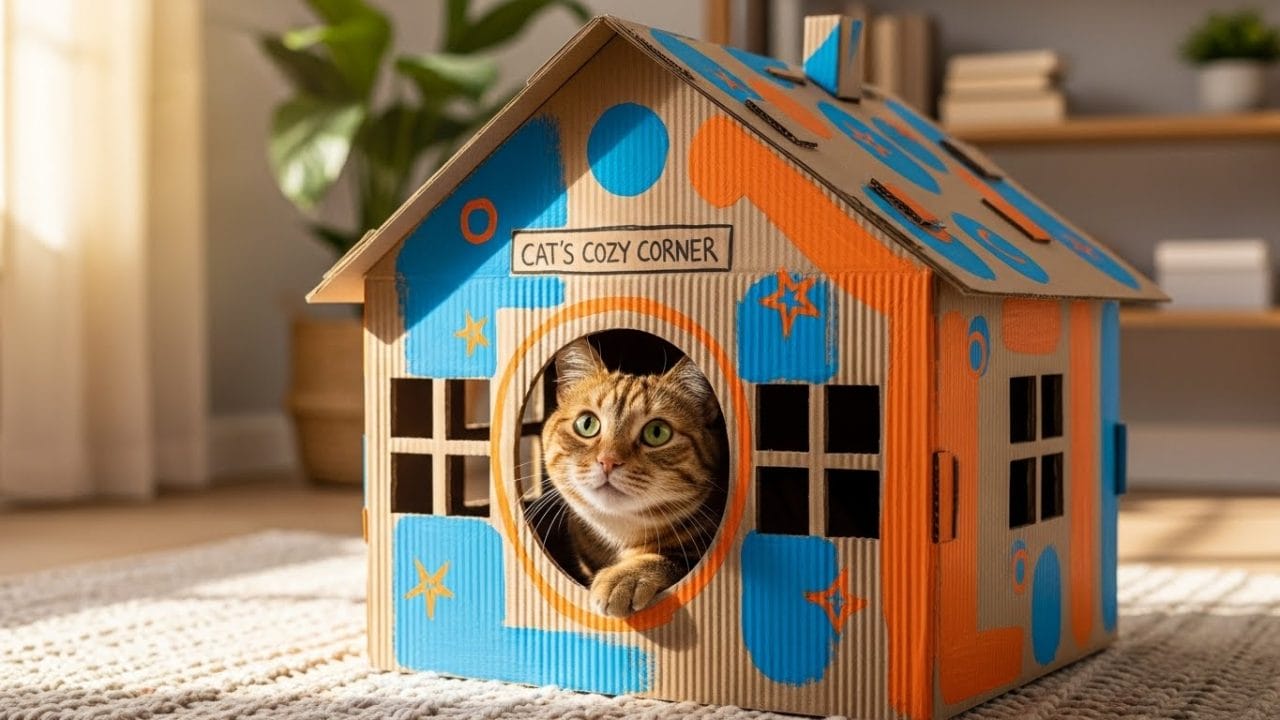
Look, if you’re gonna build a cardboard house, why not make it Instagram-worthy?
Start with two large boxes—delivery boxes work perfectly. Cut out windows, a door, and a peaked roof line. Then get creative with the add-ons: a little fireplace, window boxes, a front step. Use hot glue and tape to secure everything while it dries.
The painting part is where it gets fun.
One creative person made a white house with a grey rock facade, bright orange door, and light blue accents. Their cats actually used it for over a year before it finally gave up. Paint it whatever matches your decor—mid-century modern, beach cottage, haunted mansion, whatever.
Reality check: This takes a weekend if you’re going all out, but your cat will have the coolest house on the block.
Wire Hangers + Cardboard + T-Shirt = Cat Tent
This one’s weirdly satisfying to make.
Take two wire hangers and bend them into an X shape, taping them together at the center. Place this frame on top of a square piece of cardboard (cut from a box), then tape the hanger ends to the cardboard corners. You’ve just made a dome frame.
Now pull a t-shirt over the entire frame with the neck hole at one end.
What you get: A tent-shaped hideout that cats go absolutely nuts for. The fabric gives them that cozy den feeling, and the structure is stable enough that it won’t collapse when they inevitably decide to pounce on it at 3 AM.
Time: 5 minutes. I’m not kidding.
Wooden Pallet A-Frame (For the Carpenter in You)
If you’ve got basic woodworking skills and access to free pallets, this is your project.
Build an A-frame structure using recycled pallet wood. The peaked roof sheds rain and snow naturally, and the rustic look actually fits most backyards perfectly. You’ll need to add insulation between the walls if you’re using this in winter—spray foam or rigid insulation works great.
Important safety note: Make sure your pallets aren’t treated with harmful chemicals. Look for the “HT” stamp which means heat-treated, not chemically treated.
Some people stain these to match their deck furniture, while others leave them natural for that shabby-chic vibe.
Cost: Free pallets + $20-30 for insulation and hardware.
Cardboard Cat Castle (Go Big or Go Home)
This is what happens when cardboard addiction meets cat obsession.
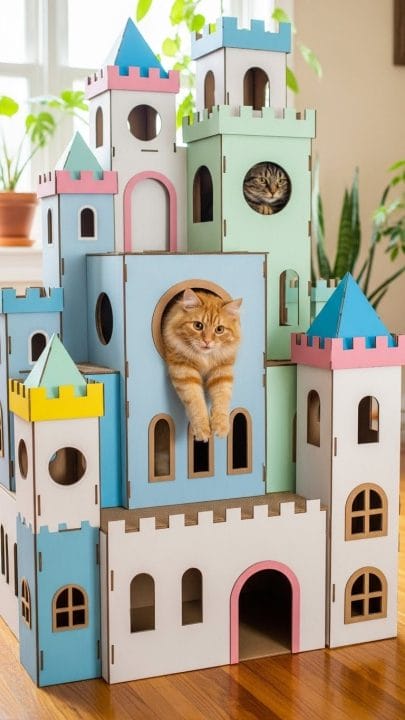
Stack multiple boxes of different sizes to create a multi-level fortress complete with drawbridge, towers, and fortress walls. Cut windows and doors at various heights so your cat can climb between levels. Some people even add little flags and banners using paper and toothpicks.
Fair warning: This project is addictive.
You’ll start with a simple house and suddenly you’re adding a second tower and a courtyard. But honestly? The look on your cat’s face when they explore their new castle is worth every minute of cutting and gluing.
Best for: Cats who like to climb and survey their kingdom from above.
The Concrete Tube House (Modern & Durable)
Buy a concrete form tube from the hardware store (they’re like $10-15).
Cut a 16-inch section, then cut an opening along one side about 6.5 inches wide. Sand the rough edges so your cat doesn’t get scratched. Paint it with acrylic paint—any color you want—and add a foam cushion inside.
Why cats love this: The rounded shape mimics a cave or hollow log, which triggers their natural denning instincts. Plus, the solid structure means it won’t tip over when they do their crazy parkour moves.
You can make three cat houses from one tube if you want to hook up the whole neighborhood cat crew.
Durability: This thing will outlast most cats’ attention spans.
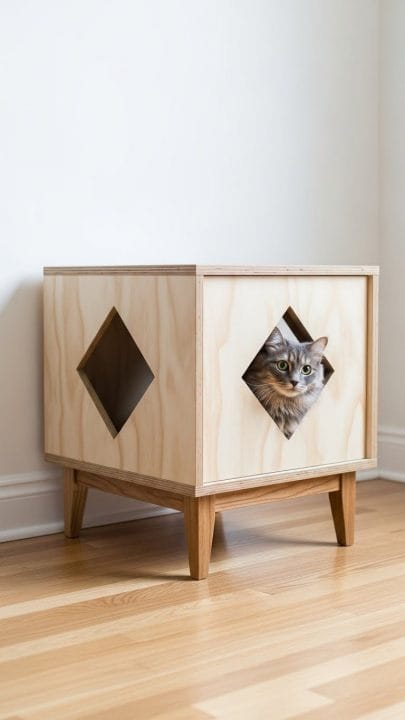
Plywood Side Table Cat House (Furniture That Works)
This one’s next-level because it doubles as actual furniture.
Build a two-tier end table using one sheet of plywood, but cut diamond-shaped entrances in the sides so your cat can get inside. The table holds your coffee, the cat gets a hideout—everybody wins.
The genius part: Your guests will think it’s just a cool mid-century modern side table until your cat pops their head out of the diamond hole. It’s like a magic trick but with more cat hair.
You’ll need basic woodworking tools—table saw, drill, sander—but the final product looks professional enough to sell on Etsy.
Time investment: A weekend afternoon if you’re comfortable with tools.
Vintage Camper Cardboard House (For Adventurous Cats)
Turn a long cardboard box into a retro Airstream-style camper.
Cut windows along the sides, add a door at one end, and paint it with that classic silver aluminum look (or go wild with a custom paint job). Some people add fake license plates, taillights, and even little curtains in the windows.
Extra credit: Cut out tiny tail fins or a sun roof. Add racing stripes. Your cat won’t appreciate the details, but you’ll get some serious creative satisfaction.
One person even added a cardboard “hitch” so it looked like their cat was ready for a cross-country road trip.
Perfect for: Cat owners who miss their camping days.
What Actually Matters When Building a Cat House
Let’s get real about cat house priorities.
Size matters: The entrance should be about 1.5 times your cat’s width. Too big and they won’t feel secure. Too small and, well, your chonky cat won’t fit.
Location is everything: Cats want to observe their territory while feeling protected. Put the house where they can see what’s happening but also feel hidden. Near a window or in a quiet corner usually works best.
Multiple exits save lives: If you’re building for outdoor or feral cats, always include two exits. This prevents cats from getting trapped by predators (or aggressive neighborhood cats).
Straw over blankets: For outdoor shelters, straw is non-negotiable. Blankets absorb moisture and freeze. Straw repels water and provides better insulation.
Your scent helps: Using old clothes or fabric you’ve worn makes cats more likely to actually use their new house. Cats are weird like that—they want their own space, but they also want it to smell like you.
Why Bother Making a Cat House Anyway?
Because store-bought cat houses are either ridiculously expensive or look like rejected furniture from a catalog.
DIY cat houses cost almost nothing. Most of these projects use stuff you already have—cardboard boxes, old t-shirts, plastic totes you bought on sale. The expensive wooden outdoor house with a microchip door? That cost someone $300. But the cardboard castle or t-shirt tent? Free.
Plus, there’s something weirdly satisfying about building stuff for your cat.
They might ignore it for three days, then suddenly decide it’s the best thing ever and spend half their day inside. Or they might use it once and go back to sleeping on your laptop. That’s cats for you.
But here’s the thing: even if your cat only uses it occasionally, you’ve given them options. Cats are all about having choices. Sometimes they want to be social, sometimes they want to disappear into their private den.
And honestly? The building process is kind of fun.
You get to use power tools (or scissors, depending on the project), be creative with paint and decorations, and feel like a legit pet parent who actually does stuff for their animals beyond filling the food bowl.
One Last Thing
Start simple if you’ve never built anything before.
The t-shirt tent or cardboard box house takes literally minutes and requires zero skills. If your cat loves it, great—you can upgrade later. If they sniff it once and walk away, you’ve lost 10 minutes and zero dollars.
Don’t stress about making it perfect. Cats don’t care if your paint lines are crospy or your measurements are slightly off. They care about whether it feels safe, smells familiar, and gives them a good vantage point for judging your life choices.
Now go build your cat a house before they claim another one of your favorite sitting spots.
Your furniture (and your cat) will thank you.