GigaPaw.com participates in affiliate programs including Amazon Associates. We earn from qualifying purchases. Content is for informational purposes only—consult a licensed veterinarian for pet medical advice.
9 Hidden Litter Box Ideas for Renters (No Drilling, No Damage, No Deposit Stress)

You finally have your apartment looking decent.
Then you remember the litter box sitting in the corner like a crime scene.
You can’t drill into the wall. You can’t paint the trim. You definitely can’t lose your security deposit because you tried to mount an IKEA shelf with a hammer and a prayer.
So here we are.
This is the renter’s guide to hiding a litter box without putting one hole in one wall.
Every idea here passes three tests: no drilling, no permanent damage, and nothing your landlord can charge you for at move-out.
The Renter’s Litter Box Rules (Read This First)
Before we get into setups, let’s set the bar.
A “renter-friendly” hidden litter box (Shop hidden litter box furniture on Amazon) has to do four things at once.
| Rule | Why It Matters |
|---|---|
| No drilling or wall anchors | Even small holes can trigger a $50-$200 patch charge per wall |
| Freestanding or curtain-based | The whole setup has to move with you, intact |
| No paint, glue, or adhesive on rentals | Removable hooks fail more often than people admit, especially on textured walls |
| Cat can still find it easily | A hidden box your cat refuses to use is just expensive trash |
If a setup needs you to mount, screw, glue, or paint anything onto the apartment itself, skip it.
A landlord can keep your deposit for damage they call “above normal wear.” Two screw holes in drywall and a paint touch-up are exactly the kind of thing they love to bill.
Now let’s get into the actual ideas.
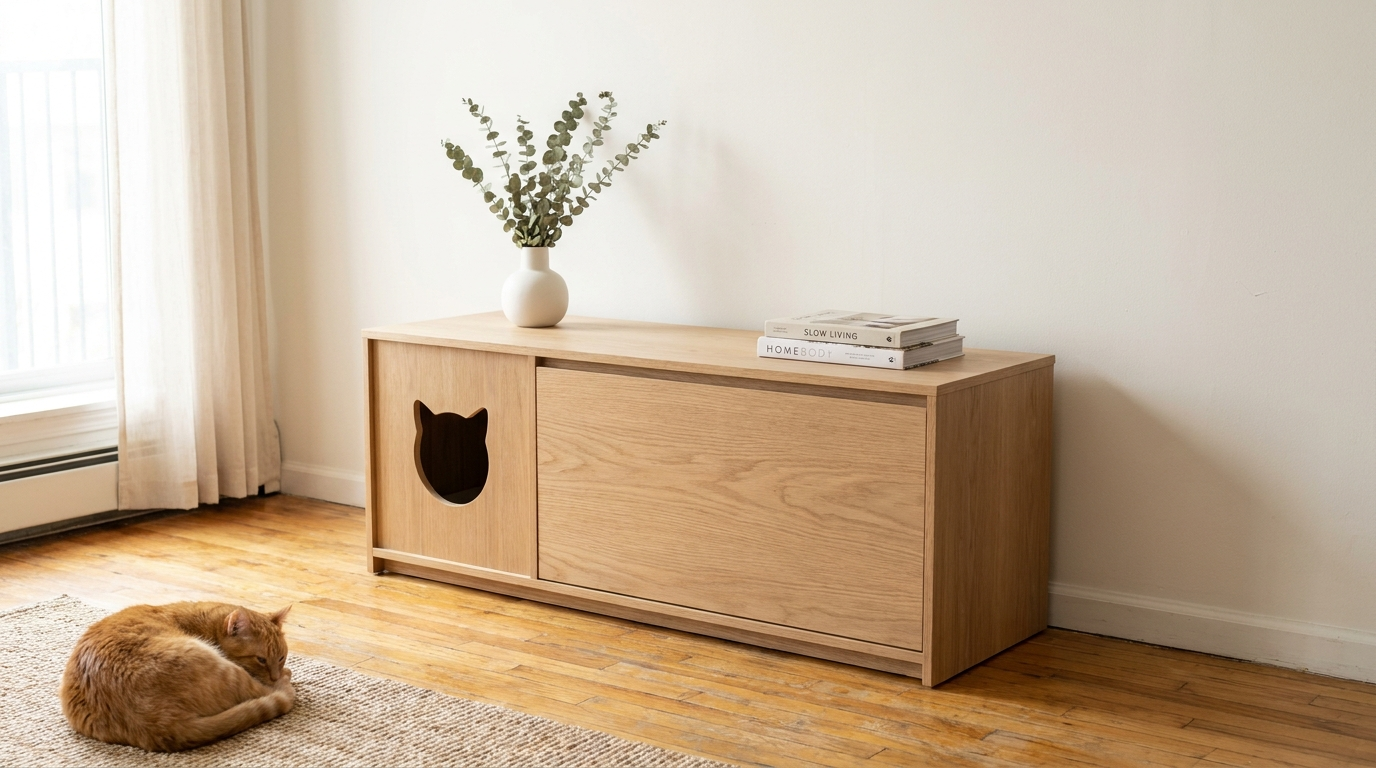
1. The Freestanding Litter Cabinet (Looks Like a Sideboard)
This is the easiest win for any renter, hands down.
You buy a litter box cabinet that’s built to sit on the floor like a regular piece of furniture. No mounting, no drilling, no wall contact required.
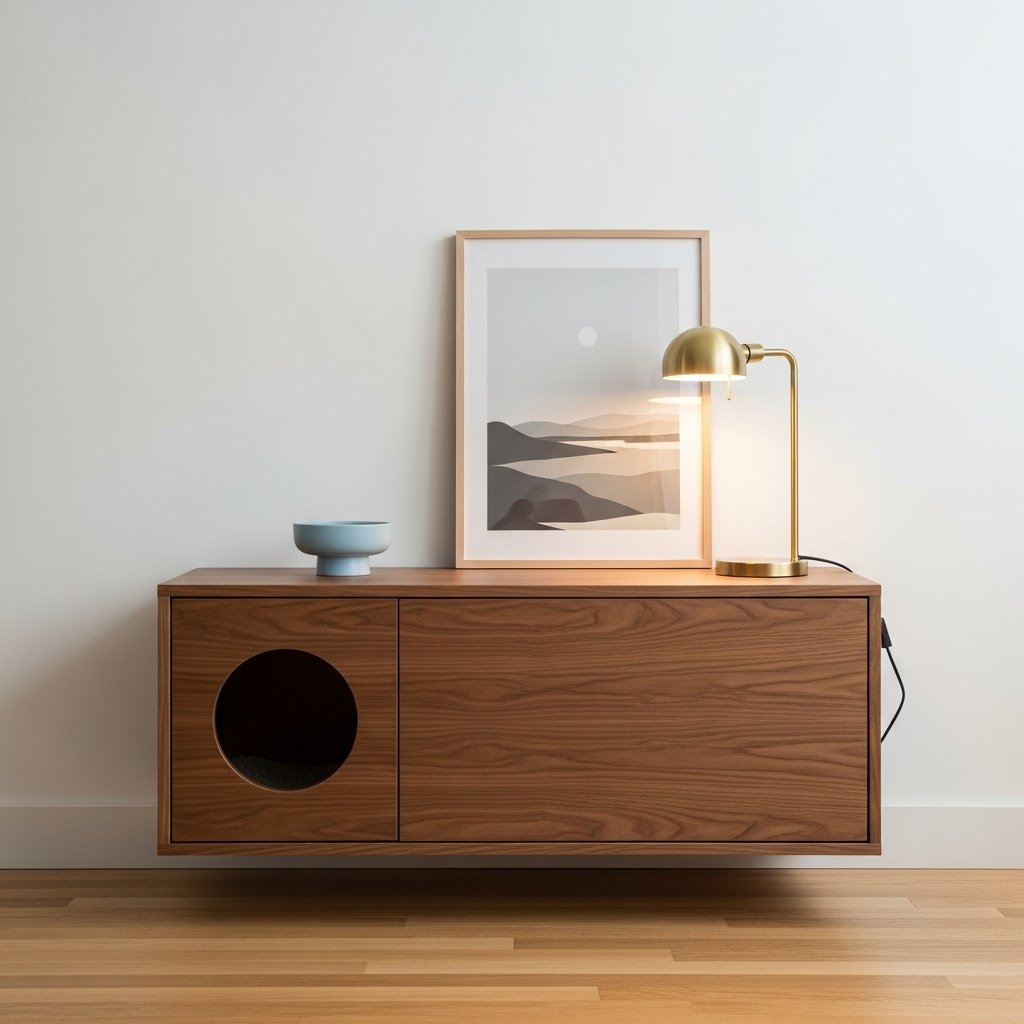
The good ones look like a small console, sideboard, or nightstand. Guests sit on top of them, set drinks on them, and never figure out what’s inside.
Why renters love this one
You assemble it once, slide it against any wall, and walk away. When you move, you disassemble or just lift and carry.
Look for these features when shopping:
- Side entry your cat can reach without crawling under low furniture
- Removable inner panel so you can scoop without dragging the box out
- Ventilation slots so odor doesn’t get trapped
- A finish that matches the rest of your apartment, not a “pet store” wood tone
A solid mid-range cabinet runs $120-$200 and lasts through several moves. That’s roughly the cost of one wall-repair charge, so it pays for itself the first time you hand back your keys.
2. The Tension Rod + Curtain Hide (The Classic Deposit-Saver)
If you have any nook, alcove, recessed wall, or doorway you’d rather not look at, this is your friend.
A spring tension rod wedges between two surfaces with zero hardware. You hang a curtain panel from it, leave one side open as the entry, and the whole thing becomes a private cat suite.
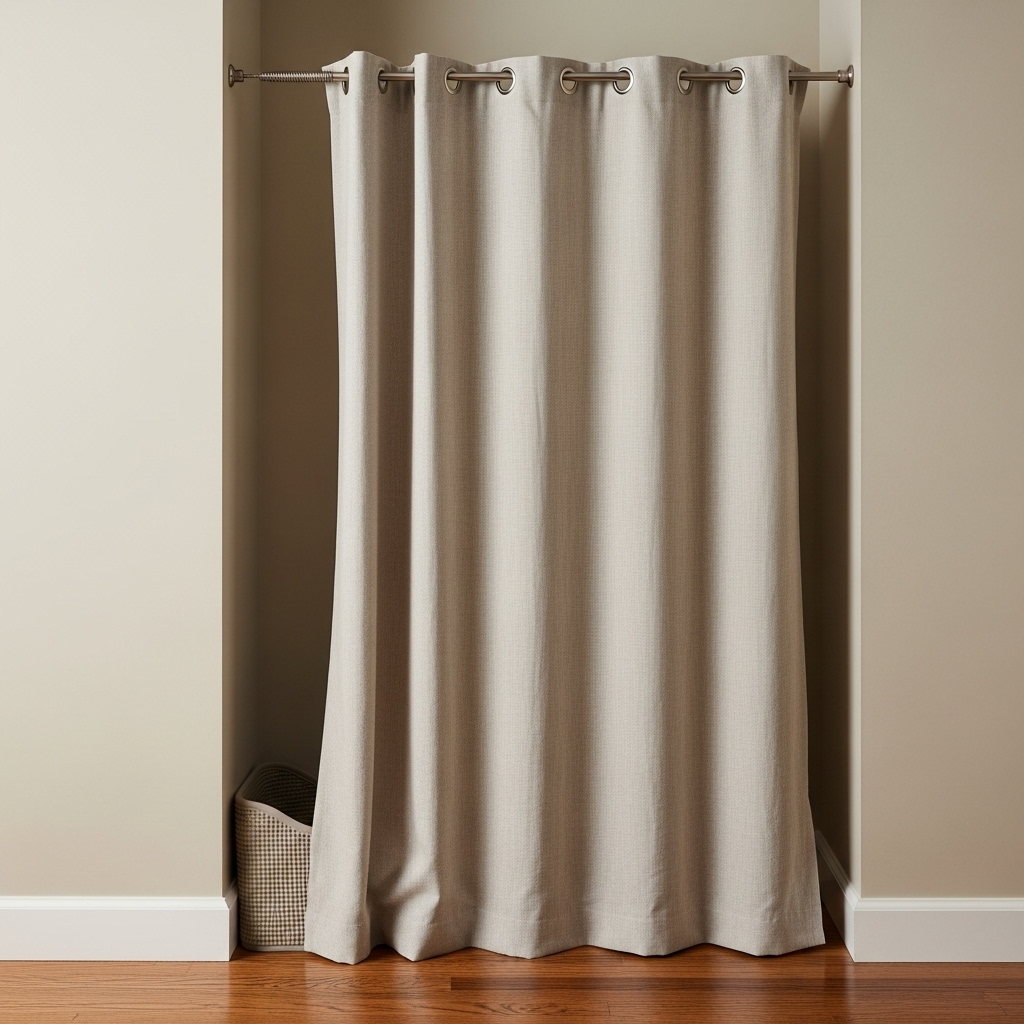
How to set it up in under 10 minutes
- Measure the gap between two walls (or one wall and a piece of heavy furniture).
- Buy a tension rod rated for that span, plus 1-2 inches of overlap.
- Hang any curtain panel that matches your decor.
- Slide the litter box behind the curtain with the open end facing the entry.
That’s it. No drill, no anchors, no holes.
Pro tip: Pair this with a low-tracking clumping litter and a mat just behind the curtain. The curtain catches sightlines and the mat catches everything else.
3. The Skirted Console Table (Use What You Already Own)
You probably already have a console, side table, or low desk somewhere in your apartment.
If there’s space underneath, you have a hidden litter box waiting to happen.
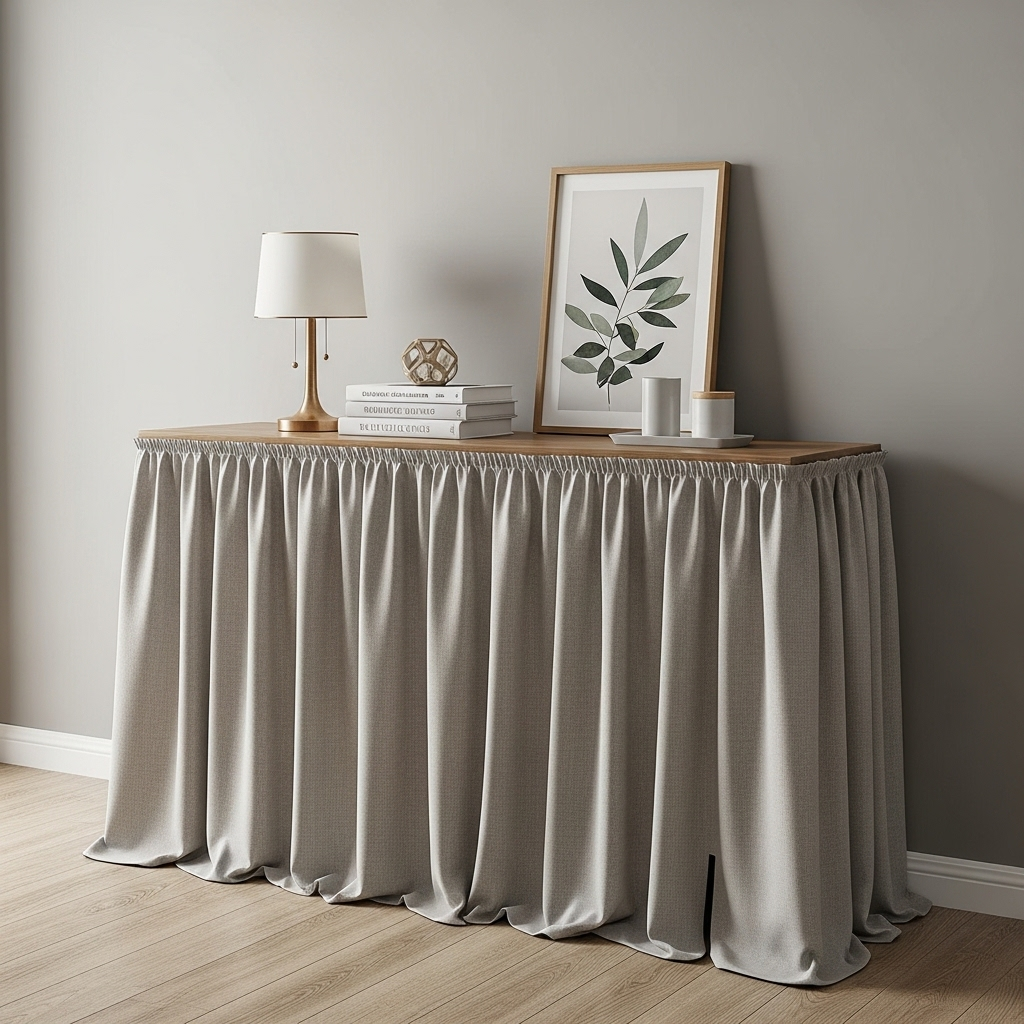
The setup
Drape a fabric skirt around the legs of the table. Velcro strips, clip-on curtain hooks, or even simple ribbon ties keep the fabric in place without a single nail.
Leave a flap or gap on one side facing a wall so your cat has a clear entrance, but guests only see the front-facing decorative panel.
The fabric is a tablecloth in disguise. You take it off, fold it up, and pack it when you move. The table goes with you. The wall stays untouched.
4. The IKEA Kallax Cat Cube (No Mounting Required)
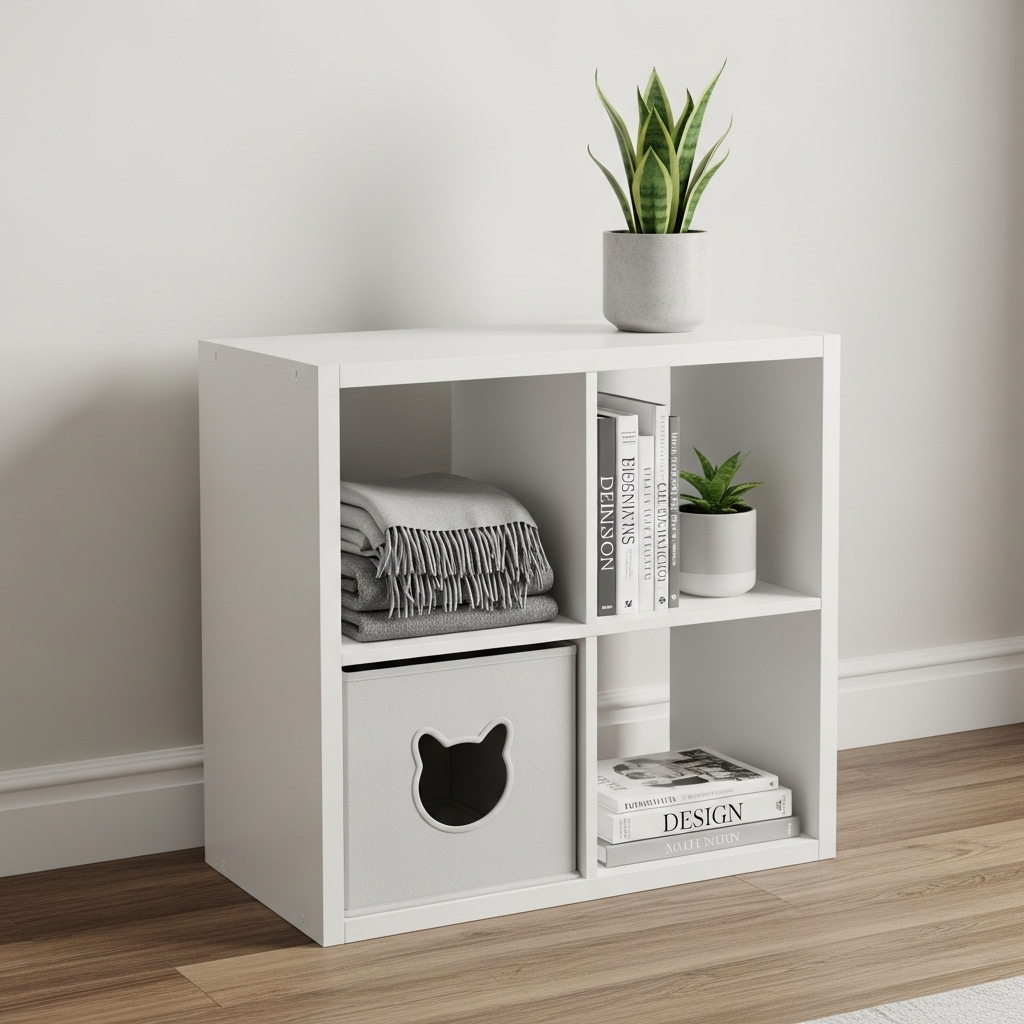
The Kallax has been a renter favorite for years for a reason: it doesn’t need to be bolted to anything.
It sits flat on the floor, holds its shape, and offers 13×13-inch cubes that fit most standard litter boxes.
How to do it without damaging anything
Buy a single-row or 2×2 Kallax and place it where you want the box. Replace one cube insert with a fabric drawer that has a cat-sized opening cut into the front, or pop in a pre-made litter-box insert designed for Kallax cubes.
You’re not screwing it to the wall, so the included anti-tip strap stays in the box. Done.
When you move, you can disassemble the Kallax or wheel it onto a furniture dolly and take the whole thing with you. Zero holes, zero damage, zero deposit risk.
5. The Litter Bench (Doubles as Seating, Sits on the Floor)
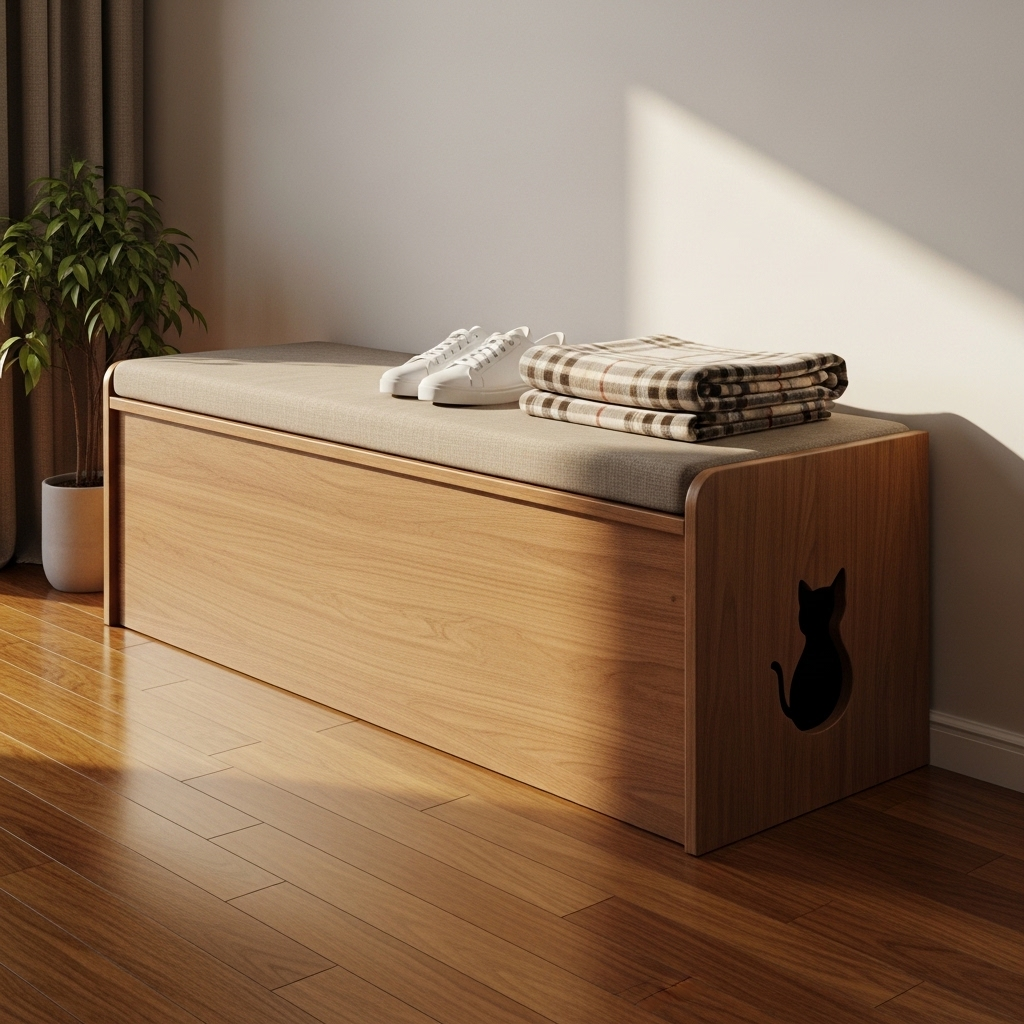
A litter box bench looks like a small entryway bench or storage ottoman.
Inside, it hides a full-size litter pan. On top, it holds a cushion you can actually sit on.
Why renters get more out of this than homeowners
Apartments rarely have built-in entryway storage. So you get to solve two problems with one piece of furniture without committing to anything.
It’s freestanding. It moves. It earns its square footage twice.
A few quick wins to look for:
- Side entry (top-loaders are harder for older or chubbier cats)
- Removable cushion so you can spot-clean fabric
- Latching front panel for easy scooping access
Most quality benches run $80-$160, which is cheaper than a single deposit deduction in most cities.
6. The Folding Screen Hide (Zero Permanent Setup)
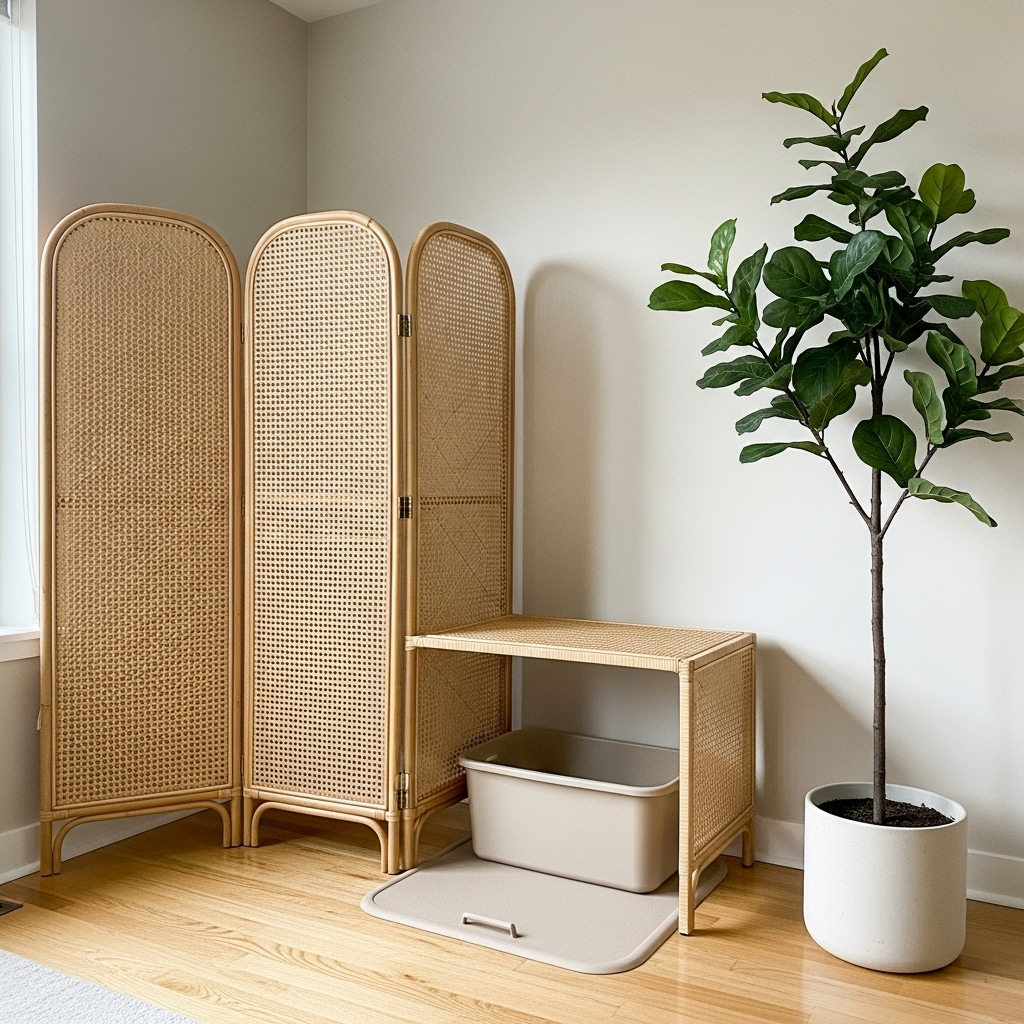
A three-panel folding screen is the most renter-friendly thing on the planet.
You unfold it, place it, and your litter box is hidden. You fold it up and lean it against a closet when you move.
Where this works best
Studios. Open-plan one-bedrooms. Any spot where you don’t have a natural nook to tuck the box into.
Set the screen in an L-shape around the box, with one side acting as the cat’s entry path. Pick a screen with woven panels or rattan if airflow matters for odor control.
A decent folding screen is $50-$120 and lives a long second life as a regular room divider after your cat stops needing the cover.
7. The Cut-Lid Storage Bin (Under $30, Move-Friendly)
This is the budget option, and it works.
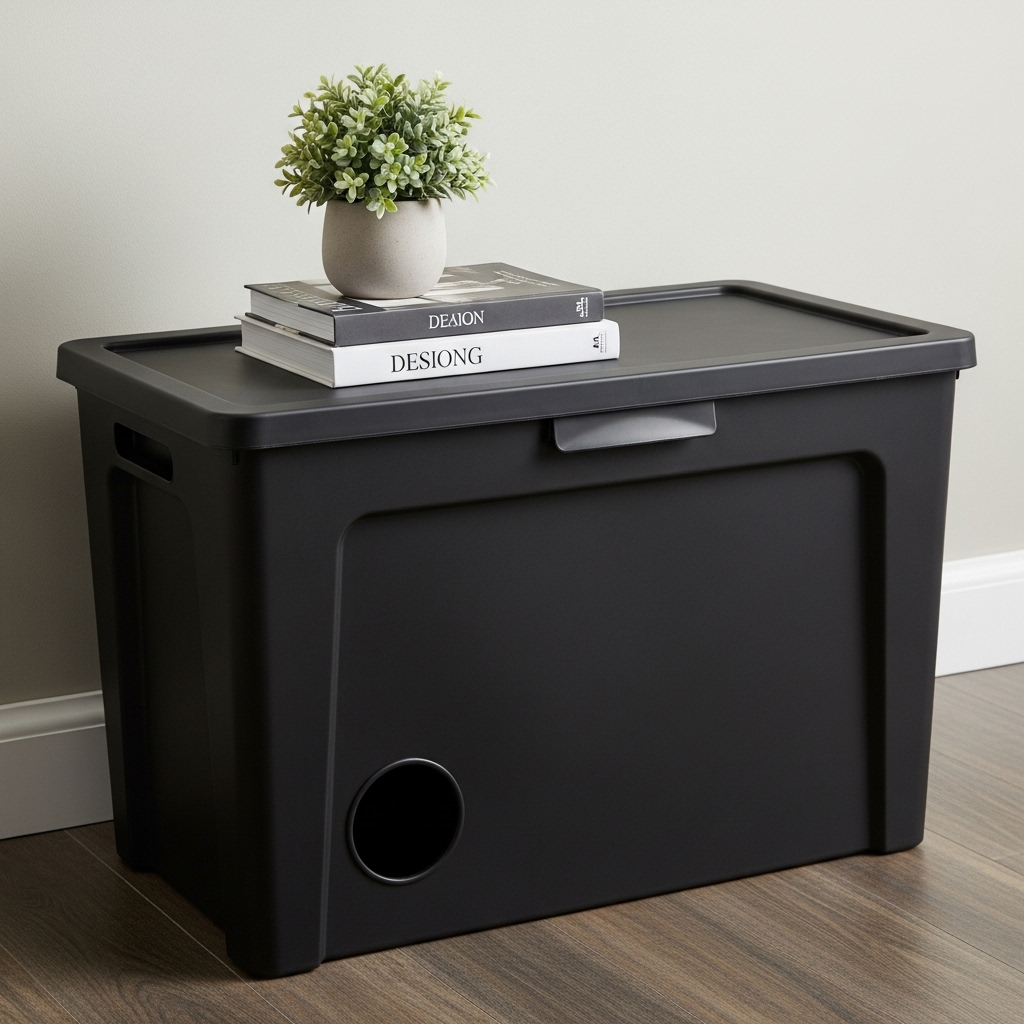
Buy a large plastic storage tub with a clip-on lid. Cut a cat-sized hole in the lid or one of the side panels.
That’s the whole project.
Why this beats a “real” enclosure for some renters
It’s light. It’s cheap. It’s easy to scrub. It survives a move in the back of a U-Haul with zero damage.
A few tips that make it look less like a literal tub:
- Pick a bin in matte black, deep navy, or a wood-grain finish (not safety orange)
- Place a small fake plant or stack of books on top to break the “storage” silhouette
- Use a bin tall enough that your cat can stand without ducking
This is the setup I’d quietly recommend to anyone living somewhere short-term, like a sublet or a six-month lease, where you don’t want to invest in furniture you’ll have to lug.
8. The Vanity-Door Curtain Swap (Door Goes Back On at Move-Out)
This one is sneaky-clever and works in almost any rental bathroom or kitchenette with a cabinet under the sink.
You unscrew the existing cabinet door, store it in a closet for safekeeping, and hang a curtain panel across the opening with a tension rod or adhesive Velcro on the inside edge of the cabinet frame.
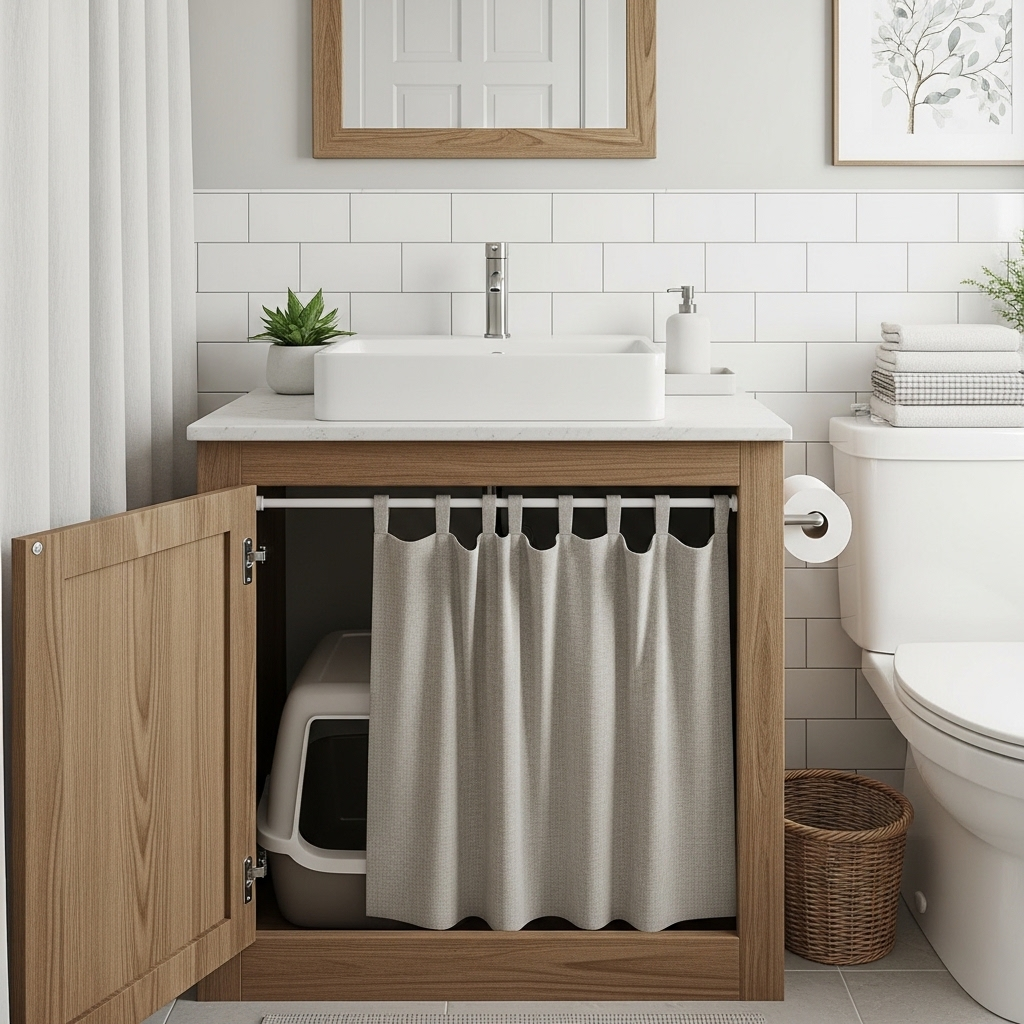
Why landlords don’t care
The door is fine. You stored it. You’ll put it back on move-out day with the same hinges and screws that came with it.
The cabinet itself never gets drilled, painted, or modified.
Your cat walks under the curtain, uses the box inside the cabinet, and the smell stays mostly contained by the cabinet walls. Pop in a litter deodorizer and run a bathroom vent fan after scooping.
This is one of the cleanest hidden setups you can do in a tiny apartment.
9. The Closet Reroute (Tension Rod + Pet Flap, No Drilling)
If you have a closet you barely use, you have a hidden litter box room.
You don’t have to cut the closet door. You don’t have to install anything.
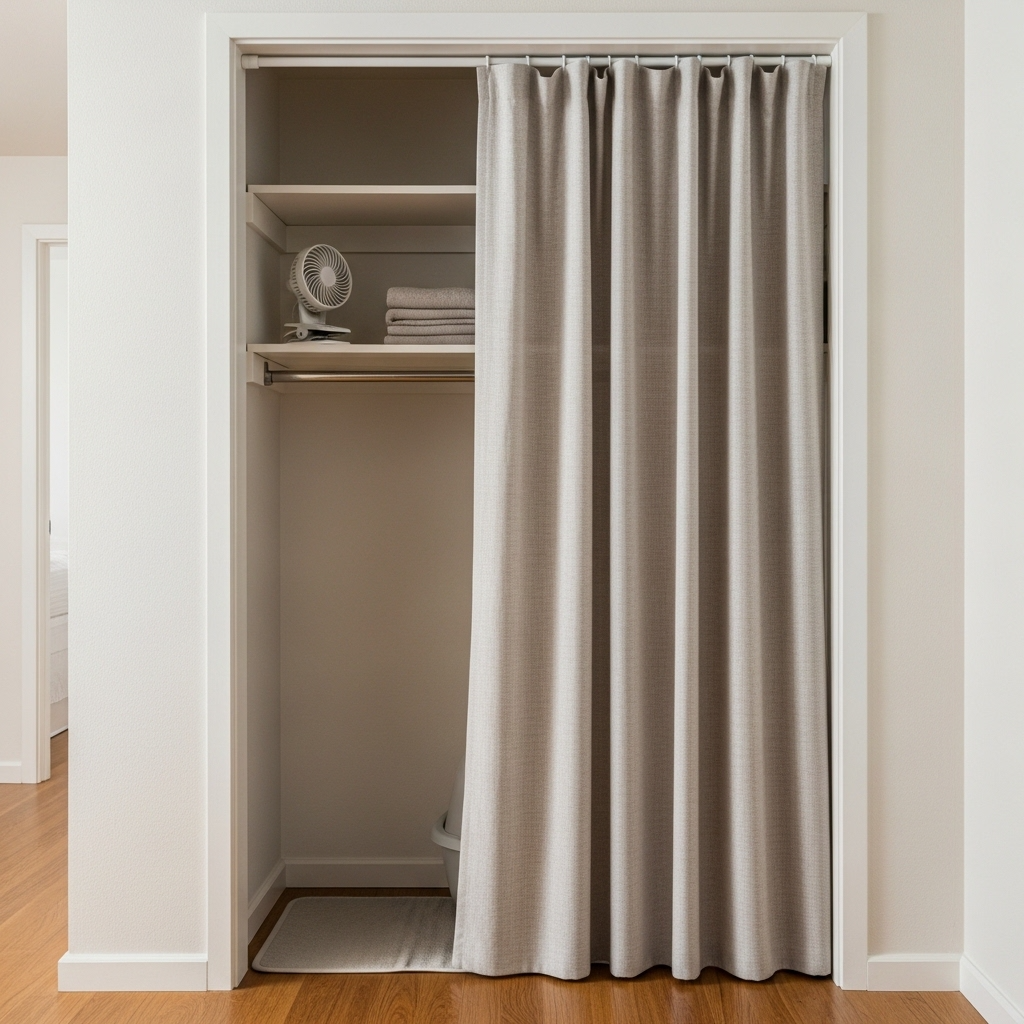
The renter-safe setup
- Leave the closet door slightly ajar with a doorstop or wedge so your cat can push it open.
- Or replace the door with a tension-rod curtain across the closet opening.
- Place the litter box inside, on top of a tracking mat to catch debris.
- Add a small clip-on fan or rechargeable air purifier for airflow.
The closet stays sealed at the floor and the ceiling. No holes. No cuts. Your deposit stays exactly where it should: in your bank account, eventually.
The Renter’s Hidden Litter Box Gear Checklist
Whichever setup you pick, these no-tool extras make the whole thing work better.
| Item | Why It Matters |
|---|---|
| Spring tension rod | The backbone of any curtain-based hide |
| Curtain panel (machine washable) | Goes from rental to rental |
| Adhesive Velcro strips (renter-safe brands) | Holds light fabric without paint damage when removed correctly |
| Low-tracking clumping litter | Less mess escaping the hidden setup |
| Litter-catching mat | Stops tracking from giving away the box location |
| Litter deodorizer powder | Keeps small hidden spaces from getting funky |
| Small clip-on fan or rechargeable purifier | Airflow without modifying any wall |
Total renter-friendly investment, even on the higher end: roughly $150-$300 depending on which setup you pick. Lose your deposit even once and that math becomes obvious fast.
Renter Mistakes That Quietly Cost You Your Deposit
Some “harmless” hidden box hacks can absolutely show up on your move-out itemized bill.
Skip these unless you’re okay paying:
- Adhesive hooks left on textured or freshly painted walls (paint peels with the hook)
- Stick-on cat doors mounted to a rental closet door
- Drilling “tiny” pilot holes for a curtain rod (still a hole)
- Painting a freestanding cabinet to match the wall (technically fine, but the cabinet is yours, so paint it before you bring it in)
- Velcro the wrong way around on rental drywall (the strong side comes off with paint)
The rule is simple: if it has to attach to the apartment itself, it’s not renter-safe. If it attaches to your own stuff, you’re good.
Finally, The Sanity Check
Your cat doesn’t care if her bathroom looks chic.
She cares that it’s clean, accessible, in a quiet corner, and big enough to turn around in.
So pick the hidden setup that fits your apartment, your budget, and your move-out plan. Then scoop daily, keep a mat under the entry, and let the rest take care of itself.
You don’t need to drill anything to have a clean-looking apartment with a cat. You just need a tension rod, the right cabinet, and zero patience for landlord deposit games.
If you want more renter-friendly cat ideas, the next post you should read is on smart cat apartment setups for tiny spaces — same energy, different room.