GigaPaw.com participates in affiliate programs including Amazon Associates. We earn from qualifying purchases. Content is for informational purposes only—consult a licensed veterinarian for pet medical advice.
6 Vet-Approved Homemade Cat Food Recipes for Sensitive Stomachs

So your cat’s been treating the litter box like a crime scene, and you’re standing there at 2 AM wondering where it all went wrong.
Yeah, I’ve been there.
If your cat has a sensitive stomach, you already know the drill. The random vomiting. The mystery poops. The absolute betrayal in their eyes when you open yet another can of commercial food they refuse to eat.
Here’s the thing though. You don’t have to keep playing Russian roulette with store-bought cat food. You can actually make homemade cat food that’s gentle on your cat’s stomach, costs less than those fancy veterinary brands, and takes about the same effort as making yourself a sad weeknight dinner.
Let me walk you through everything.
Why Your Cat’s Stomach Is Acting Up in the First Place
Before you start playing chef, it helps to know why your cat’s gut is throwing tantrums.
Cats are obligate carnivores.
Their entire digestive system is built to process meat. Not corn. Not soy. Not whatever mystery filler makes up half the ingredients list on that budget kibble.
When you feed a cat something their body wasn’t designed to handle, things go sideways fast.
Here are the most common reasons for a sensitive stomach in cats:
- Sudden food changes are a big one. You can’t just swap your cat’s food overnight and expect smooth sailing. Their digestive system needs a solid 7 to 10 days to adjust.
- Food allergies or intolerances are more common than people think. Some cats react to specific proteins, grains, or dairy. And yes, your cat can develop an allergy to chicken even if they’ve eaten it their whole life.
- Low-quality ingredients in commercial food are a huge culprit. Cheap fillers, artificial preservatives, and vague ingredient labels like “meat by-products” can wreck a cat’s gut over time.
- Underlying health issues like inflammatory bowel disease, parasites, or pancreatitis might be hiding behind those symptoms. This is why a vet visit should always come first.
- Eating too fast is another classic. Some cats inhale their food like it’s their last meal on earth, and then promptly throw it all back up. A slow feeder bowl can work wonders here.
Quick Reference: Stomach-Friendly Ingredients at a Glance
| Category | Good Choices | Avoid |
|---|---|---|
| Proteins | Chicken, turkey, white fish, rabbit, chicken hearts | Fatty cuts of beef, pork, processed meats |
| Carbs (small amounts) | White rice, sweet potato, pumpkin | Corn, wheat, soy |
| Vegetables | Steamed carrots, green beans, pumpkin | Onions, garlic, leeks, chives, raw tomatoes |
| Supplements | Taurine, fish oil, calcium, cat multivitamin | Human supplements (wrong dosages) |
| Fiber | Plain canned pumpkin, steamed vegetables | High-fiber grains |
Why Homemade Cat Food Makes Sense for Sensitive Stomachs
The biggest advantage of homemade cat food is dead simple: you know exactly what’s going into your cat’s bowl.
No hidden preservatives. No mystery fillers. No ingredient you need a chemistry degree to pronounce.
You get full control over the protein source, which matters a lot when you’re trying to figure out what’s upsetting your cat’s stomach. And you can adjust recipes based on what your specific cat tolerates.
Plus, fresh food is just easier to digest. Wet, gently cooked meals are way kinder to a sensitive gut than dry kibble, which can be harder on the digestive system and often contains more fillers.
The Non-Negotiable Stuff: What Every Homemade Cat Meal Needs
Alright, before you start boiling chicken like you’re making soup for a sick friend (which, honestly, you kind of are), there are some critical nutritional bases you need to cover.
- Cats are not small dogs. They have very specific dietary needs, and skipping any of these can cause serious health problems.
Taurine Is Everything
Taurine is the single most important nutrient to understand when making homemade cat food. It’s an amino acid that cats absolutely cannot produce on their own. Without enough taurine, cats can develop dilated cardiomyopathy (a serious heart condition), go blind from retinal degeneration, and suffer from digestive problems.

Back in the 1980s, before taurine was routinely added to commercial cat food, thousands of cats developed heart disease. It was a big deal.
For homemade diets, veterinary experts recommend 250 to 500 milligrams of taurine per day, divided between meals. You can buy taurine supplements made specifically for cats, and they’re cheap.
Dark meat chicken, turkey thighs, and organ meats like heart and liver are the best natural sources. But even with those, supplementing is strongly recommended when you’re cooking at home.

The Other Must-Haves
Calcium is essential for bone health. Without it, your cat’s bones weaken over time. Bone meal or finely ground eggshells can work.
- Omega-3 fatty acids from fish oil help reduce gut inflammation and keep your cat’s coat looking good. A few drops of fish oil per meal does the trick.
- Vitamin E and B vitamins support everything from metabolism to immune function.
The simplest approach? Use a vet-recommended cat multivitamin alongside your homemade meals. It’s like an insurance policy for nutritional gaps.
Foods That Are Toxic to Cats (This Part Is Serious)
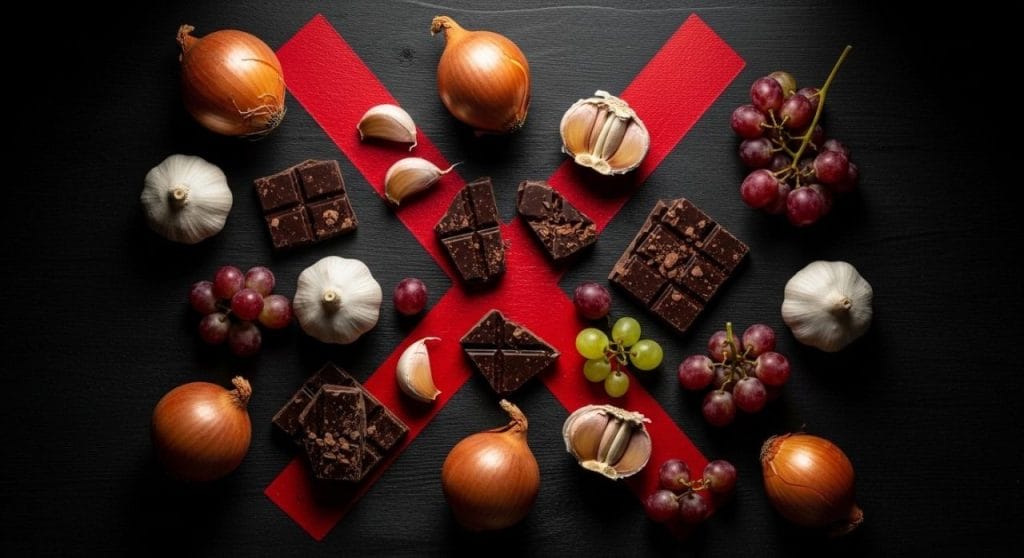
Before we get to the recipes, we need to talk about what will actually hurt your cat. This isn’t optional reading.
| Toxic Food | Why It’s Dangerous |
|---|---|
| Onions and garlic | Destroys red blood cells, causes anemia. Garlic is about 5 times more toxic than onions. Even powdered forms are dangerous. |
| Chocolate | Contains theobromine and caffeine. Darker chocolate is more dangerous. |
| Grapes and raisins | Can cause kidney failure. Any amount can be toxic. |
| Alcohol | Even tiny amounts can cause liver and brain damage. |
| Raw eggs | Risk of Salmonella and can interfere with vitamin absorption. |
| Xylitol | Found in sugar-free products. Causes dangerous blood sugar drops. |
| Dairy (large amounts) | Most adult cats are lactose intolerant. Small amounts of plain yogurt are usually fine. |
| Caffeine | Similar to chocolate toxicity. Keep coffee and tea away. |
The golden rule: no seasoning whatsoever. No salt, no pepper, no butter, no oil, no spices. Your cat’s food should be as plain as it gets.
The Best Proteins for Cats with Sensitive Stomachs
Not all proteins are created equal when it comes to sensitive tummies.
| Protein | Digestibility | Best For | Notes |
|---|---|---|---|
| Chicken | Very easy to digest | Most cats with sensitive stomachs | Lean, widely available, affordable. Use boneless, skinless breast or thigh. |
| Turkey | Very easy to digest | Cats who need variety from chicken | Low in fat, gentle on the gut. Avoid turkey with rosemary extract preservative. |
| White fish | Easy to digest | Cats who tolerate fish | High in omega-3s and taurine. Remove all bones carefully. |
| Rabbit | Easy to digest | Cats with food allergies | Novel protein most cats haven’t been exposed to. Great for elimination diets. |
| Salmon | Moderate | Omega-3 boost | Rich but can be too heavy for some sensitive cats. Use sparingly. |
| Lean beef | Moderate | Cats who need heartier meals | Higher in fat than poultry. Trim all excess fat. |
For sensitive stomachs, chicken and turkey are your safest bets. They’re lean, easy to digest, and most cats love them.
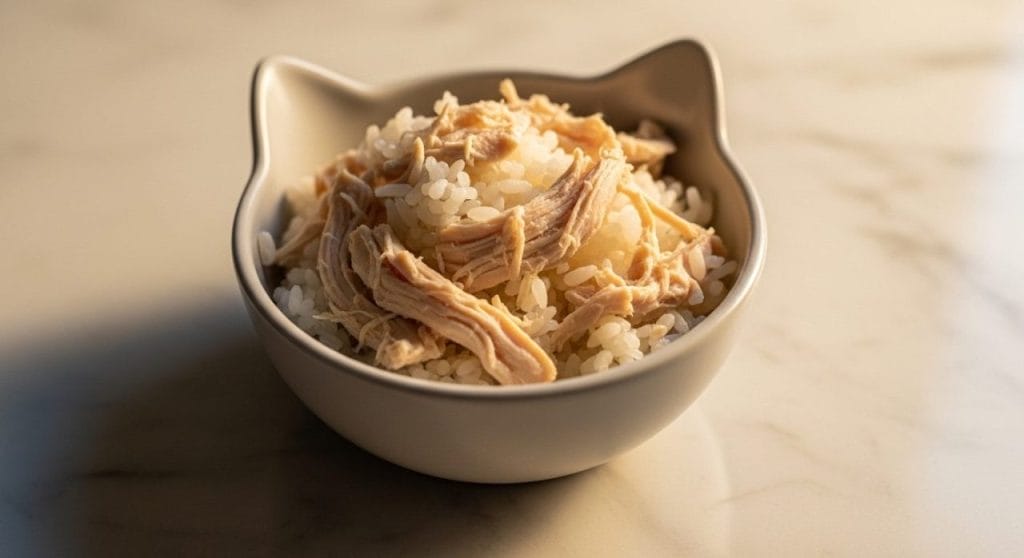
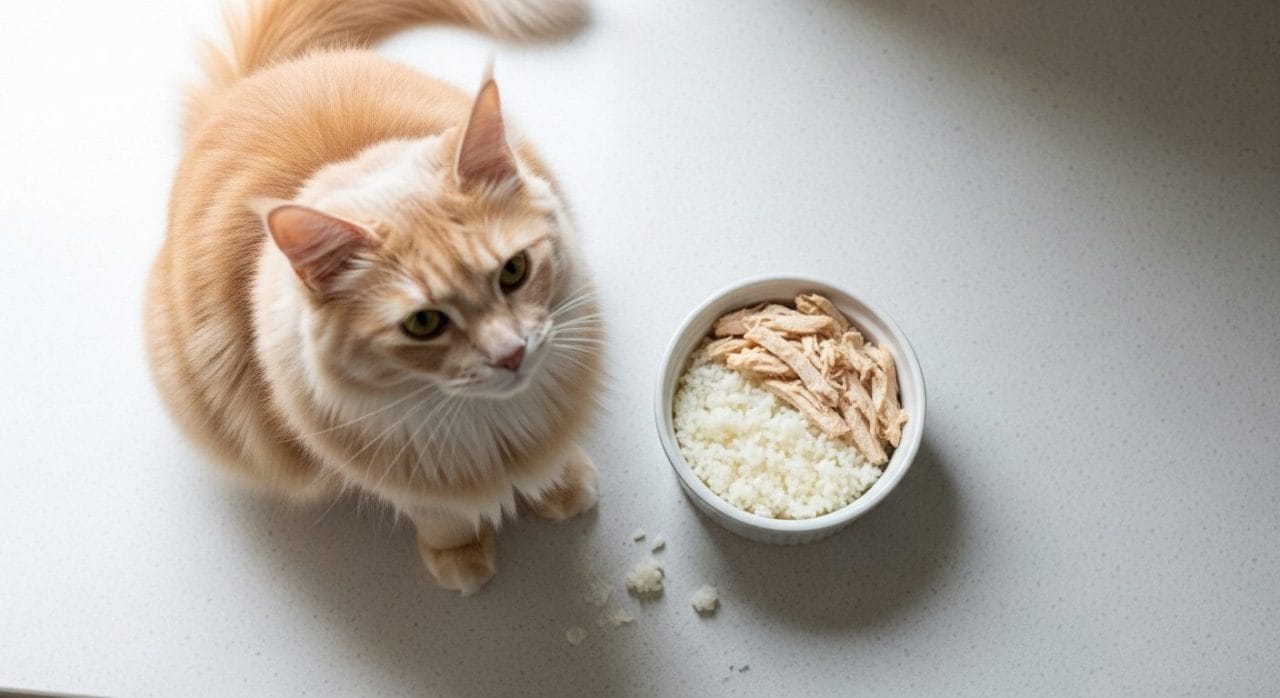
Recipe 1: The Classic Chicken and Rice Reset
This is the cat version of toast and tea after the flu. It’s the go-to recipe that vets recommend when your cat’s stomach is in full revolt mode.
Ingredients:
- 1 boneless, skinless chicken breast
- 1/4 cup white rice
- 1 taurine supplement (250mg)
- A few drops of fish oil
Instructions:
Boil the chicken breast in plain water until fully cooked all the way through. No seasoning. No shortcuts. No sneaking in a pinch of anything.
Cook the white rice separately until it’s soft and a little mushy.
Shred the chicken into tiny, bite-sized pieces. Mix with the rice at roughly a 3:1 ratio (more chicken than rice, because cats need protein, not carbs).
Let it cool to room temperature. Add the taurine supplement and fish oil. Stir gently.
Serve small portions. Refrigerate leftovers and use within 48 hours.
Why it works: Lean chicken provides easy-to-digest protein. White rice is bland and binding, which helps calm an upset digestive system. This combination gives the gut a chance to rest and recover.
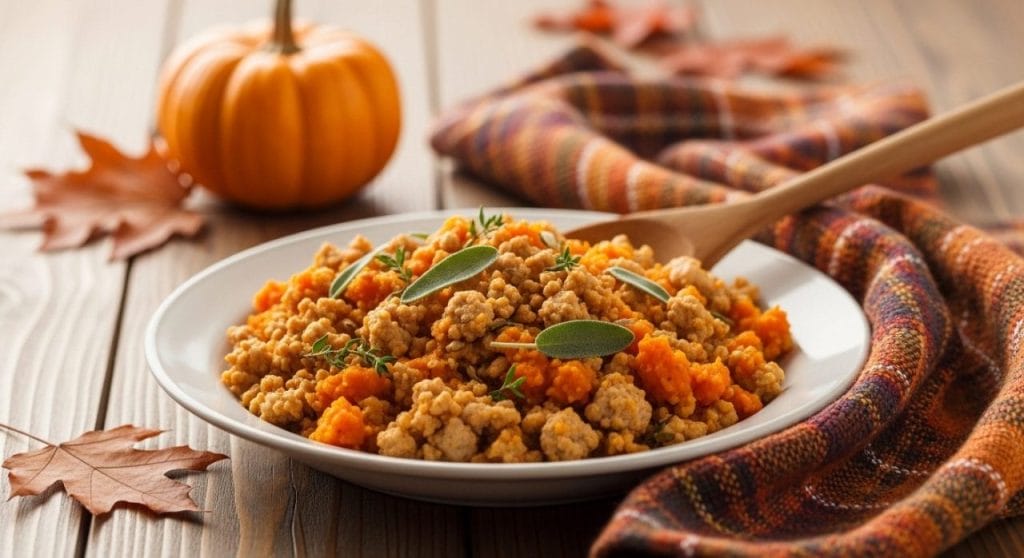
Recipe 2: Turkey and Pumpkin Soother
Pumpkin is low-key one of the best foods for a cat’s digestive health. It’s packed with soluble fiber that helps regulate digestion in both directions. Runny poop? Pumpkin firms it up. Constipated cat? Pumpkin gets things moving.
Ingredients:
- 1/2 pound ground turkey (lean)
- 2 tablespoons plain canned pumpkin (NOT pumpkin pie filling)
- 1 taurine supplement (250mg)
- A few drops of fish oil
Instructions:
Cook the ground turkey in a pan with no oil or butter until it’s fully browned. Drain any excess fat.
Mix in the pumpkin puree while the turkey is still slightly warm.
Let the mixture cool completely. Add taurine and fish oil.
Serve in small portions.
Why it works: Turkey is lean and gentle on the stomach. Pumpkin’s fiber content helps regulate digestion and can soothe both diarrhea and constipation. The combination is like a warm hug for your cat’s gut.
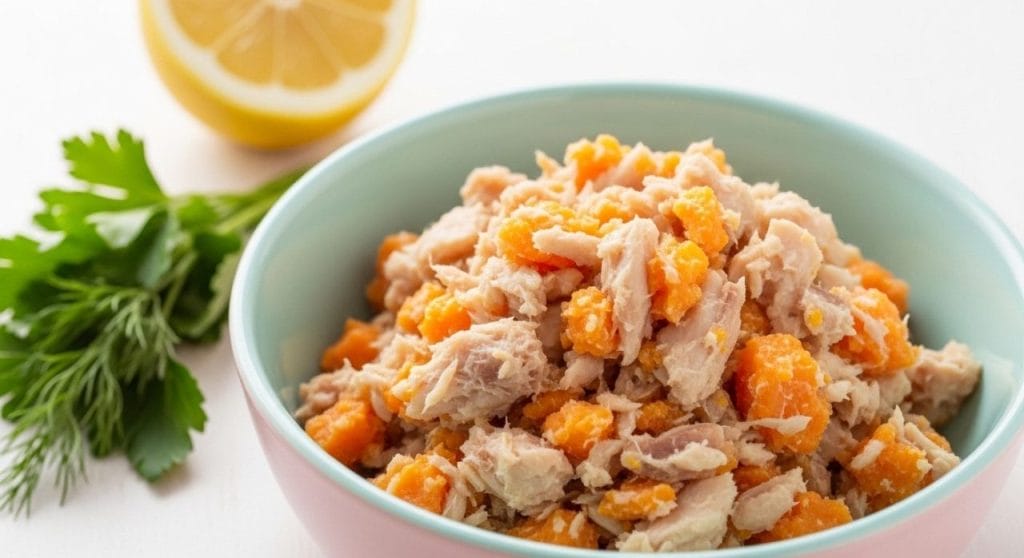
Recipe 3: White Fish and Sweet Potato Blend
For cats who tolerate fish well, this recipe delivers a serious omega-3 boost that helps reduce gut inflammation.
Ingredients:
- 1 small fillet of cod or whitefish
- 2 tablespoons mashed sweet potato
- 1 taurine supplement (250mg)
- A pinch of ground eggshell (for calcium)
Instructions:
Steam or bake the fish until it’s fully cooked and flakes easily. Go through it carefully and remove every single bone. I mean it. Every. Single. One.
Cook the sweet potato until it’s soft enough to mash with a fork.
Flake the fish into small pieces and mix with the mashed sweet potato.
Cool to room temperature. Add taurine and ground eggshell.
Why it works: White fish is highly digestible and loaded with taurine and omega-3 fatty acids. Sweet potato provides gentle fiber and vitamins without irritating the stomach.
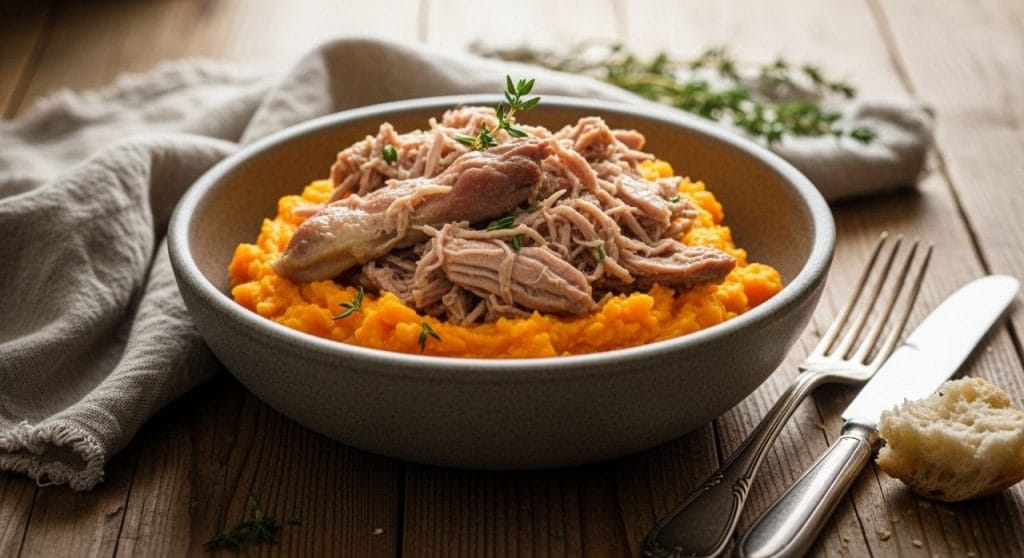
Recipe 4: Rabbit and Carrot Allergy Buster
If your cat seems to react to chicken, beef, and fish, rabbit might be the answer. It’s a novel protein, meaning most cats have never been exposed to it, so the chance of an allergic reaction is way lower.
Ingredients:
- 1/2 pound rabbit meat (boneless)
- 2 tablespoons steamed and mashed carrots
- 1 taurine supplement (250mg)
- A few drops of fish oil
- A pinch of calcium supplement
Instructions:
- Slow-cook or boil the rabbit meat until it’s tender and falls apart easily. Remove any bones.
- Steam carrots until they’re very soft, then mash them.
- Mix the rabbit and carrots together. Cool to room temperature.
- Add taurine, fish oil, and calcium supplement.
Why it works: Rabbit is lean, protein-rich, and easy on sensitive stomachs. It’s the protein that veterinary nutritionists often recommend for elimination diets when you’re trying to identify a food allergy.
Recipe 5: Chicken Heart and Green Bean Power Bowl
This one sounds weird, but hear me out. Chicken hearts are one of the best natural sources of taurine on the planet. They’re cheap, easy to find at most butcher counters, and cats go absolutely nuts for them.
Ingredients:
- 1/2 pound chicken hearts
- 2 tablespoons finely chopped steamed green beans
- 1 tablespoon steamed and mashed carrots
- A pinch of calcium supplement
Instructions:
Boil the chicken hearts until fully cooked. Chop them into small pieces.
Steam the green beans and carrots separately until soft. Chop the green beans finely and mash the carrots.
Mix everything together. Cool to room temperature.
Add the calcium supplement.
Why it works: Chicken hearts are naturally loaded with taurine, so you might not even need a separate supplement with this recipe (though double-check with your vet). The vegetables add gentle fiber for digestive support.
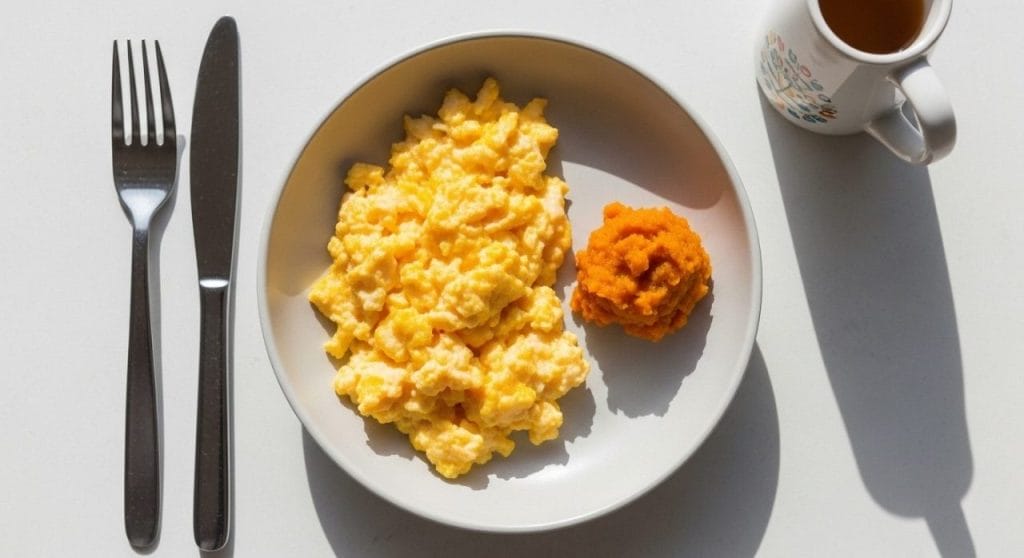
Recipe 6: Simple Scrambled Egg Meal
Sometimes you need something quick and easy. This recipe takes about five minutes and most cats find it irresistible.
Ingredients:
- 2 eggs
- 1 tablespoon plain canned pumpkin
- A few drops of fish oil
- 1 taurine supplement (250mg)
Instructions:
Scramble the eggs in a non-stick pan with no butter, oil, or seasoning.
Let them cool. Mix in the pumpkin puree.
Add taurine and fish oil.
Why it works: Eggs are a complete protein that’s easy to digest. Combined with pumpkin for fiber, this makes a quick meal that’s gentle on the stomach. Just don’t make this the only thing you feed your cat long-term. Variety matters.
Homemade Cat Food for Diarrhea
When your cat has diarrhea, the goal is to give the gut a break with low-fat, easy-to-digest food and add fiber to firm things up.
Best ingredients to use:
- Boiled chicken or turkey (lean, no skin) — gentle on an inflamed gut
- Plain canned pumpkin (1–2 tsp per meal) — soluble fiber that absorbs excess water in the intestines
- White rice — bland, binding, and easy to digest
- Steamed sweet potato — mild fiber without irritating the colon
Avoid fish and fatty cuts of meat while diarrhea is active. Fat slows down gut motility and makes things worse.
The Turkey and Pumpkin Soother (Recipe 2) above is the go-to for diarrhea. Pumpkin fiber firms up loose stools fast, and turkey is about as gentle as it gets on an irritated digestive tract.
If diarrhea lasts more than 48 hours, contains blood, or comes with lethargy or vomiting, skip the home remedies and call your vet.
Homemade Cat Food for Constipation
Constipation is the opposite problem — the gut is moving too slowly, and your cat is straining with nothing to show for it.
The fix is moisture and fiber. Cats with constipation are almost always dehydrated, so wet food is already a step in the right direction.
Best ingredients to use:
- Low-sodium chicken or bone broth — add a tablespoon to any recipe to boost moisture intake
- Plain canned pumpkin (1–2 tsp) — yes, the same ingredient works both ways. Soluble fiber regulates in both directions.
- Steamed green beans — gentle fiber that gets things moving
- Fish oil (a few drops) — lubricates the digestive tract and softens stool
The simplest fix: take any recipe above and stir in a tablespoon of warm broth before serving. Extra moisture is often all a constipated cat needs.
If your cat hasn’t defecated in 48+ hours, is straining and crying in the litter box, or has a hard distended belly, that’s a vet visit — not a home remedy situation.
How to Transition Your Cat to Homemade Food (Without Making Things Worse)
Here’s where a lot of people mess up. They read these recipes, get all excited, and dump a full bowl of homemade food in front of their cat on day one.
Don’t do that.
A sudden diet change is one of the fastest ways to trigger stomach upset. Even if the new food is objectively better.
The 10-day transition plan:
Days 1 to 3: Mix 25% homemade food with 75% of their current food.
Days 4 to 6: Go 50/50.
Days 7 to 9: Switch to 75% homemade and 25% old food.
Day 10: Full homemade.
Watch your cat’s stool, energy level, and appetite throughout the transition. If things get worse at any stage, slow down and give their stomach more time to adjust.
Storage and Food Safety Tips
Homemade cat food doesn’t have the preservatives that commercial food does, so you need to be more careful about storage.
- Refrigerate any leftovers immediately. Use within 48 hours.
- Freeze larger batches in individual serving portions. Homemade cat food freezes well for up to 3 months.
- Thaw frozen portions in the refrigerator overnight, not on the counter. Warming the food slightly in the microwave (just a few seconds) can make it more appealing and aromatic.
- Never leave wet food out for more than 30 minutes. Bacteria grows fast at room temperature.
- Wash everything that touches raw meat thoroughly. Cutting boards, knives, bowls, your hands. The same food safety rules that apply to cooking for humans apply here.
Feeding Schedule for Cats with Sensitive Stomachs
Cats with sensitive stomachs almost always do better with smaller, more frequent meals instead of one or two big ones.
Think about it. A cat’s stomach is roughly the size of a ping-pong ball. Cramming a huge meal into that tiny space is basically asking for trouble.
Aim for 3 to 4 small meals per day instead of 2 large ones. This gives the digestive system less work to do at any given time and reduces the chance of vomiting.
If your cat tends to eat too fast, a slow feeder bowl or puzzle feeder can help them pace themselves.
When Homemade Food Isn’t Enough
Let’s be real for a second. Homemade food is great, but it’s not magic.
If your cat has been vomiting for more than a day or two, has blood in their stool, is losing weight, seems lethargic, or stops eating entirely, get to a vet. These could be signs of something more serious like inflammatory bowel disease, pancreatitis, or parasites.
Homemade food works best as part of a bigger plan that includes proper veterinary care.
And here’s the advice you’ll hear from every vet and nutritionist: always consult your veterinarian before switching your cat to a fully homemade diet. They can help you make sure the meals are nutritionally complete and safe for your specific cat’s needs.
A veterinary nutritionist can even create a custom recipe tailored to your cat’s exact health situation. It’s worth the investment.
The Bottom Line
Making homemade cat food for a sensitive stomach isn’t complicated. It’s basically boiling meat, adding a veggie or two, and throwing in the right supplements.
The hard part is the patience. Finding what works for your specific cat takes time. What soothes one cat’s stomach might not agree with another’s.
But once you find that sweet spot? You’ll notice the difference. Fewer emergency clean-ups. A calmer, happier cat. And honestly, there’s something satisfying about watching your cat actually enjoy their food for once instead of giving it the side-eye and walking away.
Start with the chicken and rice recipe. See how your cat responds. Go from there.
And please, talk to your vet. They’re your teammate in this, not just the person you visit when things go wrong.
Your cat’s gut will thank you. Well, they won’t actually thank you because they’re a cat. But you’ll know.