
GigaPaw.com participates in affiliate programs including Amazon Associates. We earn from qualifying purchases. Content is for informational purposes only—consult a licensed veterinarian for pet medical advice.
How to Have a Christmas Tree When Your Cat Is a Chaos Agent

Look, we need to talk about the elephant in the room—or should I say, the cat in the tree.
If you’ve ever owned a cat during Christmas, you know exactly what I’m talking about. That moment when you hear suspicious jingling sounds at 3 AM, followed by a crash that could wake the dead. You rush downstairs to find Mr. Whiskers dangling from the top branch like a furry ornament, looking at you like you’re the one who’s lost it.
The truth is, cats and Christmas trees have a complicated relationship. To your cat, you’ve just brought home the world’s most exciting jungle gym, complete with dangly toys and twinkly lights. To you, it’s a festive decoration that cost good money and contains family heirlooms.
But here’s the good news: you can have both a Christmas tree and a cat without losing your mind. You just need the right game plan.
Why Your Cat Thinks Your Christmas Tree Is Their Personal Playground
Before we dive into solutions, let’s understand what we’re dealing with here.
Cats are natural climbers, and from their perspective, you’ve just installed the ultimate climbing wall right in their territory. The tree offers everything a cat could want: height for surveying their kingdom, hiding spots, interesting smells, and bonus points for all those shiny, dangly things that move when you bat at them.
Plus, cats are curious as hell. When you suddenly bring a six-foot pine tree into the living room, your cat’s going to investigate it the same way you’d investigate a UFO landing in your backyard.
The Real Dangers (Because It’s Not Just About Your Ornaments)
Okay, real talk for a second. While broken ornaments are annoying, there are actual health risks we need to address.
Tree Needles Can Be Toxic
Pine, fir, and spruce needles are all mildly toxic to cats when chewed or ingested. The oils in these needles can cause vomiting, drooling, and stomach upset. Even worse, those sharp needles can puncture your cat’s digestive tract or get stuck in their throat.
Your cat would need to eat a lot of needles to get seriously ill, but even one needle can cause problems.
That Tree Water Is Basically Poison
Here’s something that blew my mind: the water at the base of your Christmas tree can be toxic to cats.
The tree oils leach into the water, and if you’ve added any preservatives, fertilizers, or those packets that come with the tree—forget about it. Those chemicals can make your cat seriously sick. Even plain water sitting there for days becomes a bacterial soup your cat absolutely should not drink.
The Tinsel Situation
If you’re a tinsel person, I hate to break it to you, but tinsel is a veterinary nightmare. When cats eat tinsel (and they will, because it’s shiny and moves), it can cause something called a linear foreign body obstruction. Basically, one end gets stuck under their tongue while the rest keeps moving through their intestines, causing damage that requires emergency surgery.
The vet bill alone should convince you to skip the tinsel.
Other Holiday Hazards
| Danger | Why It’s Bad |
|---|---|
| Glass Ornaments | Can shatter and cause cuts to paws, mouth, or digestive tract if swallowed |
| Electrical Lights | Chewing cords can cause electrocution, burns, heart issues, or death |
| Fake Snow/Flocking | Contains chemicals that can be toxic if ingested |
| Snow Globes | Contain antifreeze (ethylene glycol), which is extremely toxic to cats |
| String/Garland | Same issue as tinsel—can cause intestinal blockages |
Choosing the Right Tree for Cat Owners
Artificial vs. Real: The Great Debate
Artificial trees are your friend when you have cats. They’re lighter (less dangerous if they topple), no toxic needles to worry about, no water bowl to poison your cat, and you can use them year after year.
If you must have a real tree, go for varieties with softer, blunt needles like Douglas fir or white pine. They’re less likely to hurt your cat’s paws when they inevitably try to climb it.
The Cat-Friendly Tree Design
Here’s something genius I found: they actually make Christmas trees specifically for cat owners. These trees have a tall trunk with zero lower branches, kind of like a palm tree situation. The ornaments hang from the top half, completely out of your cat’s reach.
Amazon sells a popular 6-foot pre-lit version for around $100, and reviewers swear by it. One person said it’s the first time in 11 years they’ve been able to have a tree without their cats destroying it.
Size Matters
Smaller trees are safer, plain and simple. A 3-4 foot tree is easier to secure, easier to decorate strategically, and if your cat does knock it over, it won’t cause as much chaos.
Setting Up Your Tree (The Strategic Approach)
Location, Location, Location
Keep your tree away from launching pads. Cats can jump about three feet horizontally, so you need to think like a military strategist here.
Move furniture, shelves, and cat trees away from your Christmas tree. A corner spot is ideal because you can anchor it to two walls. Whatever you do, don’t put it next to a bookshelf—that’s just asking for disaster.
Anchor That Thing Like Your Life Depends On It
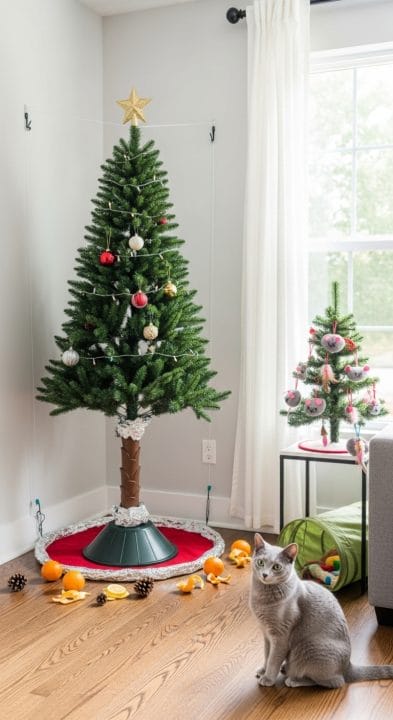
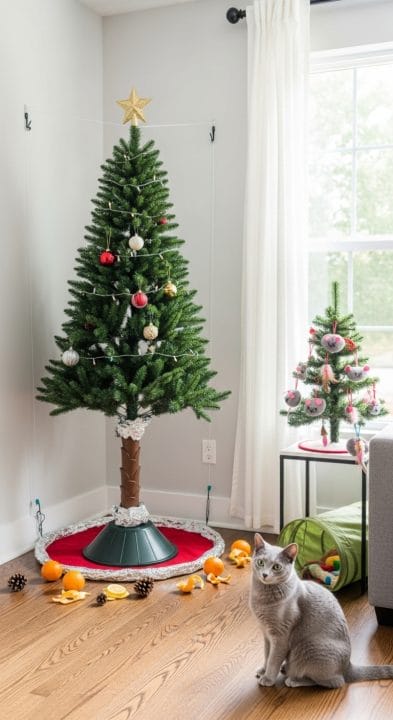
Use fishing line or wire to secure your tree to the wall or ceiling. I’m talking multiple anchor points. Get a tree stand with a wide, heavy base, and if you’re really paranoid (and you should be), weight it down even more.
One cat owner said they secured their tree like it was preparing for a Category 5 hurricane, and honestly, that’s the energy we need.
The Aluminum Foil Hack
Here’s a weird trick that actually works: cats hate aluminum foil.
Something about the crinkly sound, the texture, or maybe their own reflection freaks them out. Wrap the trunk of your tree in foil, or lay sheets of it around the base like a shiny moat. Crumple it up for maximum crinkle effect.
Bonus: you get to watch your cat do the “approach-and-retreat” dance with the foil, which is hilarious.
Decorating Strategies That Won’t End in Disaster
The Top-Heavy Approach
Put all your expensive, breakable ornaments at the top of the tree. Keep the bottom third completely bare, or use only shatterproof plastic, felt, or wooden decorations down low.
Think of it as a Christmas tree hierarchy: the VIPs go to the exclusive upper level where peasant paws can’t reach them.
Skip These Entirely
Just don’t use tinsel. Period. It’s not worth the potential vet bill.
Also avoid: fake snow, string lights on lower branches, glass ornaments within cat reach, and any food-based decorations (they’ll just encourage your cat to snack on the tree).
Secure Everything
Use zip ties, floral wire, or twist ties instead of ornament hooks. Those little metal hooks are basically cat toys waiting to be swallowed, and they can cut your cat’s mouth and intestines.
Hide the Cords
Tuck electrical cords close to the tree trunk or cover them with cord protectors. You can use PVC pipes, cord covers, or even duct tape to secure them to the floor. Keep them out of reach, and always unplug the lights when you’re not home.
Deterrents That Actually Work
The Citrus Defense
Cats hate citrus with a passion. Place orange or lemon peels around the base of your tree, or make a citrus spray with water and a few drops of lemon or orange essential oil.
Spray the lower branches lightly (test a small area first to make sure it doesn’t damage your tree or stink up your house). The smell is pleasant to humans but repulsive to cats.
Motion-Activated Sprays
These gadgets release a harmless burst of air when they detect motion, startling your cat without hurting them. The PetSafe SSSCAT is a popular option.
The key is that it’s automated—if you spray your cat with a water bottle yourself, they’ll just learn to mess with the tree when you’re not around.
Cat Deterrent Sprays
Bitter-tasting sprays can keep cats from chewing on branches. You can buy these at pet stores, or make your own with rosemary, vinegar, and lemon juice.
The Decoy Strategy
Here’s a genius move: create a “Cat Christmas Corner” with its own mini tree decorated with cat toys, catnip ornaments, and dangly things your cat is allowed to destroy.
Add new toys every few days to keep it interesting. Sometimes the best defense is giving your cat something better to do.
Protecting That Tree Water
If you have a real tree, cover the water reservoir completely. Use aluminum foil (that double-whammy again), a tree skirt secured tightly to the stand, or plastic wrap.
Some people pile presents on top of the tree skirt to add extra weight and camouflage the water bowl. Whatever works.
Never use additives in your tree water—just plain, fresh water changed daily. No preservatives, no fertilizer, no aspirin, no sugar, nothing. Those additives are toxic to cats.
What to Do When Disaster Strikes Anyway
Let’s be real: even with all these precautions, your cat might still get into trouble.
If Your Cat Eats Tree Needles
Call your vet or Pet Poison Helpline immediately, even if it seems like just a few needles. They can tell you whether you need to bring your cat in.
Watch for signs of toxicity: vomiting, drooling, lethargy, or pawing at the mouth.
If You See Tinsel Hanging from Your Cat’s Mouth
DO NOT PULL IT OUT. I know it’s tempting, but pulling can cause serious internal damage.
Take your cat to the vet immediately and let them handle it.
If Your Cat Gets Tangled in Lights
Unplug the lights first, then carefully cut them away with scissors. One cat owner described their kitten getting wrapped so tightly in lights that they couldn’t even get a finger between the cord and the cat’s leg—it was a nightmare that ended safely only because they acted fast.
Alternative Christmas Tree Ideas for Crazy Cat Households
If you’ve tried everything and your cat is still treating your tree like an amusement park, you have other options.
Wall-Mounted Trees
These flat, decorative trees mount to your wall, completely out of your cat’s reach. They’re trendy, space-saving, and cat-proof.
Ceiling-Hung Trees
Hang your tree upside-down from the ceiling. Yes, this is a real thing. It looks funky and modern, and your cat literally cannot get to it.
Tabletop Trees
A small tree on a high table or shelf can give you that Christmas vibe without the cat chaos. Just make sure the surface is stable and your cat can’t jump up there.
The “No Tree” Christmas
Some years, it’s okay to skip the tree. Decorate with wreaths, garlands on high shelves, a festive mantelpiece—there are plenty of ways to make your home feel Christmassy without giving your cat a climbing wall.
Training Your Cat (Yes, It’s Possible)
Cats can be trained, even if it takes more patience than training a dog.
The Pre-Decoration Period
Set up your tree a few days before decorating it. Let your cat investigate the bare tree and (hopefully) get bored with it before you add the tempting ornaments.
Clicker Training
Use positive reinforcement to teach your cat to stay away from the tree. Reward them with treats when they ignore the tree, and redirect them with toys when they show interest.
The Distraction Method
Give your cat engaging alternatives—new cat trees, puzzle feeders, interactive toys. A busy, entertained cat is less likely to mess with your Christmas tree.
The Reality Check
Here’s the thing: you might do everything right and your cat will still knock over the tree.
Cats are unpredictable little chaos agents, and sometimes they’re just going to cat, you know? One person on Reddit said they’ve had cats knock down trees multiple times over the years, and once a cat ate an ornament hook and thankfully threw it up in a hairball.
Another cat owner with four kittens had to abandon their Halloween tree entirely because the kittens bent all the branches beyond repair. They’re now wondering if Christmas is even possible.
The point is, you’re not alone. Over 1,300 cat owners gave that special cat-friendly tree a 4.6-star rating on Amazon, which tells you this is a widespread problem with actual solutions.
The Bottom Line
You can have a Christmas tree and a cat—you just need to be strategic.
Go artificial if possible. Anchor that tree like you’re preparing for a storm. Keep ornaments high and use shatterproof ones low. Skip the tinsel entirely. Protect the water. Use deterrents like foil and citrus. Give your cat alternatives to climb and play with.
And if all else fails? There’s no shame in the wall tree or tabletop tree life. Your sanity matters too.
The holidays are stressful enough without worrying whether you’re going to wake up to ornament shrapnel and a guilty-looking cat. With the right setup, you can have a beautiful tree, a happy cat, and maybe—just maybe—make it through December without an emergency vet visit.
Stay safe out there, cat people. May your trees stay upright and your ornaments intact.
And if your cat does manage to climb to the top and hang there like a furry star, at least get a picture before you rescue them. That’s solid Instagram content right there.