GigaPaw.com participates in affiliate programs including Amazon Associates. We earn from qualifying purchases. Content is for informational purposes only—consult a licensed veterinarian for pet medical advice.
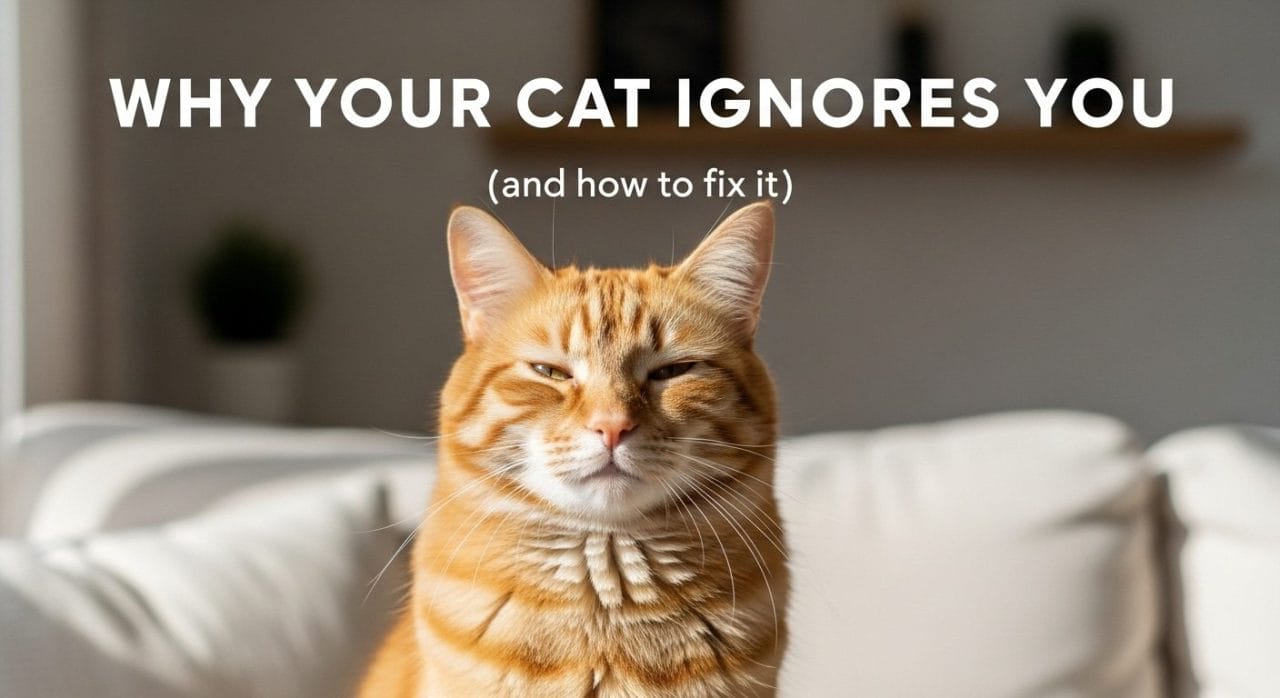
Why Your Cat Ignores You (And How to Fix It)

So your cat treats you like a glorified food dispenser with legs?
You come home after a long day, desperate for some fuzzy cuddles, and your cat barely acknowledges your existence before going back to judging you from across the room. I get it. I’ve been there.
Here’s the thing though: cats aren’t broken dogs. They’re wired differently, and once you understand their language, you can absolutely build a closer bond with even the most standoffish feline. And no, it doesn’t require witchcraft or a personality transplant for your cat.
Let me walk you through what actually works, backed by real science and the hard-won wisdom of countless cat owners who’ve cracked the code.
Learn the Slow Blink (Your New Superpower)
This is the single most powerful trick you probably don’t know about.
A 2020 study from the University of Sussex found that cats are significantly more likely to approach humans who slow blink at them. The researchers tested this with both familiar owners and complete strangers, and it worked in both cases.
Here’s how to do it: Narrow your eyes like you’re giving your cat a lazy, relaxed smile. Then close them for a couple of seconds. Open slowly.
That’s it. That’s the whole thing.
In cat language, you just said “I trust you enough to close my eyes around you.” It’s basically a feline “I love you.”
The study also found that cats in shelters who slow blinked back at humans got adopted faster. So yeah, it works both ways.
Stop Smothering Them (This Is the Hard One)
I know. Your cat is ridiculously cute. Those little paw beans are practically begging to be touched. But here’s what cat behaviorists have figured out:
Forcing affection on a cat actually makes them less affectionate over time.
Cats have what experts call a low “sensitivity threshold” for petting. Once they hit it, they either bite you, scratch you, or just leave. And every time you push past their comfort zone, you’re teaching them that being near you means being uncomfortable.
The fix is counterintuitive but effective: only give affection when they come to you first.
One cat behaviorist recommends a “consent test” that sounds silly but actually works. When your cat approaches, extend your hand toward their nose. If they sniff it and walk away? They didn’t want pets. If they rub their face against your hand or start weaving around your legs? Green light.
This single change has transformed relationships between cats and their humans more than almost anything else.
Create a Predictable Routine
Cats are creatures of habit who thrive on knowing what comes next.
This means: same feeding times, same play times, same general schedule every day. When a cat knows what to expect from you, they feel safer. And when they feel safer, they’re way more likely to let their guard down.
A veterinary behaviorist at Cornell University recommends being “the source of all good resources.” Instead of leaving food out all day, serve your cat meals at consistent times and call them when it’s ready. This creates positive associations with your presence and your voice.
Think about it from your cat’s perspective: You’re basically proving, day after day, that you’re reliable. That you show up. That you’re not a threat.
Play With Them (More Than You Think)
A University of Adelaide study found that cats who played more with their owners reported better quality of life and stronger bonds with their humans.
The magic number seems to be at least two interactive play sessions per day.
But here’s the key: you need to be involved. A cat batting at a ball by themselves isn’t the same as chasing a feather wand that YOU’RE controlling. Interactive play mimics hunting, which fires up their brain in ways that build positive associations with you.
Bonus: A 2016 study found that cats experience about a 12% spike in oxytocin (the “love hormone”) after just ten minutes of play with their owners. Dogs get a bigger spike (57%), but cats still get chemically bonded to you through play.
So those feather wand sessions aren’t just fun. They’re literally making your cat love you more on a biological level.
Talk to Your Cat (Yes, Really)
This isn’t just something crazy cat people do.
A 2021 study from Japan found that brief petting sessions combined with talking in a gentle tone boosted oxytocin levels in cat owners. But more importantly, cats seem to respond positively to being spoken to.
You don’t need to have deep conversations about philosophy. Just greet them when you come home. Narrate what you’re doing while you feed them. Use a calm, soft voice.
Cat rescue workers have noticed that cats who get personal greetings and acknowledgment become more affectionate over time. One rescue worker makes a point to give each of her cats “their own special greeting” every morning. Some like kisses, others prefer butt scratches, but they all get acknowledged.
Where to Pet (And Where to Definitely Not)
Most cats love being touched on:
| Sweet Spots | Danger Zones |
|---|---|
| Top of head and forehead | Belly (yes, even when they show it) |
| Base of ears | Lower back near tail base |
| Cheeks and chin | Whiskers |
| Back of neck | Paws |
| Along shoulders (not spine directly) | Tail |
That belly exposure? It’s actually a sign of trust, not an invitation. Most cats hate belly rubs even when they roll over and show you the goods. It’s a trap. Don’t fall for it.
Consider Pheromone Products (With Realistic Expectations)
Synthetic pheromone diffusers like Feliway have some scientific backing, though results are mixed.
A randomized, placebo-controlled study found that pheromone diffusers helped reduce aggression between cats in multi-cat households. Another study showed they reduced stress-related scratching behaviors.
However, the evidence isn’t overwhelming. Think of pheromones as one tool in your toolkit, not a magic solution.
If your cat seems anxious or stressed, a pheromone diffuser might help create a calmer environment where bonding can happen more easily. But it won’t turn an aloof cat into a lap cat overnight.
Give Them Vertical Space and Hiding Spots
This seems unrelated to affection, but stay with me.
Cats feel vulnerable when they can’t escape or observe their territory from above. A stressed cat is not a cuddly cat.
By providing cat trees, shelves, and cozy hiding spots, you’re telling your cat “this is your safe space.” Once they feel secure in their environment, they have more emotional bandwidth for bonding.
Be Patient (Some Cats Take Years)
Here’s something most people don’t talk about: some cats don’t become affectionate until they’re nearly 10 years old.
Multiple cat owners have reported their aloof cats suddenly becoming lap cats in their senior years. One forum commenter mentioned cats who “didn’t show much loving behavior until they were nearly 10” but then “became very cuddly for the rest of their lives.”
If you’ve had your cat for a year and they’re still standoffish, that doesn’t mean you’ve failed. It might mean they’re still warming up. Cats can take months or even years to fully bond.
A 2019 study published in Current Biology found that cats form attachment styles similar to humans and dogs. About 64% of cats showed secure attachment to their owners. The others had insecure attachment styles, which might explain why some cats seem more distant.
What If Nothing Works?
Real talk: some cats are just more independent than others.
Early socialization (between 2-9 weeks of age) plays a huge role in how affectionate a cat becomes. Kittens who weren’t handled much during this critical window may never become super cuddly, even with the best owner in the world.
But “not cuddly” doesn’t mean “doesn’t love you.”
Look for the subtle signs: following you from room to room (even at a distance), slow blinking from across the room, greeting you with a chirp when you come home, sitting near you even if not on you.
Your cat might just be showing love in their own weird, cat way.
Quick Reference: Your Affection-Building Game Plan
| Do This | Avoid This |
|---|---|
| Slow blink at your cat | Staring directly at them |
| Wait for them to approach you | Chasing them for cuddles |
| Pet their cheeks and chin | Rubbing their belly |
| Keep a consistent daily routine | Sudden changes in schedule |
| Two interactive play sessions daily | Expecting them to play alone |
| Talk to them in a soft voice | Loud noises and sudden movements |
| Provide vertical space and hiding spots | Cornering them with no escape route |
| Give treats during positive interactions | Forcing treats when they’re stressed |
The Bottom Line
Making a cat more affectionate isn’t about changing who they are. It’s about speaking their language and creating conditions where they feel safe enough to show affection on their own terms.
Slow blink. Respect their boundaries. Play with them. Be consistent. And give it time.
Your cat might never become a velcro pet who follows you everywhere and demands constant attention. But with patience and the right approach, most cats can develop a deeper, more affectionate bond with their humans.
And honestly? There’s something special about earning a cat’s trust. Dogs give their love freely. Cats make you work for it. But when your cat finally chooses to curl up in your lap or slow blinks at you from across the room, you’ll know you’ve earned something real.
Now go slow blink at your cat. Science says it works.